By Becky Hardin
Published Dec 14, 2022



Croissants are easier to make than you may think! This recipe yields freshly baked pastries that taste like they’re straight from a bakery. They’re perfectly soft, flaky, and buttery as can be. Your mornings just got so much more delicious!

What’s in this Croissant Recipe?
A flaky exterior that gives way to a soft, buttery, fluffy interior is key when biting into a Croissant. This recipe never fails to deliver those key elements! Get ready to knead and roll, because this is a baking staple you’ll want to make time and time again.
- Whole Milk: Provides moisture to the dough, which helps create a tender and soft crumb. Using warm milk also helps to activate the yeast.
- Active Dry Yeast: Acts as a leavening agent to help the dough rise and create a light and airy texture.
- Granulated Sugar: Helps feed the yeast, which promotes fermentation and helps the dough rise.
- Kosher Salt: Enhances the flavor of the dough and regulates the fermentation process.
- Unsalted Butter: Provides flavor and richness and creates layers in the dough during the rolling and folding process.
- All-Purpose Flour: Provides structure to the pastry and helps it hold its shape.
- Egg: Helps create a glossy, golden brown crust during baking.
Pro Tip: Make sure your yeast is active before using it. If it doesn’t bubble after resting for a few minutes, discard it and start again.
Variations on a Croissant
You can add various fillings to your dough before rolling it. Try Nutella, cookie butter , fruit jam, apple butter , chocolate , brown sugar, chopped nuts, shredded cheese, Boursin , pesto , or tomato sauce !
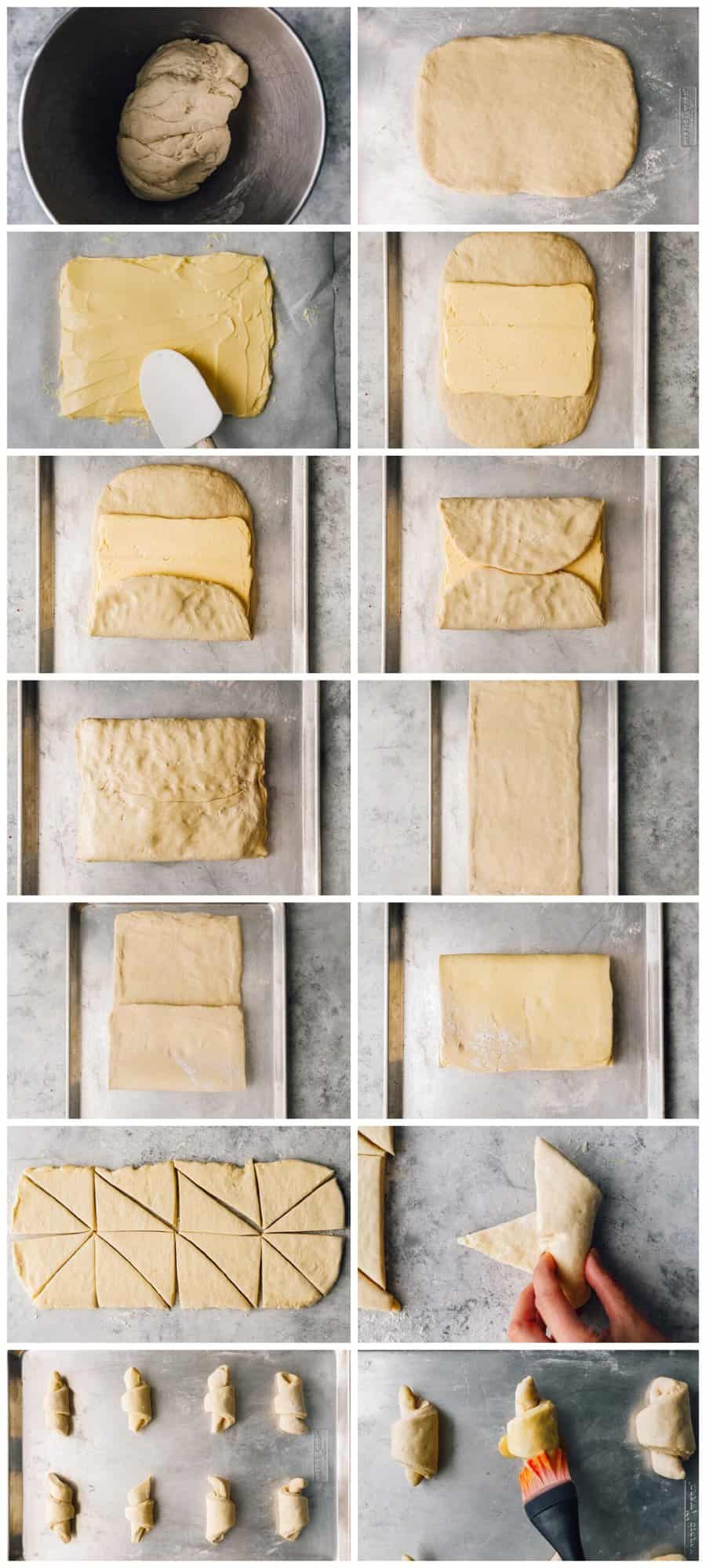
Although they are quite bready, they are actually a type of laminated pastry.
Each of these pastries is 281 calories.
They are a fun food, not a healthy one. They’re pretty high in carbs and fat, and they are best enjoyed in moderation.
These pastries contain 26 grams of carbohydrates, which is 6% of the recommended daily value.
Lamination is the process of folding dough with butter to create flaky layers. When the laminated dough bakes, the butter melts and creates steam, making tons of individual flaky layers in the dough. The process involves chilling flat layers of butter and placing them on rolled-out dough, folding them up, and repeating until you have many, many layers!
No! These pastries are too high in fat and carbs for dogs and can cause stomach upset and weight gain. It’s best to keep these far away from your furry friends!
When baking croissants, some butter leakage is normal. However, if a lot of butter is leaking out of your croissants, your butter layers may not have been chilled enough before baking. It’s important to chill the dough between each step in order to keep the butter firm enough to remain in the dough during baking.
Absolutely! They will keep well in the freezer for up to 1 month!

How to Make Ahead and Store
This is a great multi-day recipe! I recommend splitting it up as follows:
- Day 1: Prepare the dough, then let it chill overnight.
- Day 2: Laminate the dough and let it sit in the refrigerator overnight again.
- Day 3: Cut the dough and bake the croissants. You can also cut, shape, and freeze them for up to 1 month. Let thaw overnight in the refrigerator or on the counter for 1 hour before baking.
Store leftover croissants in an airtight container at room temperature for up to 3 days or in the refrigerator for up to 5 days.
How to Freeze
Freeze croissants in a single layer on a lined baking sheet until solid, about 1-2 hours. Transfer to an airtight container or Ziplock bag to store for up to 1 month. Let thaw at room temperature for 1 hour before baking.
Serving Suggestions
These pastries are delicious served simply with a side of fruit, scrambled eggs , and bacon . You can also use them as the bread for a croissant breakfast sandwich or a chicken salad sandwich . My personal favorite, though, is croissant french toast casserole !
Ingredients1x2x3x
For the Dough
- ▢ 1⅓ cup whole milk 303 grams, lukewarm (100-110°F)
- ▢ 2¼ teaspoons active dry yeast 7 grams (1 envelope)
- ▢ 3 tablespoons granulated sugar 38 grams
- ▢ 1½ teaspoons kosher salt 5 grams
- ▢ 3 tablespoons unsalted butter 42 grams, room temperature (⅜ stick)
- ▢ 3⅔ cups all-purpose flour 440 grams
For the Butter Layers
- ▢ 1¼ cups unsalted butter 283 grams, room temperature (2½ sticks — European-style recommended)
For the Egg Wash
- ▢ 1 large egg 50 grams
Instructions
Make the Dough
- Add the milk, yeast, sugar, and salt to the bowl of a stand mixer. Stir and then let it rest for a few minutes. 1⅓ cup whole milk, 2¼ teaspoons active dry yeast, 3 tablespoons granulated sugar, 1½ teaspoons kosher salt
- Attach the dough hook to the mixer. Add in the butter and mix until incorporated, then gradually add in the flour while mixing on low speed. 3 tablespoons unsalted butter, 3⅔ cups all-purpose flour
- Continue to mix on low for 4-5 minutes, until the dough becomes smooth and elastic and pulls away from the sides of the bowl.
- Remove the dough from the mixer and place on the counter to knead a few times and shape into a ball. Wrap in plastic wrap and chill in the refrigerator for 30 minutes.
- On a floured surface, roll out the dough to an 8×12-inch rectangle.
- Cover the dough with plastic wrap and chill in the refrigerator for 4 hours or overnight.
Prepare the Butter
- About 35-40 minutes before the dough has finished chilling, use a spatula to spread the softened butter out in an even layer onto a sheet of parchment paper. Shape the butter into a 6×8-inch rectangle. 1¼ cups unsalted butter
- Place the butter on a baking sheet, and cover it with another piece of parchment paper. Refrigerate for 30 minutes.
Laminate the Dough
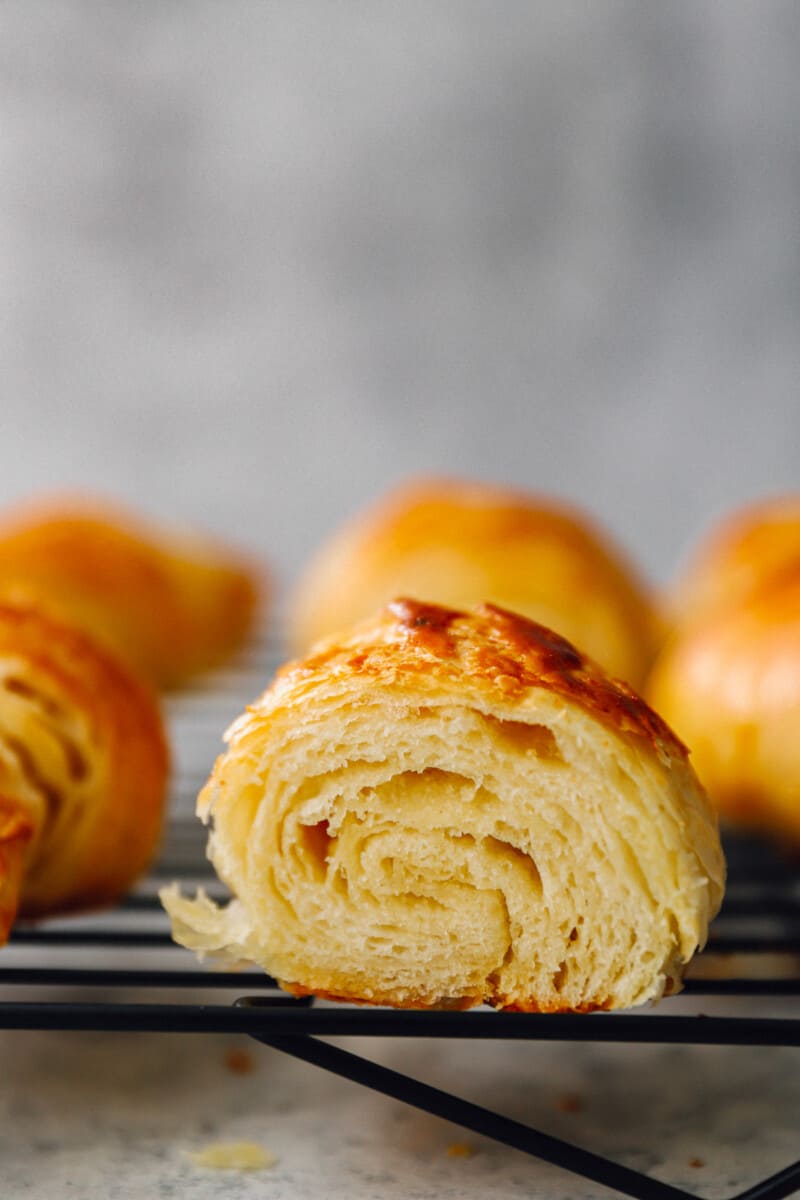
- Once the dough has chilled for at least 4 hours and the butter has chilled for 30 minutes, peel the butter rectangle off the parchment paper, place it in the middle portion of the dough, so the top and bottom of the butter perfectly match up with the top and bottom of the dough.
- Fold one side of the dough inward over the butter so that it covers half of the butter rectangle.
- Then, fold the other side inward so the two sides of dough meet in the middle to completely cover the butter.
- Press the dough together in the middle and the edges of the dough together to seal in the butter.
- Place the dough on a baking sheet, cover with plastic wrap, and refrigerate for another 30 minutes.
- Transfer the dough to a floured surface and roll out into an 8×18-inch rectangle. Visually divide the dough into thirds.
- Then, turn each outer third inward over the middle third.
- Place the dough on the sheet pan, cover with plastic wrap, and refrigerate for 30 minutes.
- Repeat the process of rolling to an 8×18-inch rectangle and folding inward 2 more times.
- Place the dough back on the sheet pan, cover, and refrigerate for at least 4 hours or overnight.
Cut the Dough
- Roll out the dough on a floured surface to an 8×18-inch rectangle.
- Use a pizza cutter to cut the dough in half lengthwise and horizontally. Then, cut the dough in half horizontally at the top and bottom to create 8 rectangles. Cut each rectangle in half diagonally to create triangles.
- Cut a tiny slit in the middle of the wide end (base) of the triangle, and roll the dough up.
- Place the croissants on a baking sheet. Let the dough rest at room temperature for 1-2 hours. Then, chill for at least 15 minutes before baking.
Bake the Croissants
- Preheat the oven to 375°F.
- Beat the egg in a small dish, then gently brush each croissant with the egg wash. 1 large egg
- Bake for 15-20 minutes until golden brown.
Equipment
- Kitchen Scale (optional, but recommended!)
- Stand Mixer
- Rolling Pin
- Baking Sheet
Becky’s Tips
- Don’t expect perfect results on the first try! Practice, practice, practice!
- Don’t rush the process. I recommend breaking this recipe out over 3 days.
- I highly recommend using a kitchen scale for this recipe to ensure the most accurate results.
- Make sure your yeast is active before using it. If it doesn’t bubble after resting for a few minutes, discard it and start again.
- Make sure the milk is warm, but not hot. If the milk is too hot, it could kill the yeast!
- Keep the dough as cold as possible. When in doubt, stick it back in the refrigerator for 20 minutes.
- Don’t chill the butter for more than 30 minutes; otherwise, it will be too hard to work with.
- If the dough or butter is too difficult to roll out, let it rest at room temperature for a few minutes. You want it cold, but still pliable!
- Lightly flour your work surface and rolling pin to prevent the dough from sticking and tearing.
- If you notice air bubbles in your dough as you roll it out, gently pop them with a toothpick, then lightly flour the area.
Nutrition information is automatically calculated, so should only be used as an approximation.
More Homemade Bread Recipes We Love
- Homemade Crescent Rolls
- Gougeres
- Garlic Pull Apart Rolls
- Homemade Sandwich Bread
- Parker House Rolls

How to Make Croissants
Equipment
- Kitchen Scale (optional, but recommended!)
- Stand Mixer
- Rolling Pin
- Baking Sheet
Ingredients
For the Dough
- 1⅓ cup whole milk 303 grams, lukewarm (100-110°F)
- 2¼ teaspoons active dry yeast 7 grams (1 envelope)
- 3 tablespoons granulated sugar 38 grams
- 1½ teaspoons kosher salt 5 grams
- 3 tablespoons unsalted butter 42 grams, room temperature (⅜ stick)
- 3⅔ cups all-purpose flour 440 grams
For the Butter Layers
- 1¼ cups unsalted butter 283 grams, room temperature (2½ sticks – European-style recommended)
For the Egg Wash
- 1 large egg 50 grams
Instructions
Make the Dough
- Add the milk, yeast, sugar, and salt to the bowl of a stand mixer. Stir and then let it rest for a few minutes. 1⅓ cup whole milk, 2¼ teaspoons active dry yeast, 3 tablespoons granulated sugar, 1½ teaspoons kosher salt
- Attach the dough hook to the mixer. Add in the butter and mix until incorporated, then gradually add in the flour while mixing on low speed. 3 tablespoons unsalted butter, 3⅔ cups all-purpose flour
- Continue to mix on low for 4-5 minutes, until the dough becomes smooth and elastic and pulls away from the sides of the bowl.
- Remove the dough from the mixer and place on the counter to knead a few times and shape into a ball. Wrap in plastic wrap and chill in the refrigerator for 30 minutes.
- On a floured surface, roll out the dough to an 8x12-inch rectangle.
- Cover the dough with plastic wrap and chill in the refrigerator for 4 hours or overnight.
Prepare the Butter
- About 35-40 minutes before the dough has finished chilling, use a spatula to spread the softened butter out in an even layer onto a sheet of parchment paper. Shape the butter into a 6x8-inch rectangle. 1¼ cups unsalted butter
- Place the butter on a baking sheet, and cover it with another piece of parchment paper. Refrigerate for 30 minutes.
Laminate the Dough
- Once the dough has chilled for at least 4 hours and the butter has chilled for 30 minutes, peel the butter rectangle off the parchment paper, place it in the middle portion of the dough, so the top and bottom of the butter perfectly match up with the top and bottom of the dough.
- Fold one side of the dough inward over the butter so that it covers half of the butter rectangle.
- Then, fold the other side inward so the two sides of dough meet in the middle to completely cover the butter.
- Press the dough together in the middle and the edges of the dough together to seal in the butter.
- Place the dough on a baking sheet, cover with plastic wrap, and refrigerate for another 30 minutes.
- Transfer the dough to a floured surface and roll out into an 8x18-inch rectangle. Visually divide the dough into thirds.
- Then, turn each outer third inward over the middle third.
- Place the dough on the sheet pan, cover with plastic wrap, and refrigerate for 30 minutes.
- Repeat the process of rolling to an 8x18-inch rectangle and folding inward 2 more times.
- Place the dough back on the sheet pan, cover, and refrigerate for at least 4 hours or overnight.
Cut the Dough
- Roll out the dough on a floured surface to an 8x18-inch rectangle.
- Use a pizza cutter to cut the dough in half lengthwise and horizontally. Then, cut the dough in half horizontally at the top and bottom to create 8 rectangles. Cut each rectangle in half diagonally to create triangles.
- Cut a tiny slit in the middle of the wide end (base) of the triangle, and roll the dough up.
- Place the croissants on a baking sheet. Let the dough rest at room temperature for 1-2 hours. Then, chill for at least 15 minutes before baking.
Bake the Croissants
- Preheat the oven to 375°F.
- Beat the egg in a small dish, then gently brush each croissant with the egg wash. 1 large egg
- Bake for 15-20 minutes until golden brown.
Notes
- Don’t expect perfect results on the first try! Practice, practice, practice!
- Don’t rush the process. I recommend breaking this recipe out over 3 days.
- I highly recommend using a kitchen scale for this recipe to ensure the most accurate results.
- Make sure your yeast is active before using it. If it doesn’t bubble after resting for a few minutes, discard it and start again.
- Make sure the milk is warm, but not hot. If the milk is too hot, it could kill the yeast!
- Keep the dough as cold as possible. When in doubt, stick it back in the refrigerator for 20 minutes.
- Don’t chill the butter for more than 30 minutes; otherwise, it will be too hard to work with.
- If the dough or butter is too difficult to roll out, let it rest at room temperature for a few minutes. You want it cold, but still pliable!
- Lightly flour your work surface and rolling pin to prevent the dough from sticking and tearing.
- If you notice air bubbles in your dough as you roll it out, gently pop them with a toothpick, then lightly flour the area.
Nutrition
By Becky Hardin
Published Jul 12, 2017
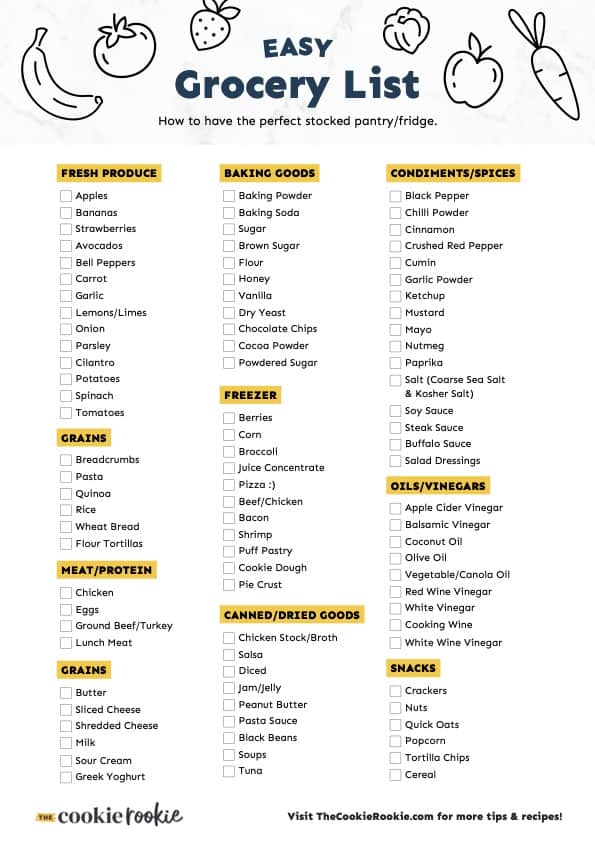
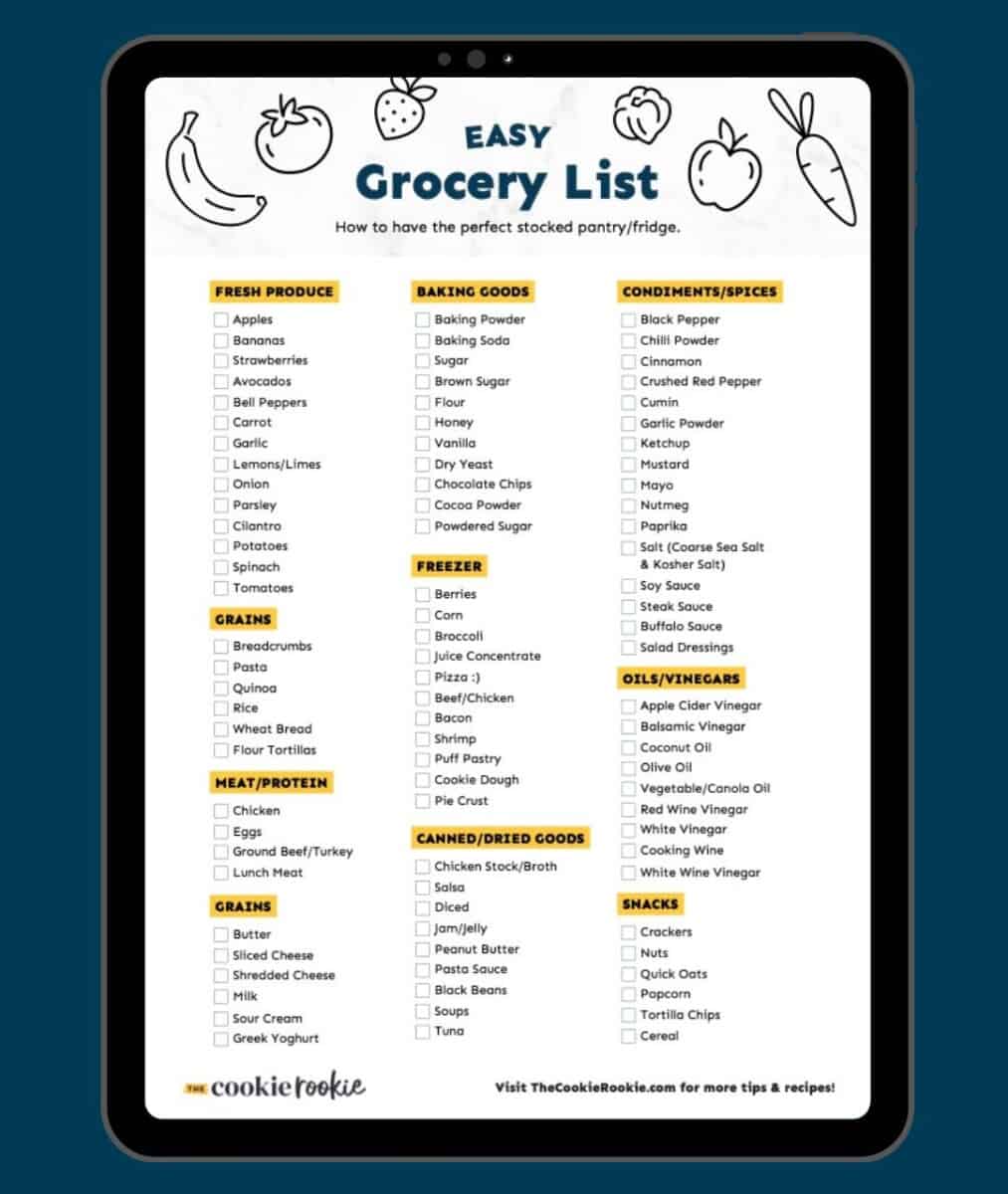


This Essential Grocery List is an absolute life saver for my family on the busy weeks. When I started this journey to learn how to cook, I quickly realized that the first step in cooking is having staple ingredients on hand. I want to avoid having to run out to the grocery store every single time I prepare a new recipe. Having a well-stocked pantry has made my life in the kitchen so much simpler, because when it’s time to cook, I have what I need.

Essential Grocery List
It’s so helpful to have a basic grocery list to help me remember which foods to buy at the store. This food shopping list is my go-to!
It’s better to stock up on things like grains, seasonings and spices, baking essentials, oils, condiments, canned and frozen foods, etc. so I can just grab them when I need them. These things have a long shelf life , so I keep them in my kitchen for convenience.
However, I do have to go to the supermarket sometimes, and there’s a way to make that trip easy and hassle-free: I keep a grocery list! If I go in blindly, I’ll leave with things I don’t need, and nothing that actually helps me prepare a good meal.
In the list below, I’ve compiled everything I always have on my stock-up grocery list.
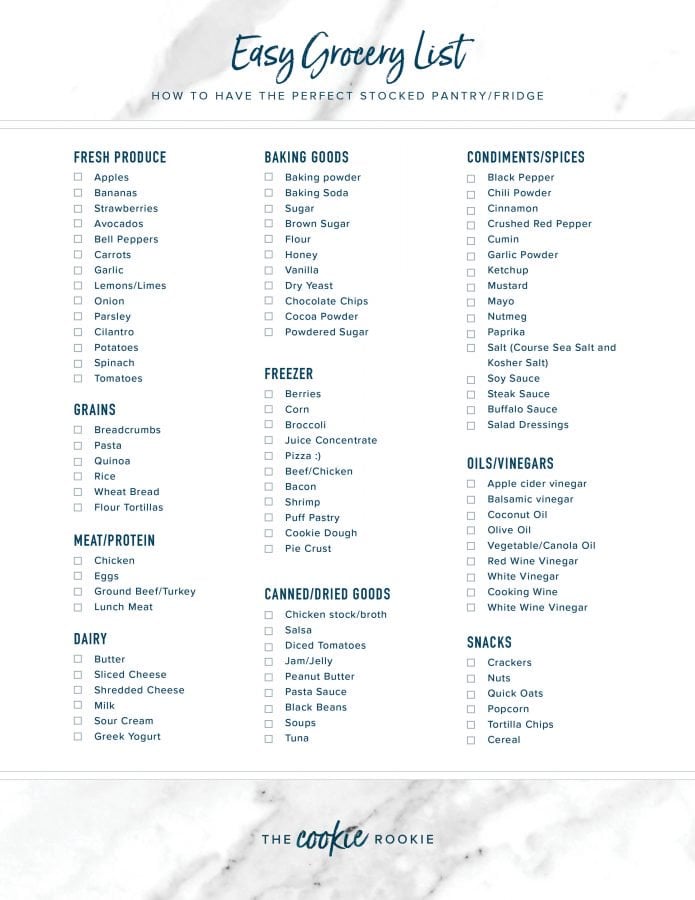
I’ve got you covered! I created an easy grocery list filled with all of the essentials. Plus there’s a free printable version that you can take with you to the grocery store. It has everything you need to stock your pantry, your freezer, and your refrigerator.
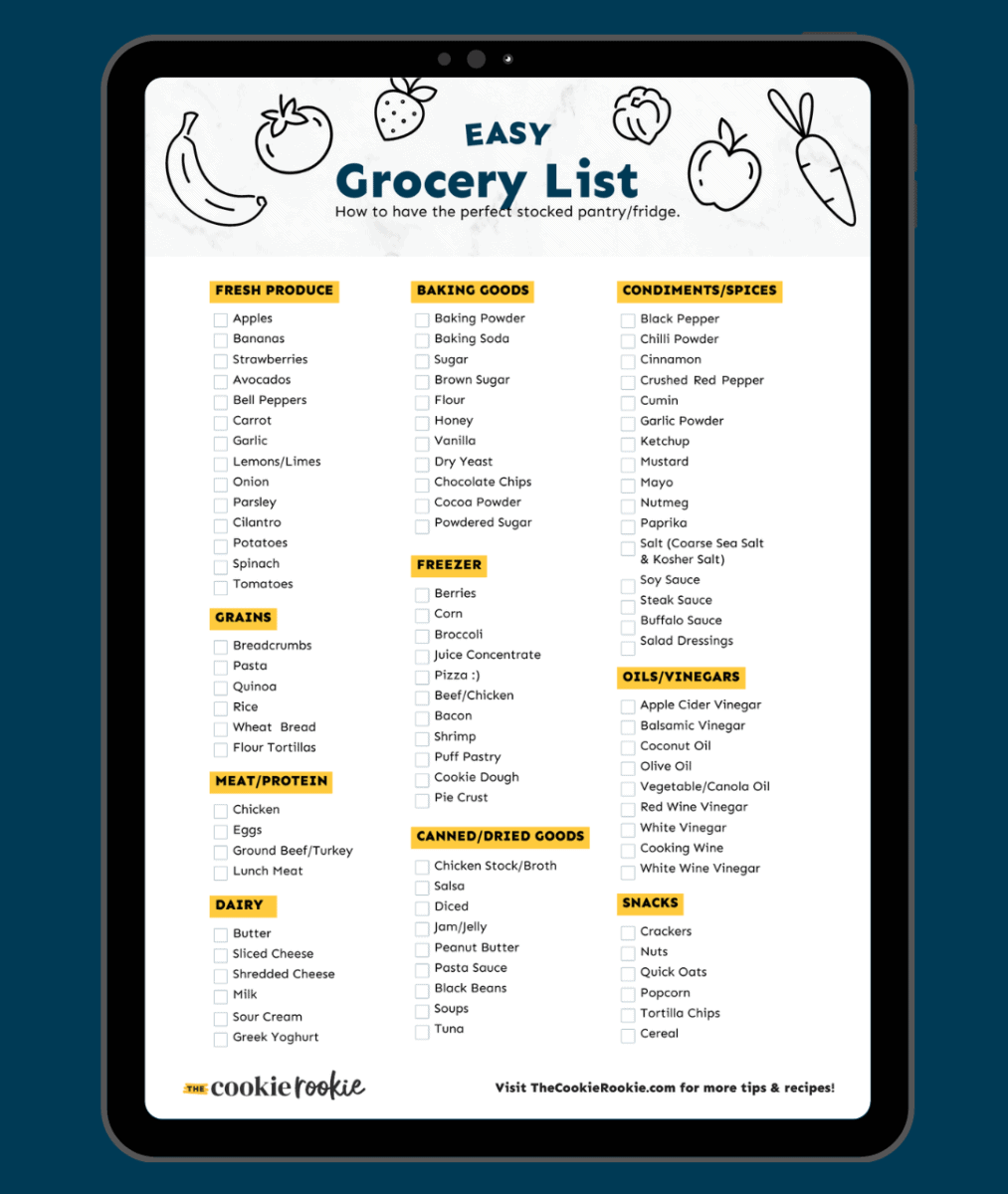
Click to get my Free Printable Grocery List
What to Buy at the Grocery Store
This is the perfect grocery list filled with all the basics and essentials. It should help get you going if you’re new to cooking, or if you’re just left staring helplessly at an empty pantry and don’t know how to fill it.
When I first started cooking, things could seem overwhelming. I quickly realized that they more prepared I could be, the more confident I felt. If you already have the basics in your kitchen, then you can shop stress-free.
So print out our easy grocery list, stock up your pantry and fridge, and you’ll be cooking in no time!
Click to get my Free Printable Grocery List for the perfectly stocked pantry and freezer!
Fresh Produce
- Apples
- Bananas
- Strawberries
- Avocados
- Bell Peppers
- Carrots
- Broccoli
- Garlic
- Lemons/Limes
- Onion
- Parsley
- Cilantro
- Basil
- Potatoes
- Spinach
- Tomatoes
GRAINS
- Breadcrumbs
- Pasta
- Quinoa
- Rice
- Sandwich Bread
- Tortillas
MEAT/PROTEIN
- Chicken
- Eggs
- Ground Beef
- Sliced Turkey
- Lunch Meat
DAIRY
- Butter
- Sliced Cheese
- Shredded Cheese
- Milk
- Sour Cream
- Greek Yogurt
BAKING GOODS
- Baking powder
- Baking Soda
- Granulated Sugar
- Brown Sugar
- Flour
- Honey
- Vanilla Extract
- Dry Yeast
- Chocolate Chips
- Cocoa Powder
- Powdered Sugar
FREEZER
- Fruit and Berries
- Frozen Veggies (Corn, Peas, Broccoli, etc)
- Juice Concentrate
- Pizza or Other Convenience Meals
- Pie Crust
- Cookie Dough
CANNED/DRIED GOODS
- Chicken stock/broth
- Salsa
- Diced Tomatoes
- Jam/Jelly
- Peanut Butter
- Pasta Sauce
- Beans (Black Beans, Chickpeas, Baked Beans, etc)
- Soups
- Tuna
- Green Chiles
- Canned Veggies
- Coffee or Tea
Get more details on the best non-perishable and pantry foods
CONDIMENTS/SPICES
- Black Pepper
- Chili Powder
- Cinnamon
- Crushed Red Pepper
- Cumin
- Garlic Powder
- Ketchup
- Mustard
- Mayo
- Nutmeg
- Paprika
- Salt (Course Sea Salt and Kosher Salt)
- Soy Sauce
- Steak Sauce
- Hot Sauce/ Buffalo Sauce
- Salad Dressings
OILS/VINEGARS
- Apple cider vinegar
- Balsamic vinegar
- Coconut Oil
- Olive Oil
- Vegetable/Canola Oil
- Red Wine Vinegar
- White Vinegar
- Cooking Wine
- White Wine Vinegar
SNACKS
- Crackers
- Nuts
- Quick Oats
- Popcorn
- Tortilla Chips
- Cereal
Click to get my Free Printable Grocery List for the perfectly stocked pantry and freezer!

Click ☝🏻 for my FREE Grocery List Printable!
I hope this essential grocery list can help you buy what you need and make your home cooking so much easier!
Stock Your Kitchen
Find more ideas for your grocery list, stock up your kitchen, and print more cooking guides and charts to keep handy!
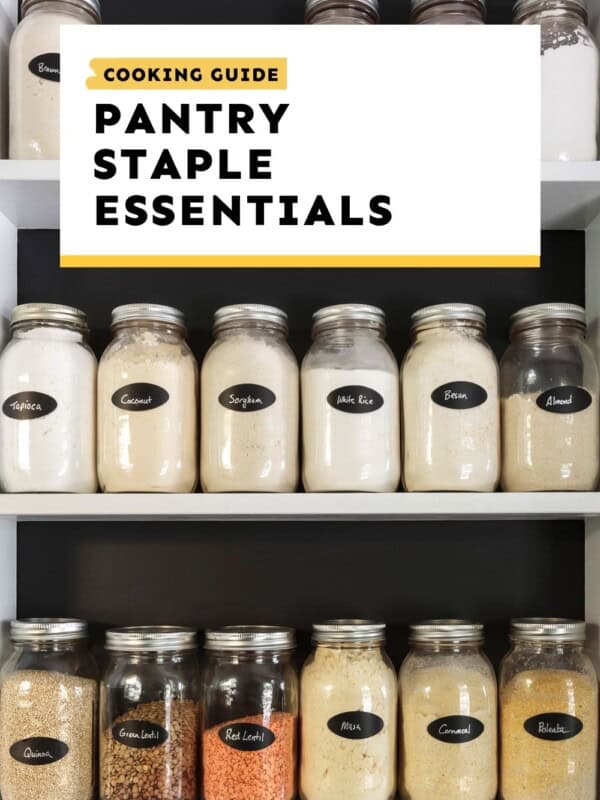
Non-Perishable Foods to Stock Up On
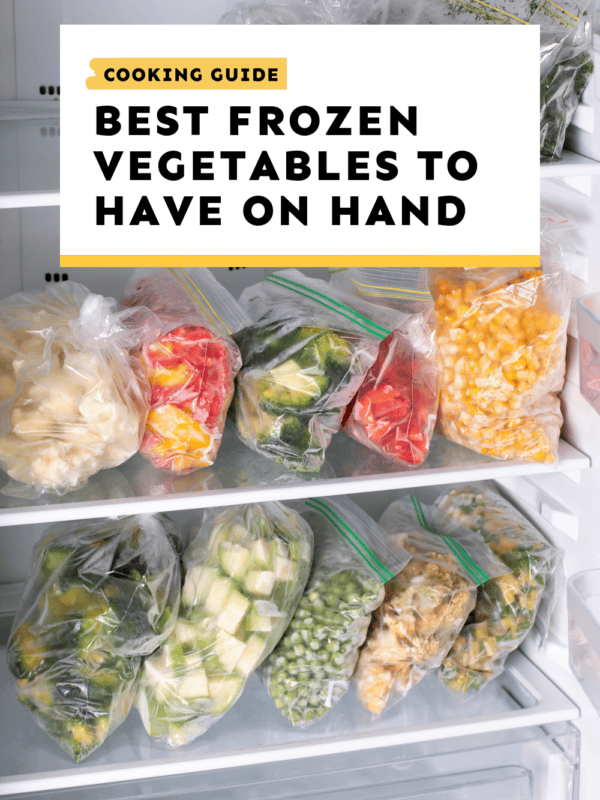
Frozen Vegetables to Stock Up On (and Recipes to Make)

Ultimate List of Cooking Herbs for Your Kitchen

Ultimate List of Cooking Spices for Your Kitchen

Cooking Oil 101: Types of Cooking Oils to Use
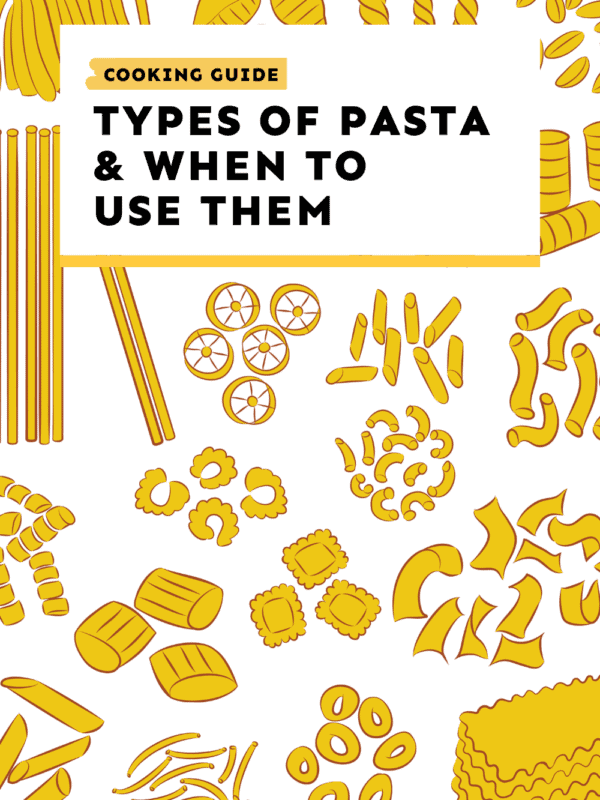
26 Types of Pasta and When to Use Them

What Fruits and Vegetables are in Season?

Meat Temperature Chart (Free Printable)
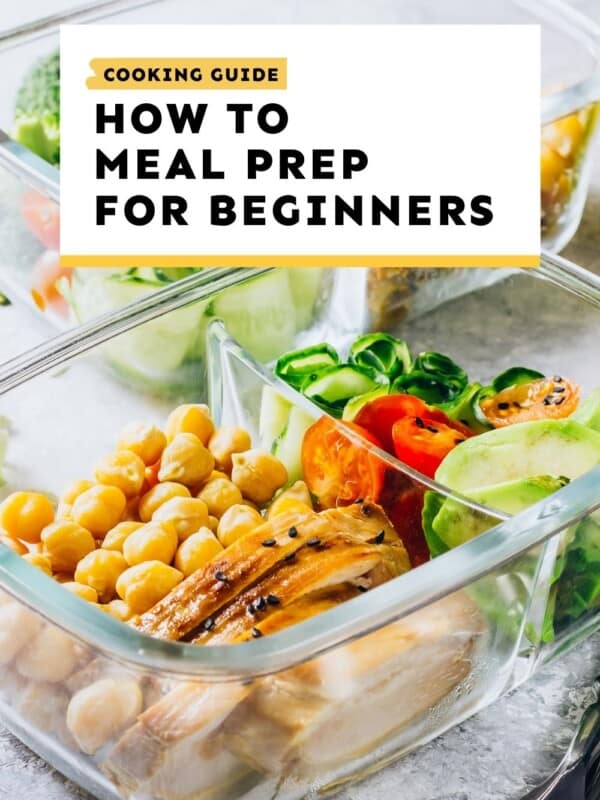
How to Meal Prep (Guide for Beginners)
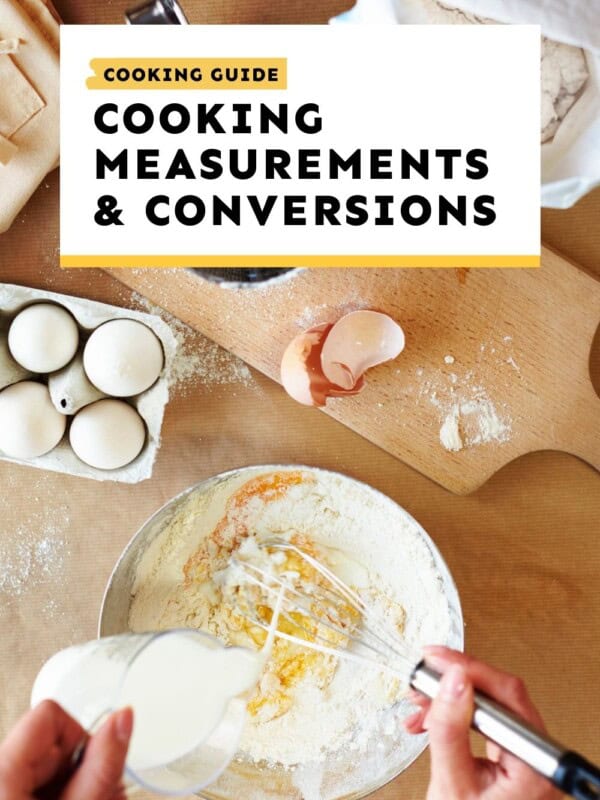
Basic Cooking Measurements & Kitchen Conversion Chart