By Becky Hardin
Published Nov 14, 2020

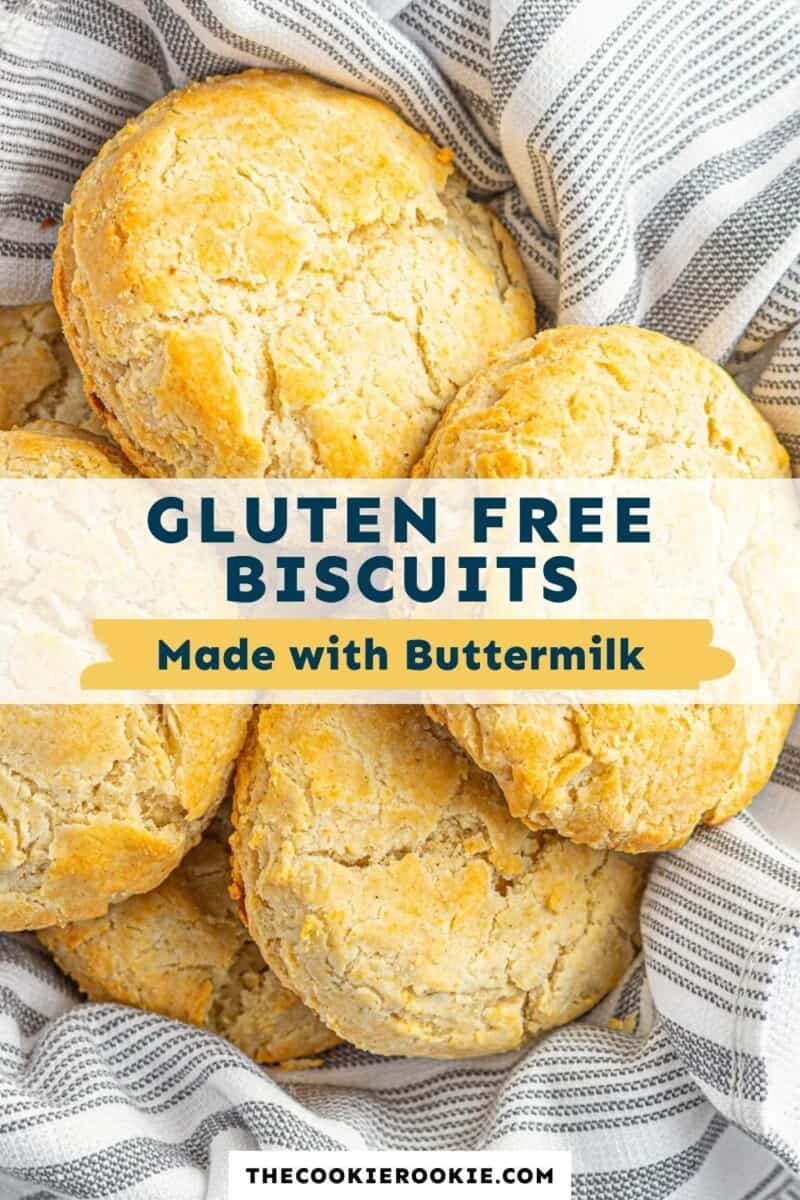
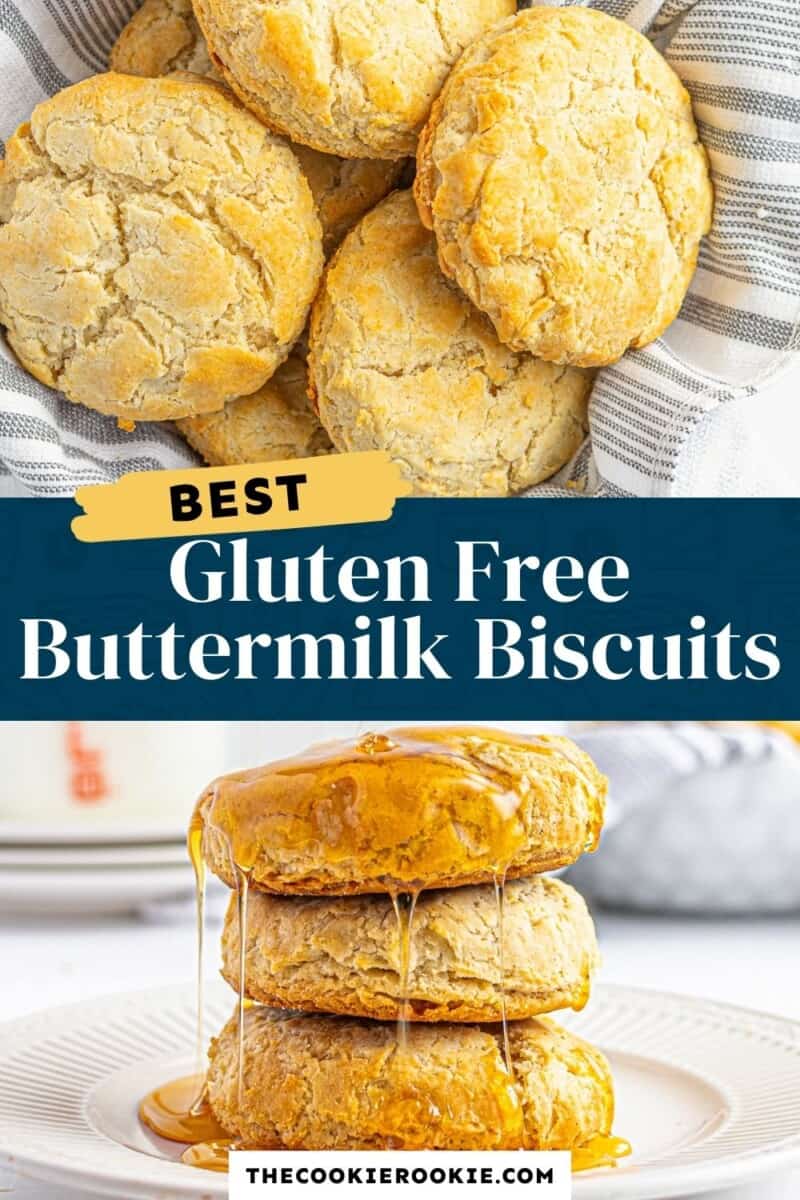
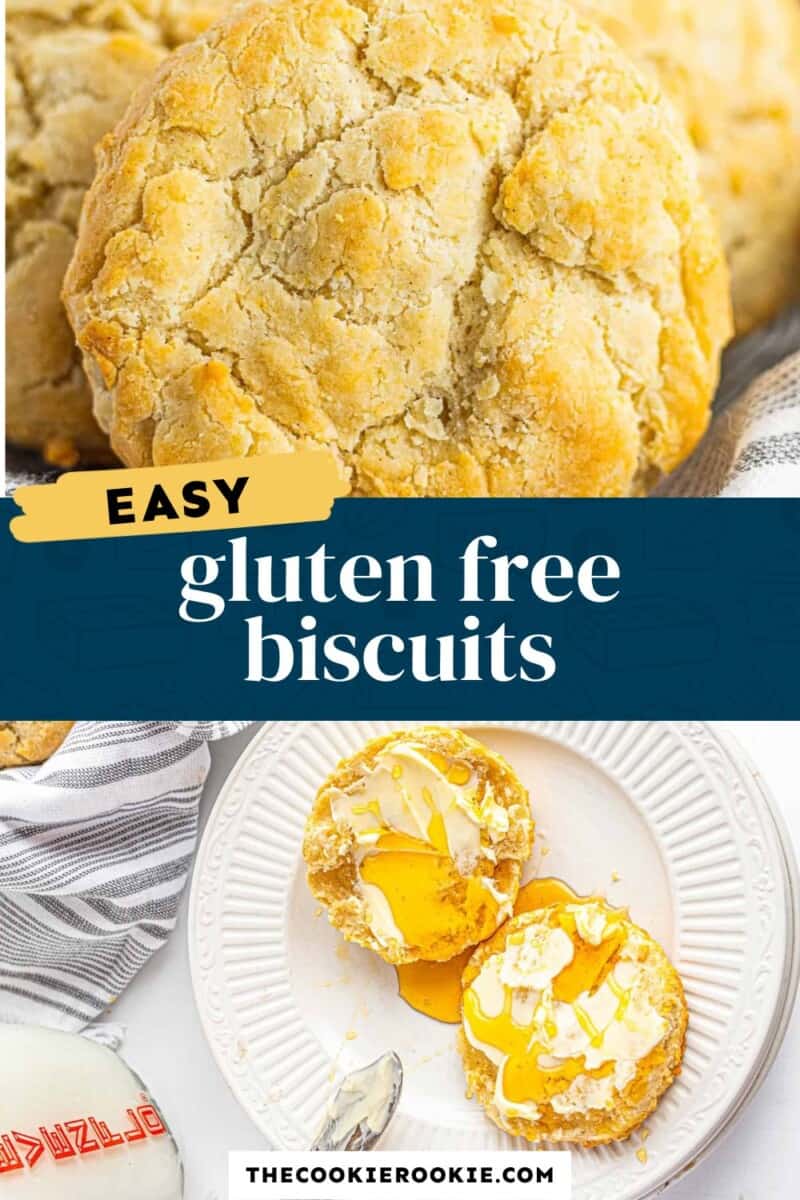
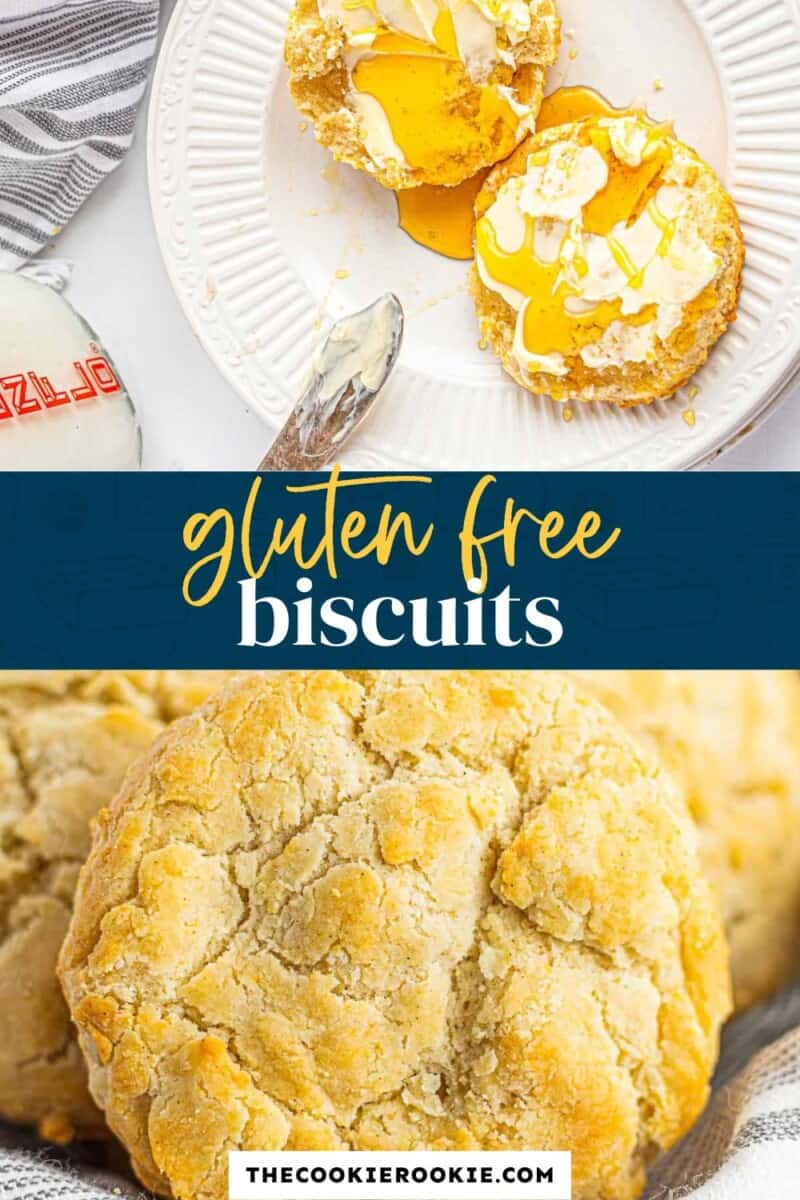
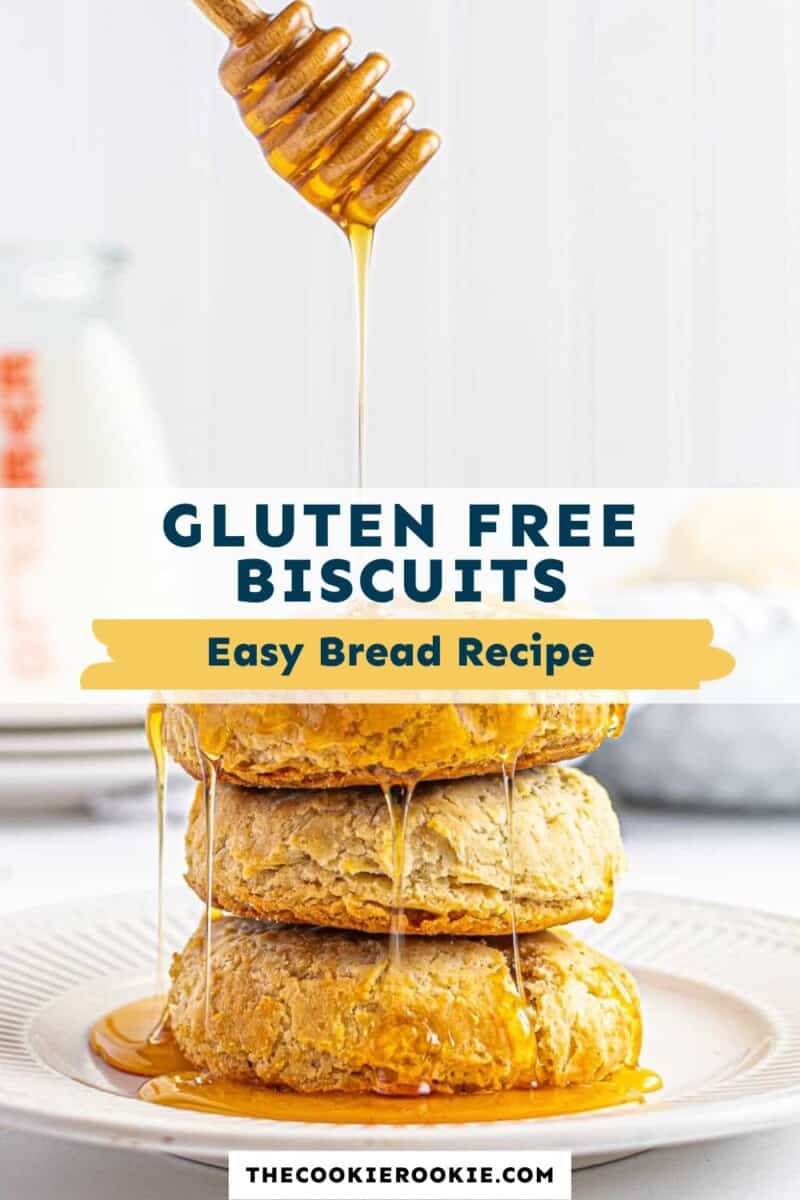
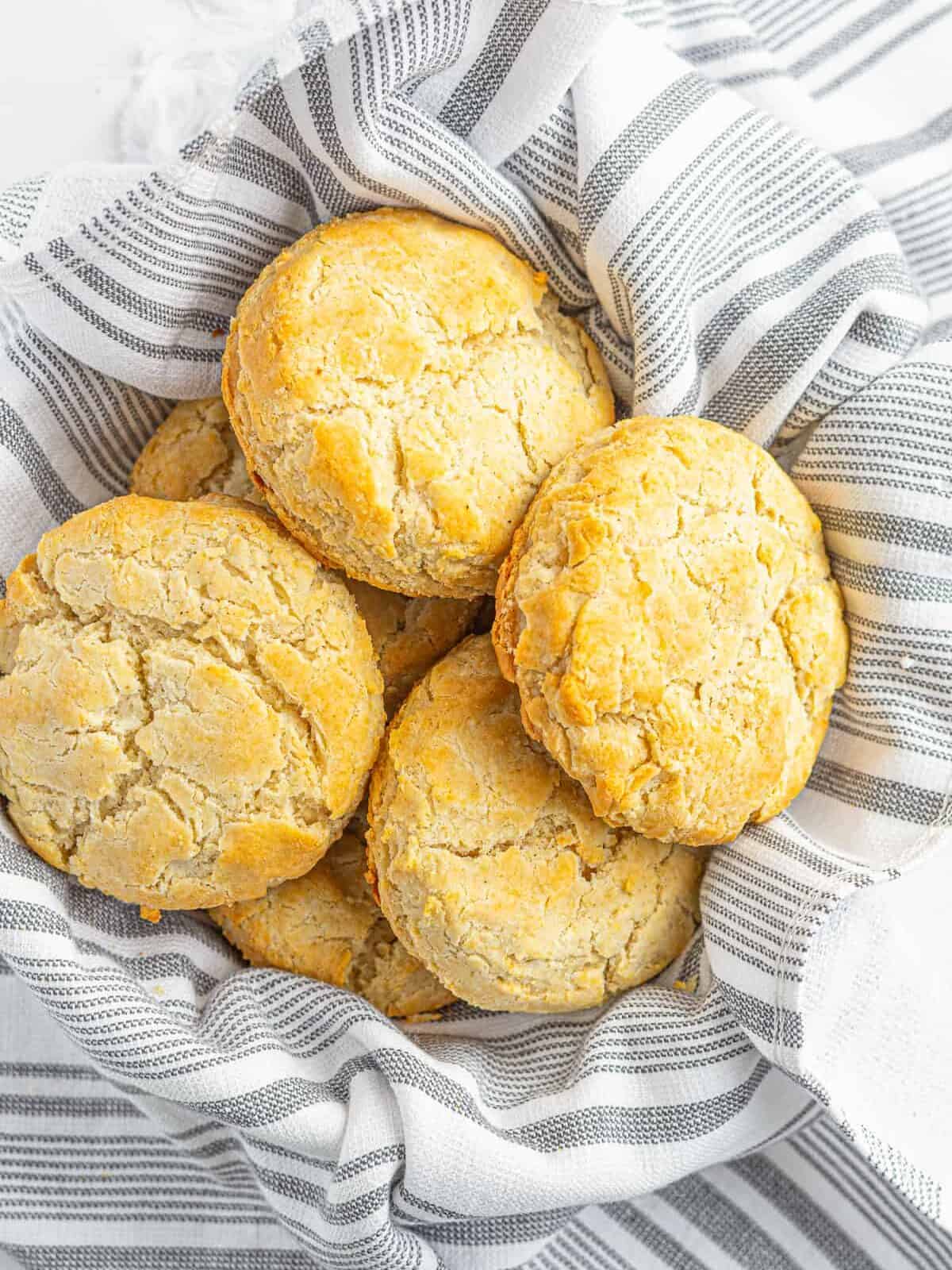
Made from scratch, this Gluten Free Biscuits Recipe really checks all the right boxes! They’re fluffy, easy to make with just 5 ingredients, and always hit the spot. I promise you, you won’t miss the gluten!
What’s in this Gluten Free Biscuit Recipe
You only need 5 ingredients and a little salt to make a batch of these delicious biscuits.
- All Purpose Gluten Free Flour: Some good brands to choose fro include Bob’s Red Mill, Cup4Cup, and King Arthur.
- Baking Powder: This is what helps the biscuits rise to the best fluffy height. Check the expiration date because baking powder does expire! It’s best when used within 6 months of opening the container.
- Kosher Salt: This doesn’t make the biscuits taste salty. It’s really just used to help the biscuits have the best texture.
- Baking Soda: Just like baking powder, baking soda can also go bad and should be used within 6 months of opening it.
- Unsalted Butter: You’ll need it to be cold and cubed.
- Buttermilk: If you don’t have buttermilk, follow this simple homemade buttermilk recipe .
PRO TIP: If you are not gluten intolerant, you can make these biscuits with all-purpose flour.
What makes these biscuits gluten free?
By using gluten free flour instead of regular all purpose flour, you can make these biscuits gluten free! Be sure to always check the labels on all of your other ingredients just to be safe, but they should all be naturally gluten free.
Nope! There is no sugar to sweeten these homemade biscuits. They’re buttery and neutral flavored so they go well with both sweet and savory pairings.
There could be a few culprits here. First off, always make sure you measure your baking powder and baking soda with care and check that neither are expired. Secondly, use buttermilk, not any other type of dairy.
Fold the biscuit dough according to recipe instructions in order to create the best flaky layers in these biscuits. It may require a little TLC, but it’s well worth the effort!
How to Store/Reheat
Once cooled, you can transfer them to an airtight container and will keep fresh for 2 days. In the fridge, they will keep well for 5 days. Reheat the biscuits gently in the oven to serve.
How to Freeze
If you can’t get through your batch of gluten-free biscuits, freezing is a great option. Wrap the cooled biscuits individually in plastic wrap or foil and place in a freezer bag. The biscuits will keep well for 3 months and can be thawed at room temperature.
Serving Suggestions
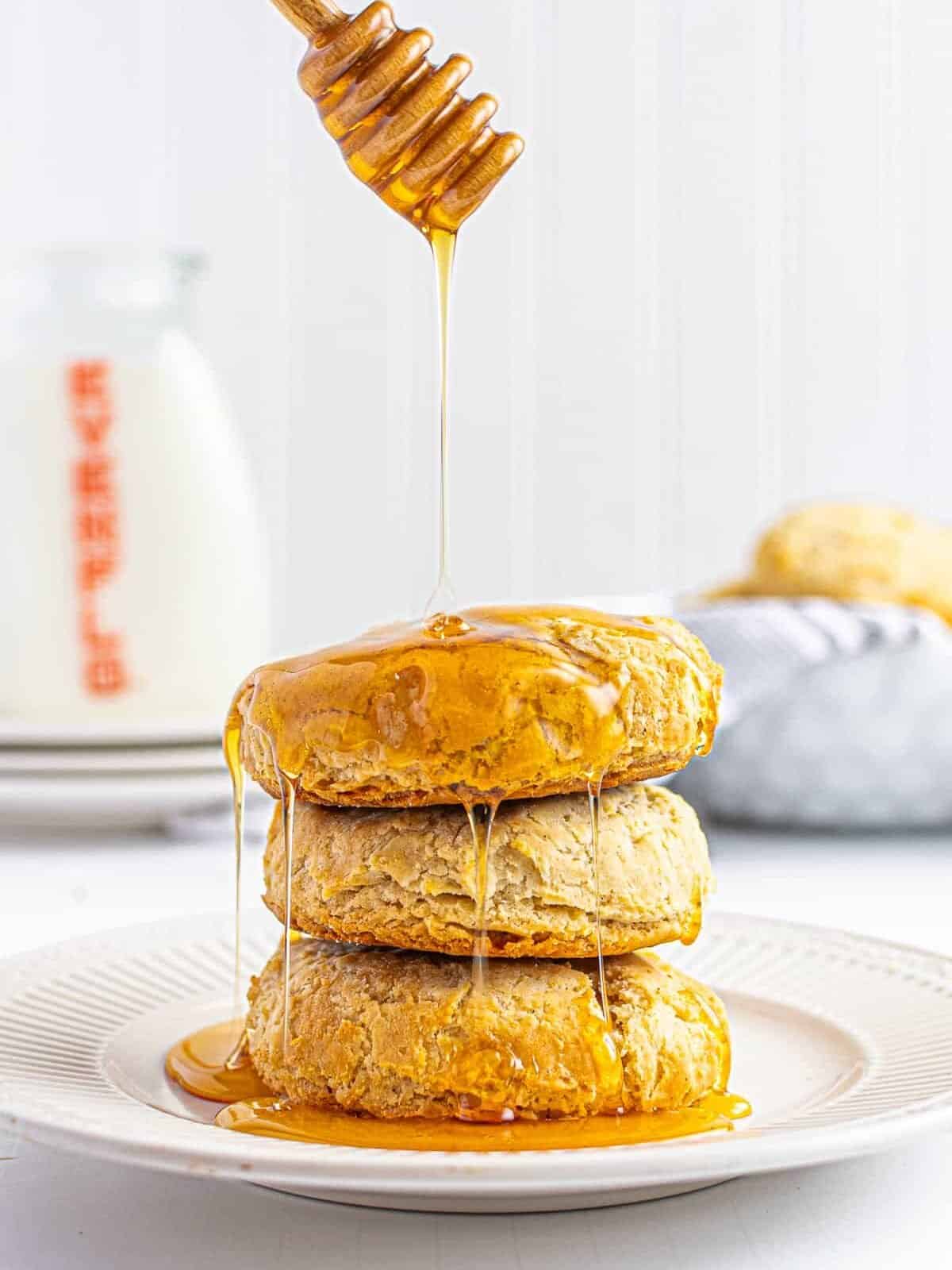
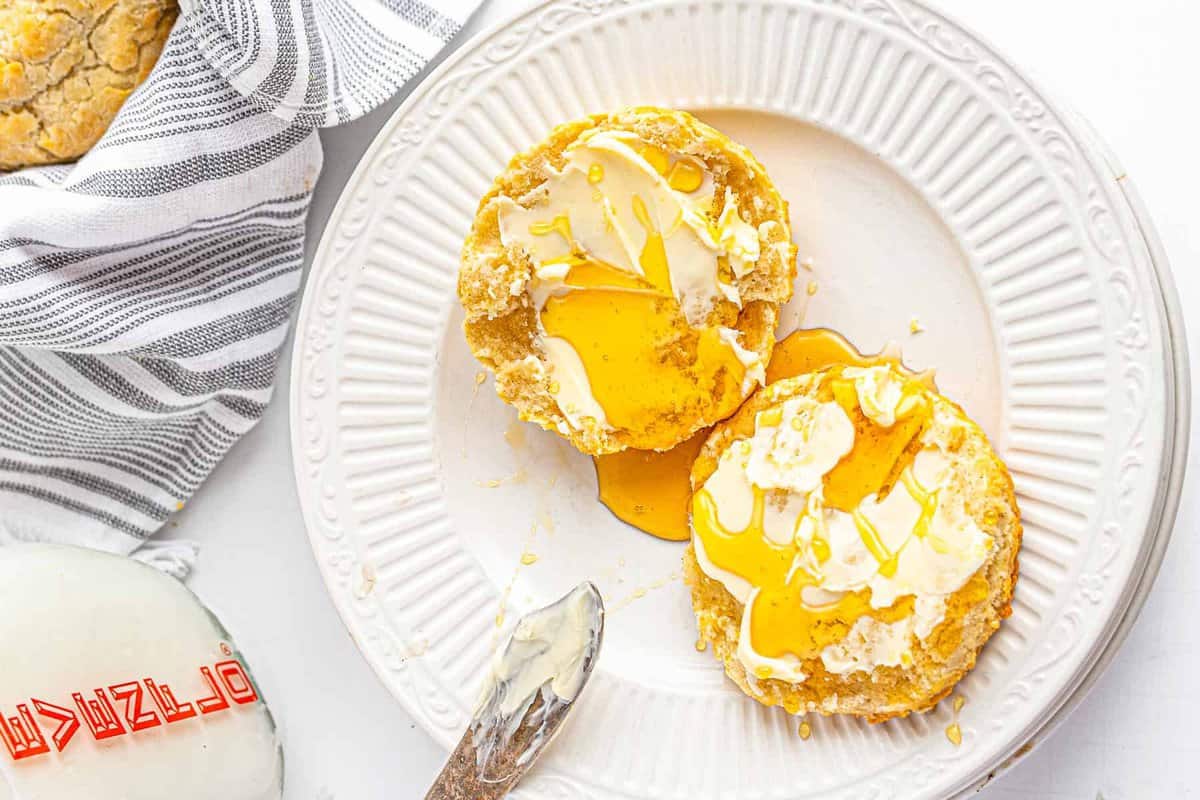
I love to enjoy these on their own with butter and a drizzle of honey, but you can easily serve these as a side with some of your favorite dishes:
- Crockpot Chili
- Red Wine Beef Stew
- Whole Roast Chicken with Herbs de Provence
- Crock Pot Ribs
- Roast Turkey Breast
- Honey Baked Ham
- Buttermilk Fried Chicken
Ingredients1x2x3x
- ▢ 3 cups all-purpose 1:1 gluten-free flour 444 grams, plus more for dusting (such as Bob’s Red Mill, Cup4Cup, King Arthur)
- ▢ 4 teaspoons baking powder 16 grams
- ▢ 1½ teaspoons kosher salt 5 grams
- ▢ ¼ teaspoon baking soda
- ▢ ½ cup unsalted butter 113 grams, cold and cubed (1 stick)
- ▢ 1¼ cups buttermilk 284 grams, chilled (see note)
Instructions
- Preheat the oven to 400°F. Spray a baking sheet with nonstick spray and set aside.
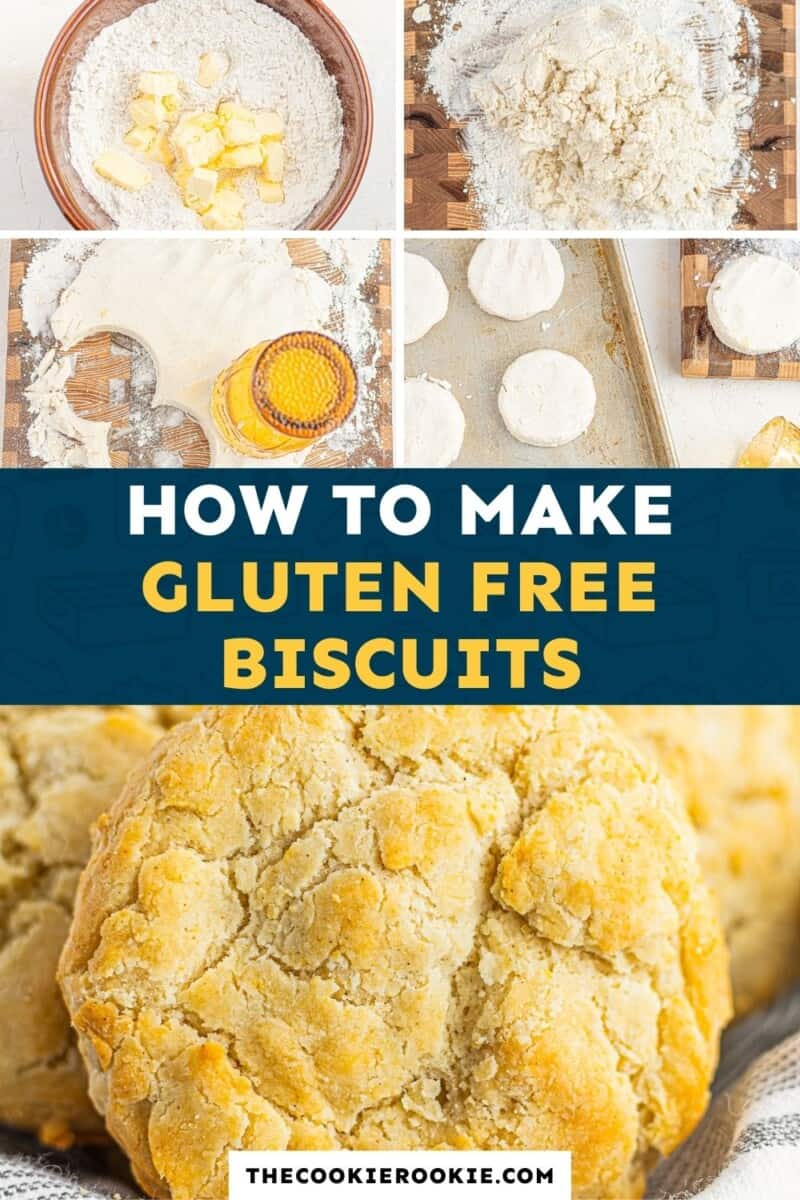
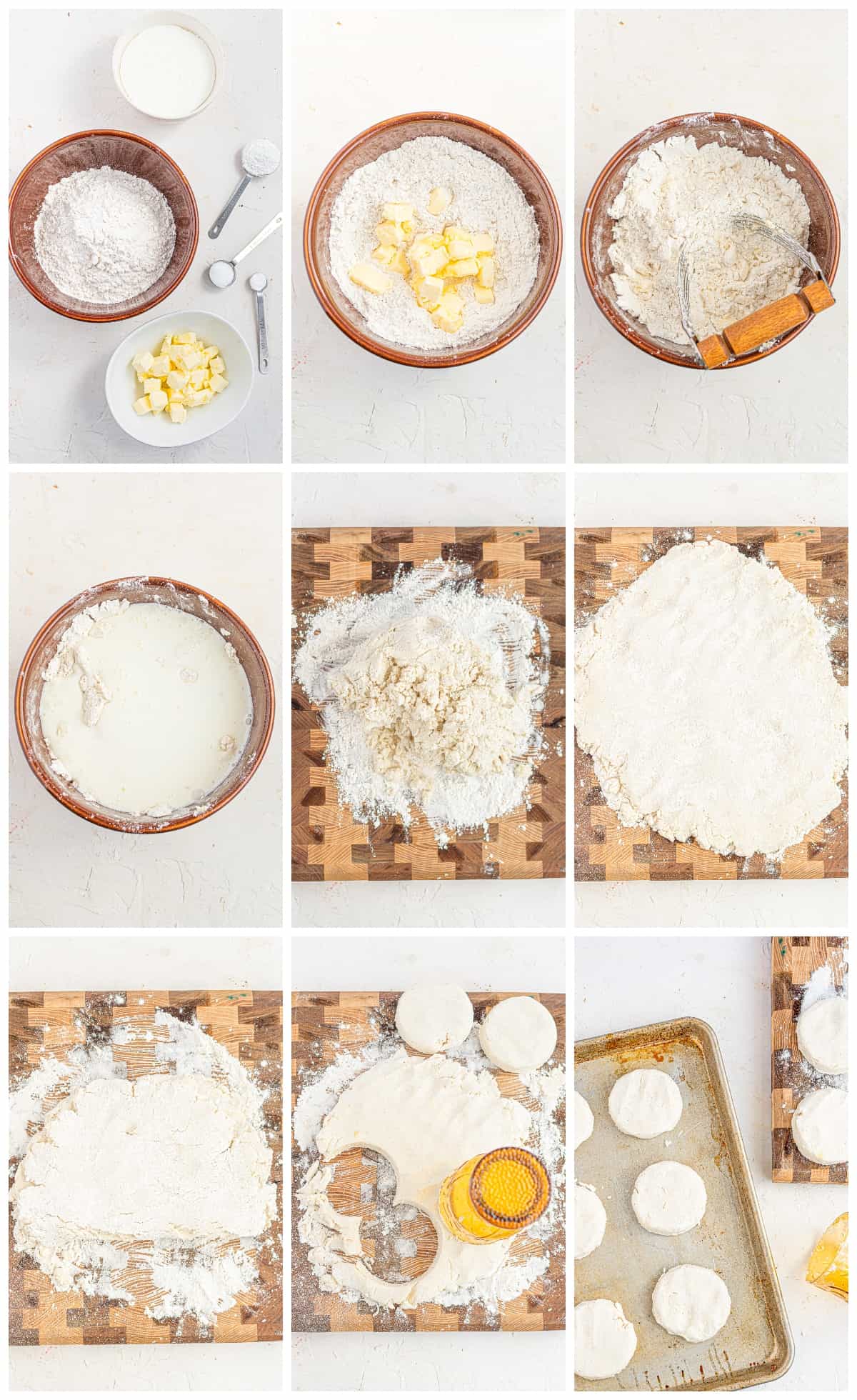
- In a medium bowl, mix the gluten free flour blend, baking powder, salt, and baking soda together. Using a pastry cutter or your hands, cut the butter into the flour mixture until it resembles crumbs. Mix in the buttermilk until it forms a shaggy dough. 3 cups all-purpose 1:1 gluten-free flour, 4 teaspoons baking powder, 1½ teaspoons kosher salt, ¼ teaspoon baking soda, ½ cup unsalted butter, 1¼ cups buttermilk
- Sprinkle a cutting board or a flat surface with gluten free flour and turn the biscuit dough out onto it and knead just until it is fully combined. Using your hands or a rolling pin, flatten dough into a ½ inch thick rectangle, sprinkle it with just a little bit of flour (too much flour will cause the layers to fall apart later). Fold the dough back on itself and press together and out again into another rectangle this time about 1 inch thick. Repeat the sprinkle of flour and folding the dough one more time and roll it out about 2 inches thick. This helps create layers in the biscuits.
- Using a cup or a biscuit cutter, press straight down into the dough to cut out biscuits. Do not rock the cup or biscuit cutter side to side when cutting the biscuits, as it will seal the layers closed. Place the biscuits onto the prepared baking sheet and place in the oven to bake for 18-20 minutes, or until the biscuits have browned.
- Remove from the oven and serve immediately. Enjoy with gluten free gravy, jam, or butter and honey!
Equipment
- Kitchen Scale (optional)
- Baking Sheet
- Rolling Pin (optional)
Becky’s Tips
- Buttermilk: If you don’t have buttermilk, follow this simple homemade buttermilk recipe .
- If you are not gluten intolerant, you can make these biscuits with all-purpose flour.
- The butter should be cold before you add it to the other ingredients, as should the buttermilk.
- Bake the biscuits in a fully preheated oven.
Nutrition information is automatically calculated, so should only be used as an approximation.
MoreGluten Free RecipesWe Love
- Gluten Free Chocolate Chip Cookies
- Gluten Free Brownies
- Gluten Free Pancakes
- Gluten Free Lemon Bars
- Gluten Free Carrot Cake Bars

Gluten Free Buttermilk Biscuits Recipe
Equipment
- Kitchen Scale (optional)
- Baking Sheet
- Rolling Pin (optional)
Ingredients
- 3 cups all-purpose 1:1 gluten-free flour 444 grams, plus more for dusting (such as Bob’s Red Mill, Cup4Cup, King Arthur)
- 4 teaspoons baking powder 16 grams
- 1½ teaspoons kosher salt 5 grams
- ¼ teaspoon baking soda
- ½ cup unsalted butter 113 grams, cold and cubed (1 stick)
- 1¼ cups buttermilk 284 grams, chilled (see note)
Instructions
- Preheat the oven to 400°F. Spray a baking sheet with nonstick spray and set aside.
- In a medium bowl, mix the gluten free flour blend, baking powder, salt, and baking soda together. Using a pastry cutter or your hands, cut the butter into the flour mixture until it resembles crumbs. Mix in the buttermilk until it forms a shaggy dough. 3 cups all-purpose 1:1 gluten-free flour, 4 teaspoons baking powder, 1½ teaspoons kosher salt, ¼ teaspoon baking soda, ½ cup unsalted butter, 1¼ cups buttermilk
- Sprinkle a cutting board or a flat surface with gluten free flour and turn the biscuit dough out onto it and knead just until it is fully combined. Using your hands or a rolling pin, flatten dough into a ½ inch thick rectangle, sprinkle it with just a little bit of flour (too much flour will cause the layers to fall apart later). Fold the dough back on itself and press together and out again into another rectangle this time about 1 inch thick. Repeat the sprinkle of flour and folding the dough one more time and roll it out about 2 inches thick. This helps create layers in the biscuits.
- Using a cup or a biscuit cutter, press straight down into the dough to cut out biscuits. Do not rock the cup or biscuit cutter side to side when cutting the biscuits, as it will seal the layers closed. Place the biscuits onto the prepared baking sheet and place in the oven to bake for 18-20 minutes, or until the biscuits have browned.
- Remove from the oven and serve immediately. Enjoy with gluten free gravy, jam, or butter and honey!
Notes
- Buttermilk: If you don’t have buttermilk, follow this simple homemade buttermilk recipe .
- If you are not gluten intolerant, you can make these biscuits with all-purpose flour.
- The butter should be cold before you add it to the other ingredients, as should the buttermilk.
- Bake the biscuits in a fully preheated oven.
Nutrition
By Becky Hardin
Published Jul 12, 2017
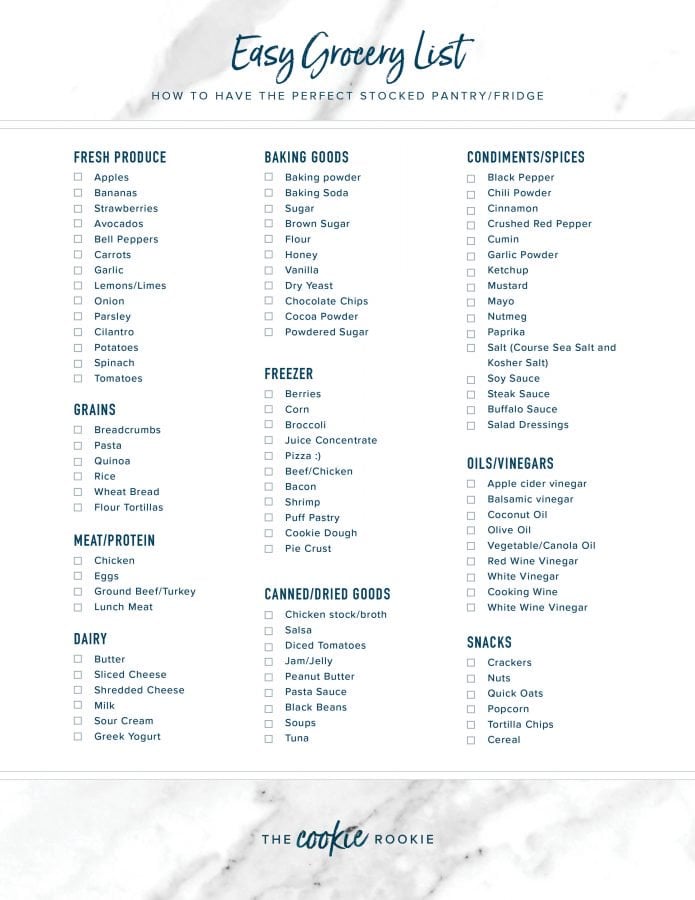
This Essential Grocery List is an absolute life saver for my family on the busy weeks. When I started this journey to learn how to cook, I quickly realized that the first step in cooking is having staple ingredients on hand. I want to avoid having to run out to the grocery store every single time I prepare a new recipe. Having a well-stocked pantry has made my life in the kitchen so much simpler, because when it’s time to cook, I have what I need.
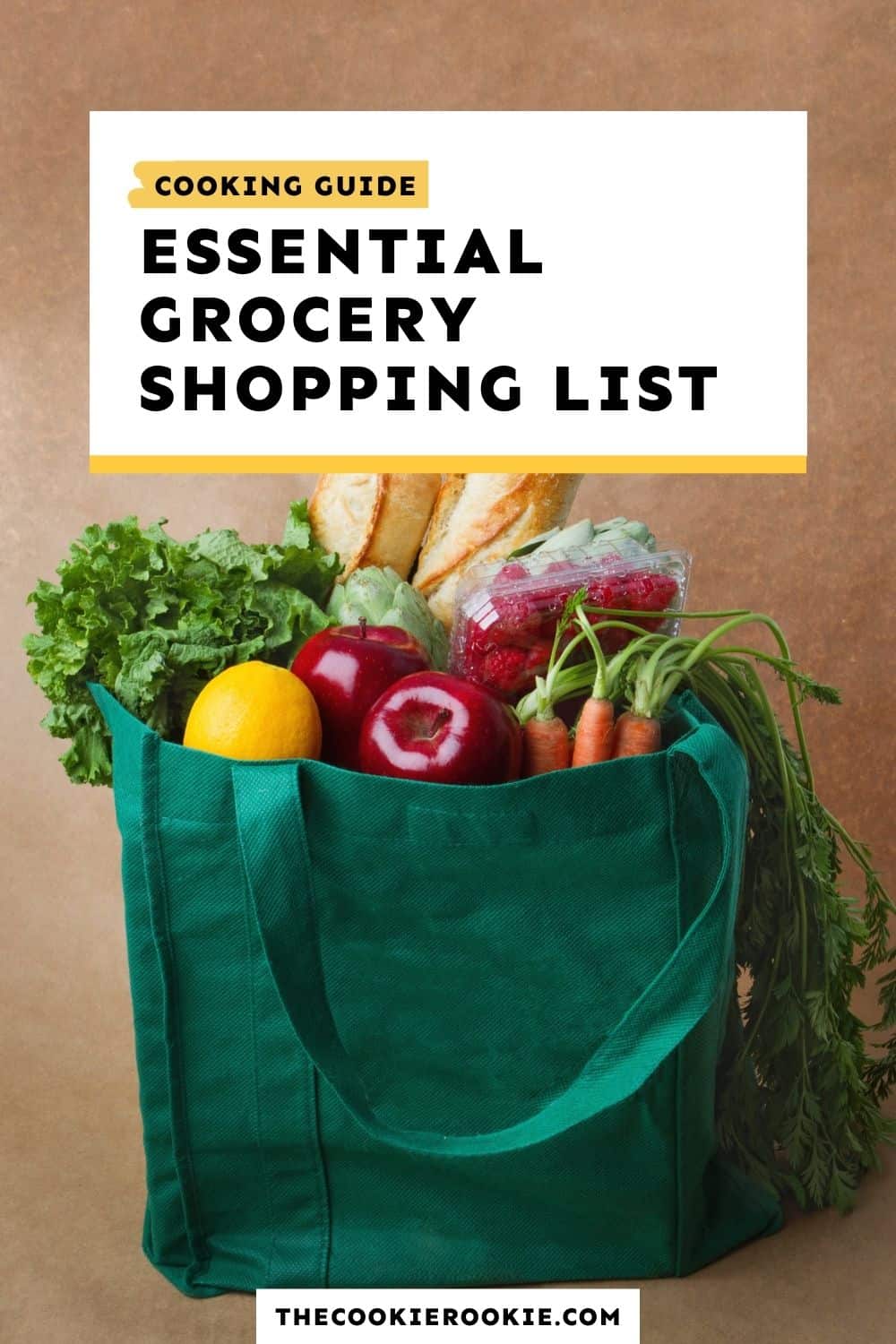
Essential Grocery List
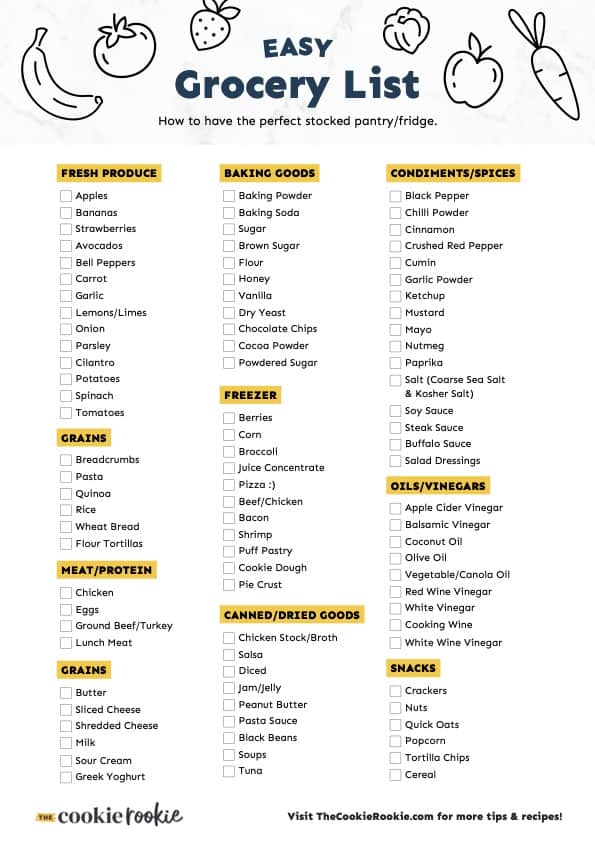
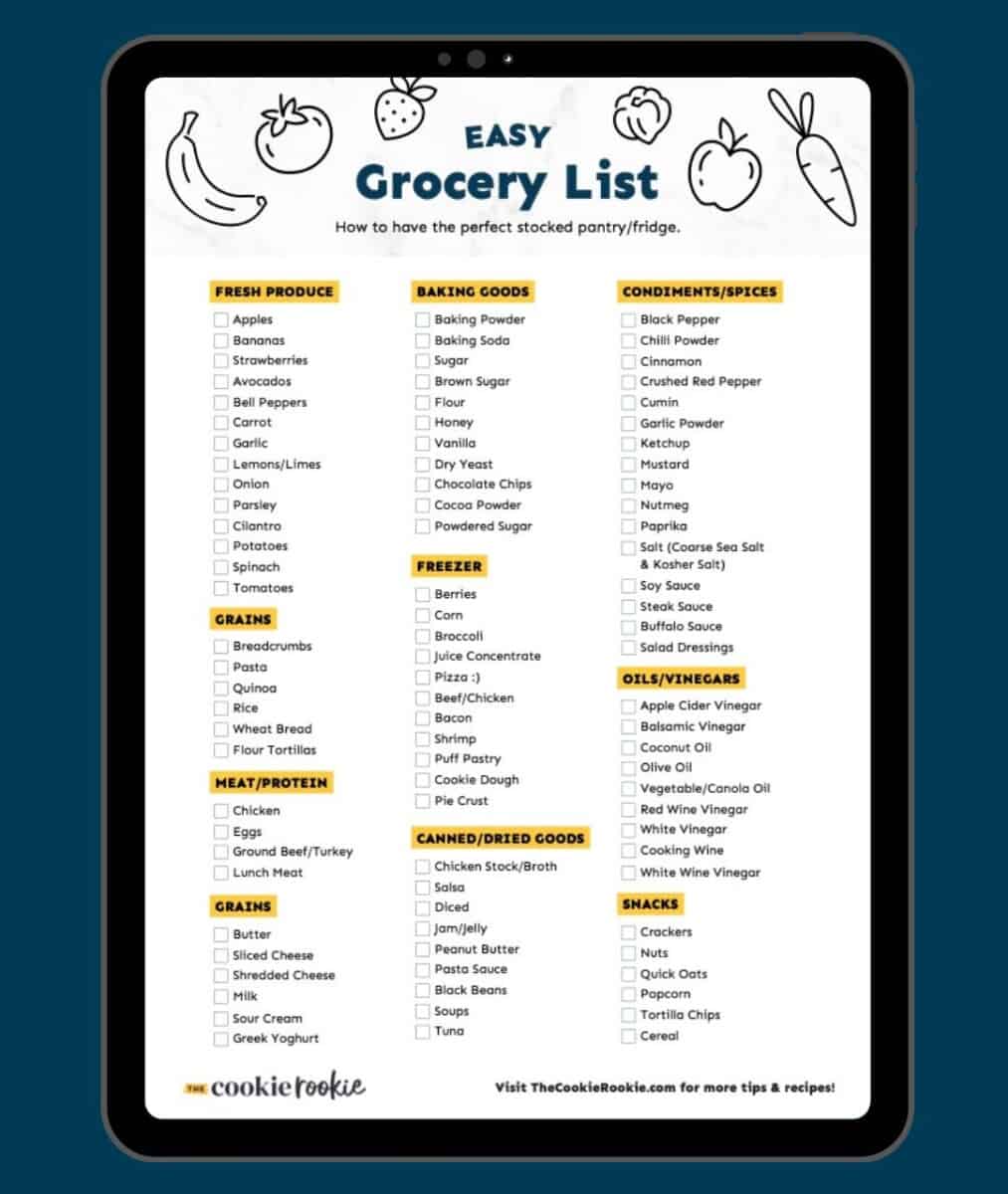
It’s so helpful to have a basic grocery list to help me remember which foods to buy at the store. This food shopping list is my go-to!
It’s better to stock up on things like grains, seasonings and spices, baking essentials, oils, condiments, canned and frozen foods, etc. so I can just grab them when I need them. These things have a long shelf life , so I keep them in my kitchen for convenience.
However, I do have to go to the supermarket sometimes, and there’s a way to make that trip easy and hassle-free: I keep a grocery list! If I go in blindly, I’ll leave with things I don’t need, and nothing that actually helps me prepare a good meal.
In the list below, I’ve compiled everything I always have on my stock-up grocery list.
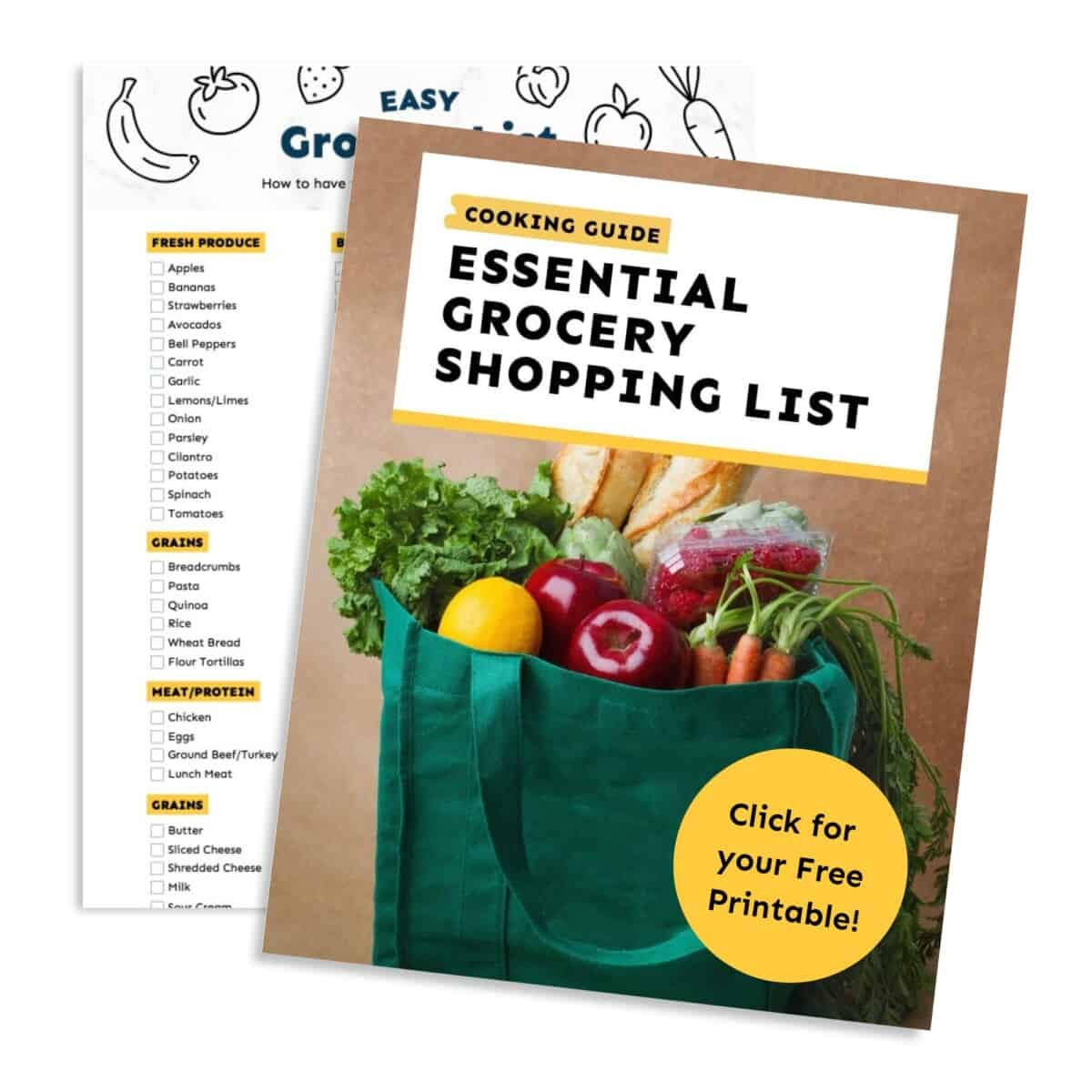
I’ve got you covered! I created an easy grocery list filled with all of the essentials. Plus there’s a free printable version that you can take with you to the grocery store. It has everything you need to stock your pantry, your freezer, and your refrigerator.
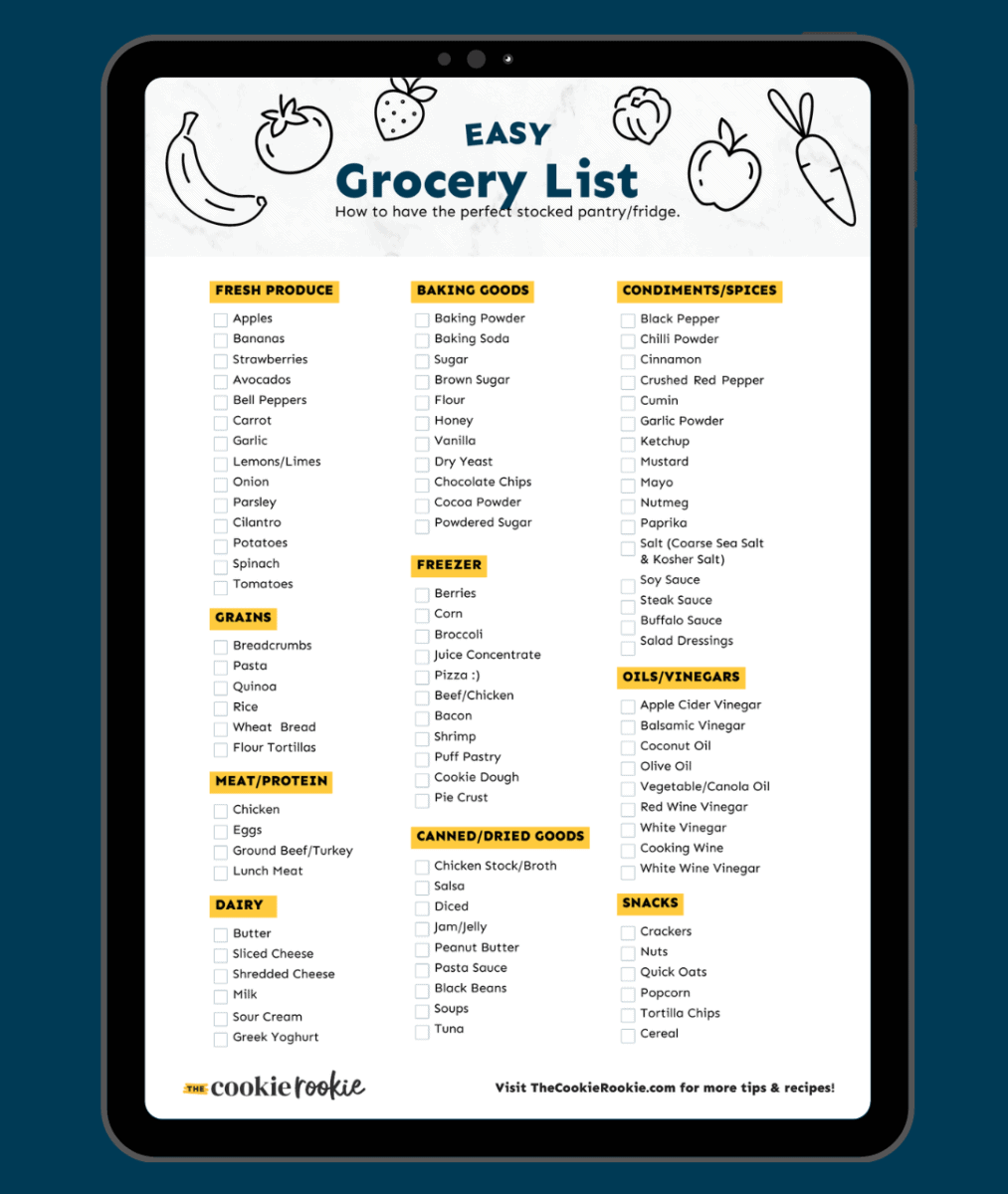
Click to get my Free Printable Grocery List
What to Buy at the Grocery Store
This is the perfect grocery list filled with all the basics and essentials. It should help get you going if you’re new to cooking, or if you’re just left staring helplessly at an empty pantry and don’t know how to fill it.
When I first started cooking, things could seem overwhelming. I quickly realized that they more prepared I could be, the more confident I felt. If you already have the basics in your kitchen, then you can shop stress-free.
So print out our easy grocery list, stock up your pantry and fridge, and you’ll be cooking in no time!
Click to get my Free Printable Grocery List for the perfectly stocked pantry and freezer!
Fresh Produce
- Apples
- Bananas
- Strawberries
- Avocados
- Bell Peppers
- Carrots
- Broccoli
- Garlic
- Lemons/Limes
- Onion
- Parsley
- Cilantro
- Basil
- Potatoes
- Spinach
- Tomatoes
GRAINS
- Breadcrumbs
- Pasta
- Quinoa
- Rice
- Sandwich Bread
- Tortillas
MEAT/PROTEIN
- Chicken
- Eggs
- Ground Beef
- Sliced Turkey
- Lunch Meat
DAIRY
- Butter
- Sliced Cheese
- Shredded Cheese
- Milk
- Sour Cream
- Greek Yogurt
BAKING GOODS
- Baking powder
- Baking Soda
- Granulated Sugar
- Brown Sugar
- Flour
- Honey
- Vanilla Extract
- Dry Yeast
- Chocolate Chips
- Cocoa Powder
- Powdered Sugar
FREEZER
- Fruit and Berries
- Frozen Veggies (Corn, Peas, Broccoli, etc)
- Juice Concentrate
- Pizza or Other Convenience Meals
- Pie Crust
- Cookie Dough
CANNED/DRIED GOODS
- Chicken stock/broth
- Salsa
- Diced Tomatoes
- Jam/Jelly
- Peanut Butter
- Pasta Sauce
- Beans (Black Beans, Chickpeas, Baked Beans, etc)
- Soups
- Tuna
- Green Chiles
- Canned Veggies
- Coffee or Tea
Get more details on the best non-perishable and pantry foods
CONDIMENTS/SPICES
- Black Pepper
- Chili Powder
- Cinnamon
- Crushed Red Pepper
- Cumin
- Garlic Powder
- Ketchup
- Mustard
- Mayo
- Nutmeg
- Paprika
- Salt (Course Sea Salt and Kosher Salt)
- Soy Sauce
- Steak Sauce
- Hot Sauce/ Buffalo Sauce
- Salad Dressings
OILS/VINEGARS
- Apple cider vinegar
- Balsamic vinegar
- Coconut Oil
- Olive Oil
- Vegetable/Canola Oil
- Red Wine Vinegar
- White Vinegar
- Cooking Wine
- White Wine Vinegar
SNACKS
- Crackers
- Nuts
- Quick Oats
- Popcorn
- Tortilla Chips
- Cereal
Click to get my Free Printable Grocery List for the perfectly stocked pantry and freezer!
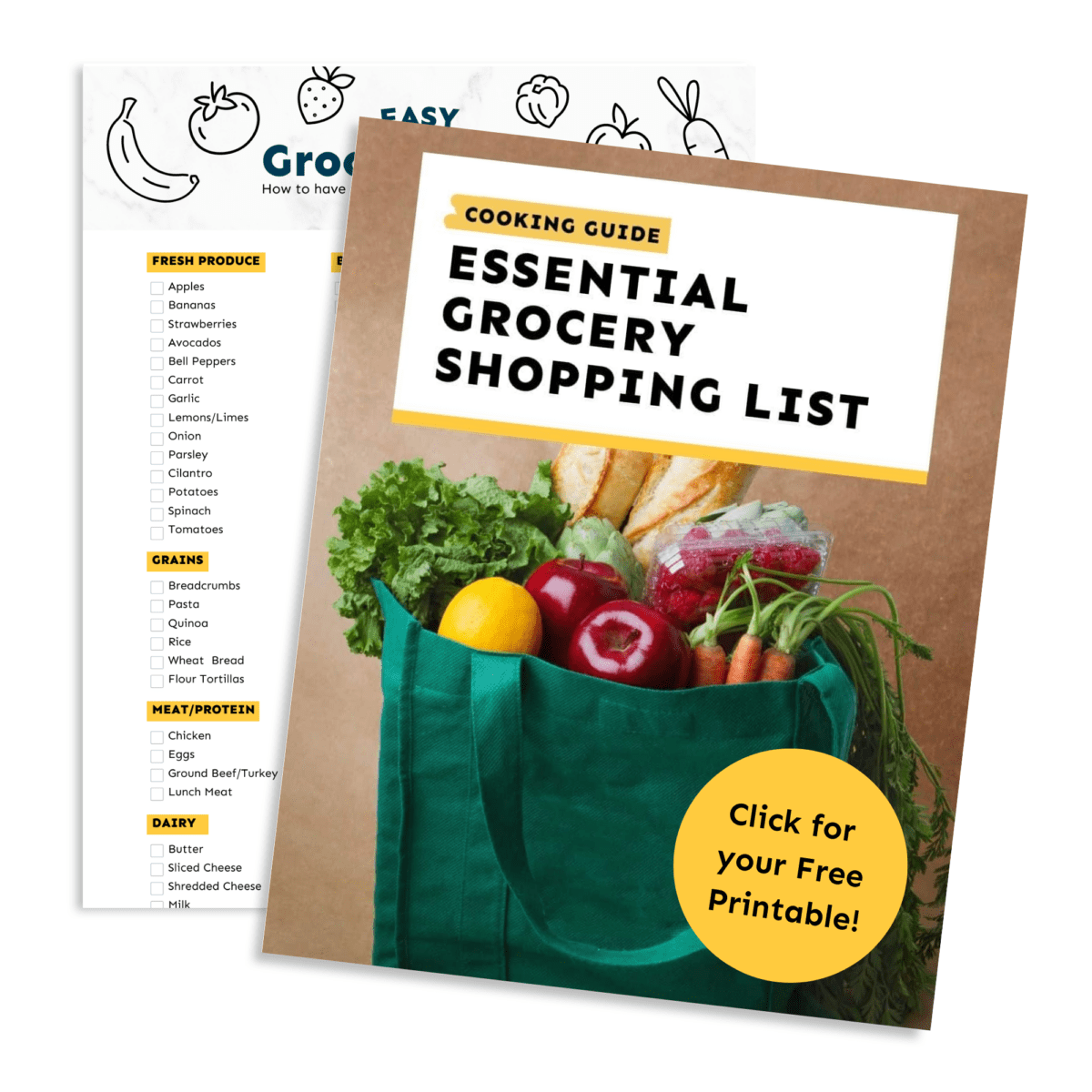
Click ☝🏻 for my FREE Grocery List Printable!
I hope this essential grocery list can help you buy what you need and make your home cooking so much easier!
Stock Your Kitchen
Find more ideas for your grocery list, stock up your kitchen, and print more cooking guides and charts to keep handy!
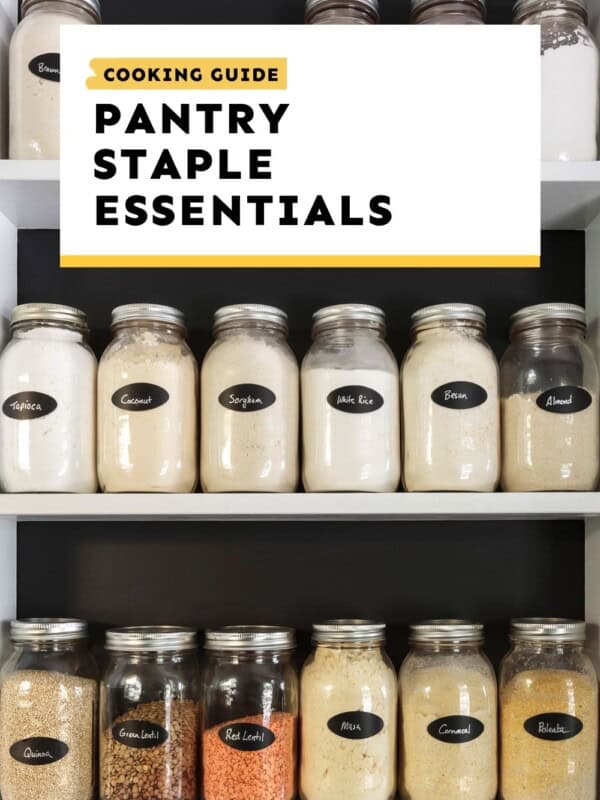
Non-Perishable Foods to Stock Up On
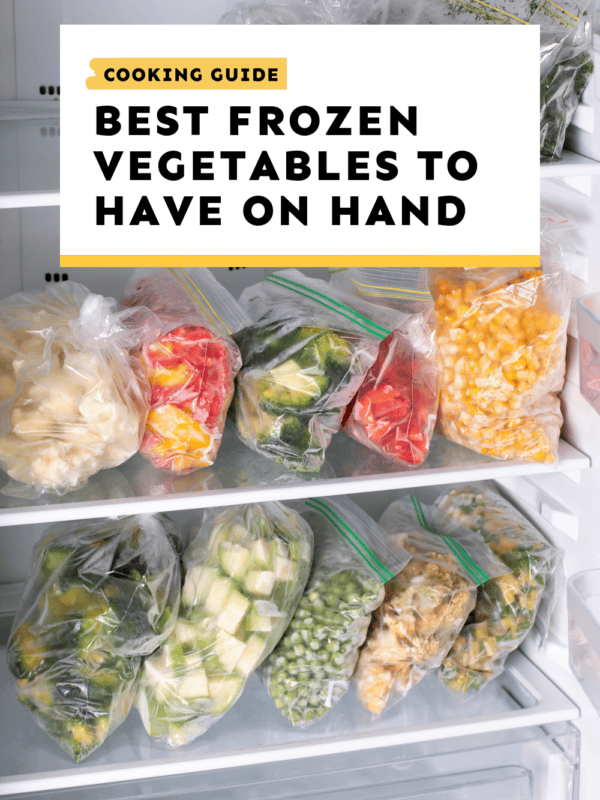
Frozen Vegetables to Stock Up On (and Recipes to Make)
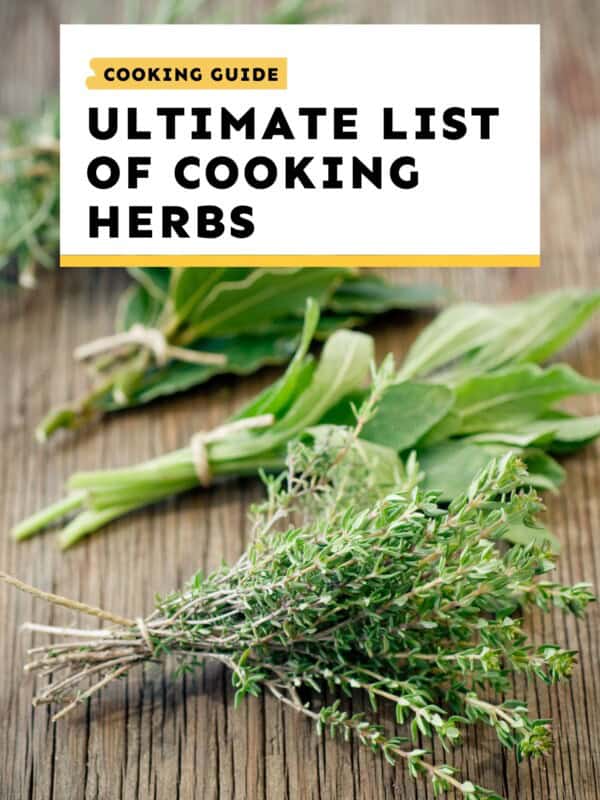
Ultimate List of Cooking Herbs for Your Kitchen
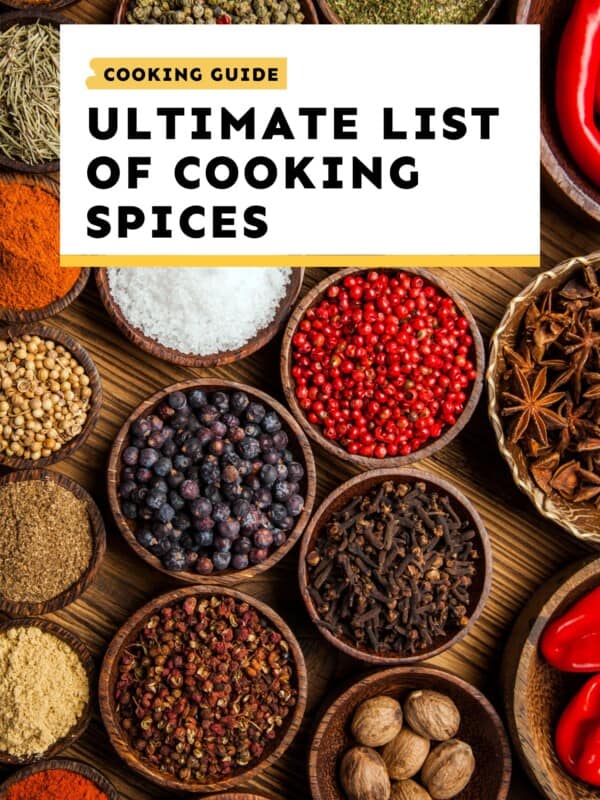
Ultimate List of Cooking Spices for Your Kitchen
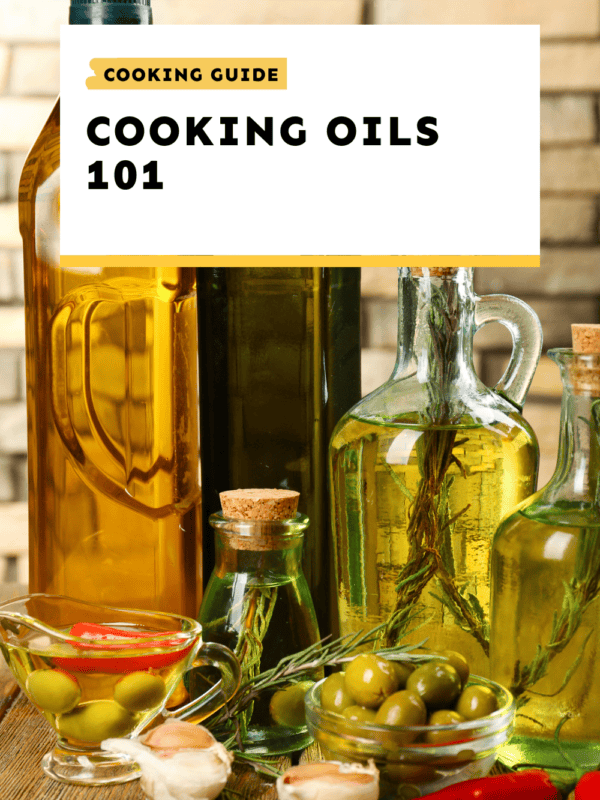
Cooking Oil 101: Types of Cooking Oils to Use
26 Types of Pasta and When to Use Them
What Fruits and Vegetables are in Season?
Meat Temperature Chart (Free Printable)
How to Meal Prep (Guide for Beginners)
Basic Cooking Measurements & Kitchen Conversion Chart