By Becky Hardin
Published Oct 7, 2022
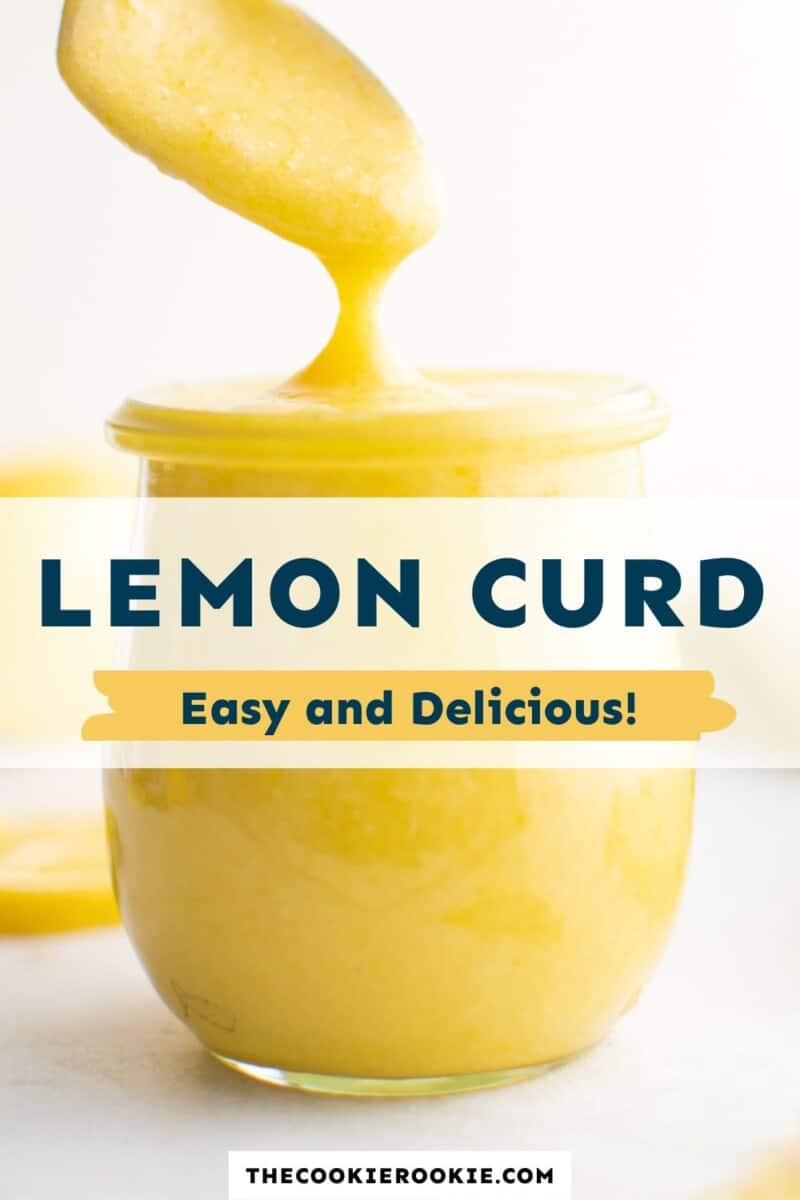
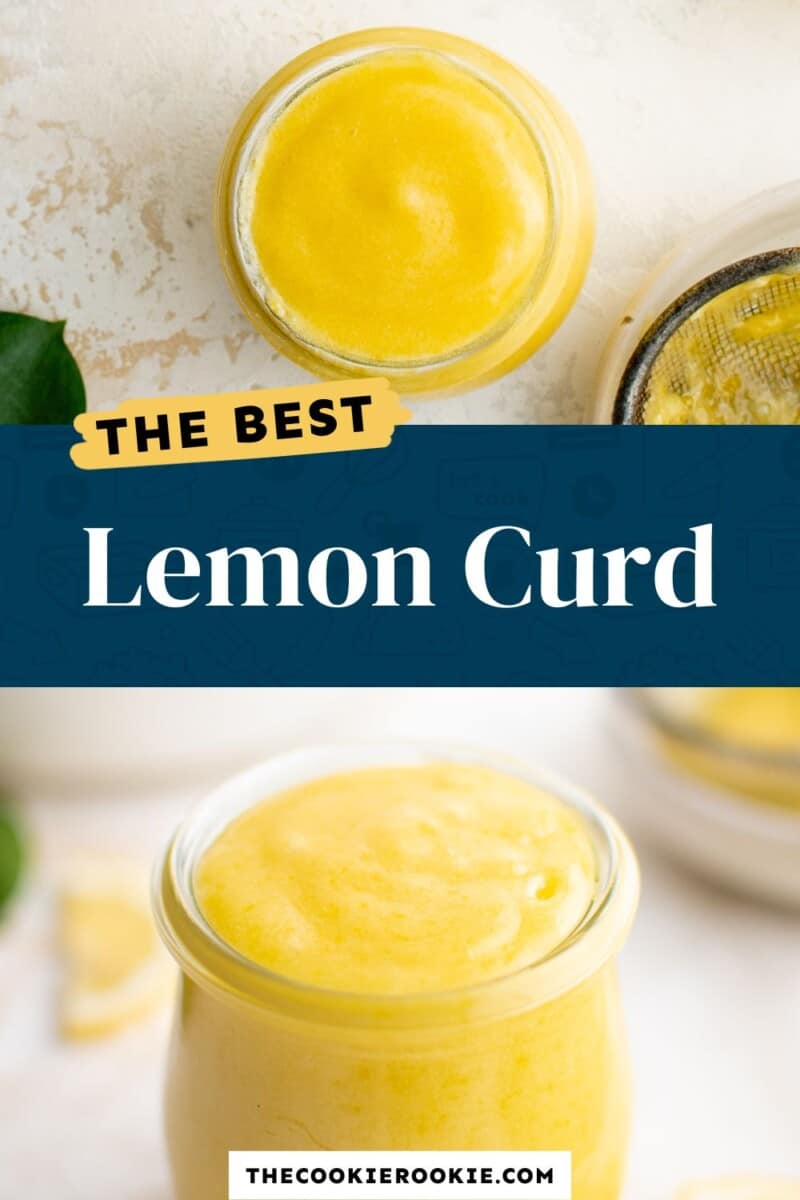
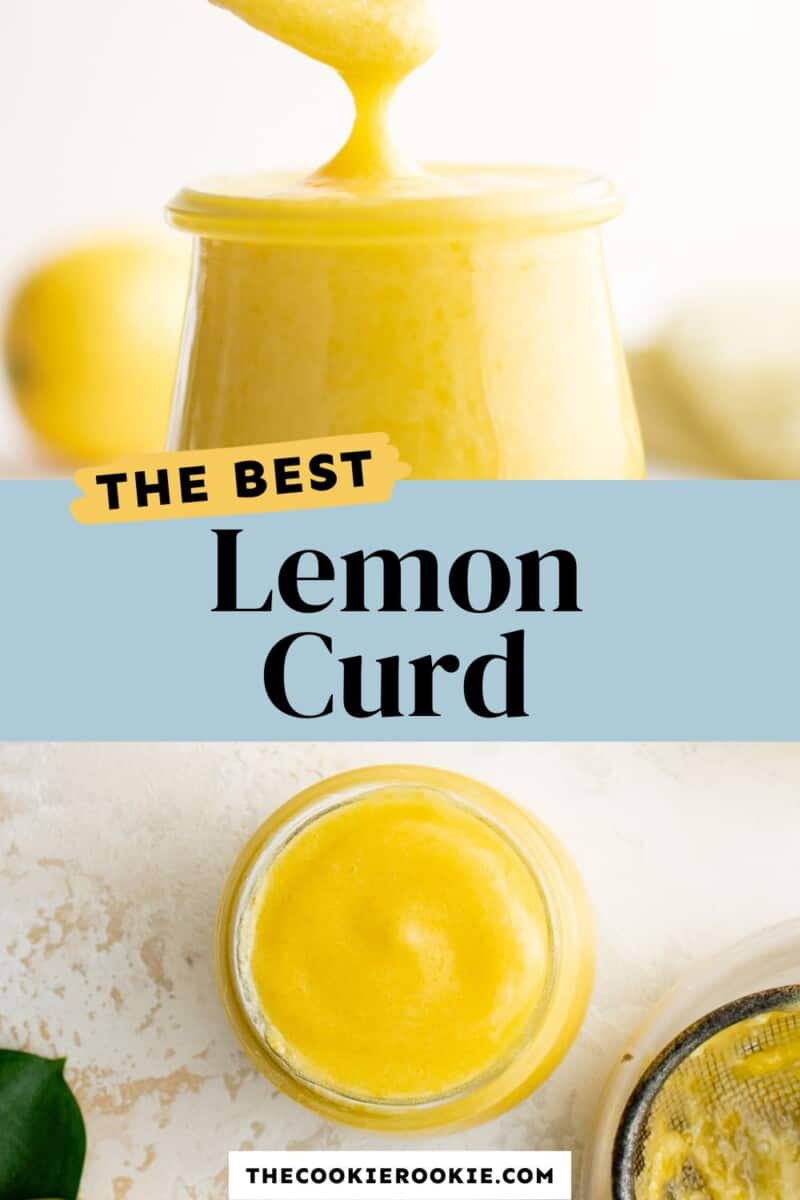
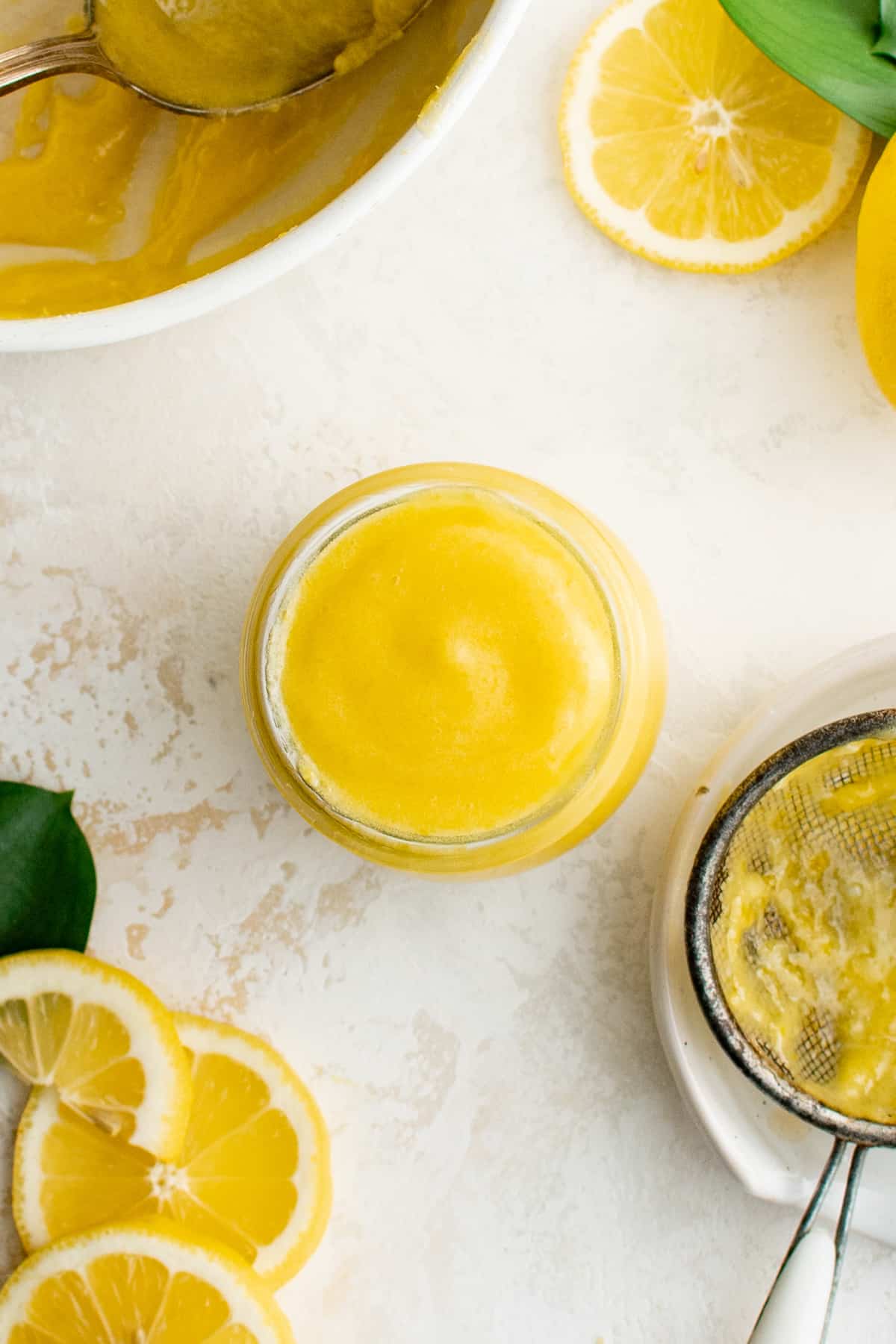
Sweet and tangy, this homemade lemon curd recipe is a must make! Easy to make with fresh lemons, it’s perfect to use in your favorite baking recipes, or as a delicious spread.
Simple Recipe for Homemade Lemon Curd
Ever since I can remember, a jar of lemon curd has been a staple in my pantry! It’s perfect to use in baking recipes, and my favorite thing is to spread it on a freshly baked scone!
Making homemade lemon curd is so easy, and it has a fresher and zingier flavor compared to store bought. This recipe is simple to master, and you’ll be making it time and time again!
If you love the bright, citrus-y flavor of lemons, this recipe is a no brainer! All made in one pot on the stovetop, it comes together quickly and easily.
Ingredients1x2x3x
- ▢ 1 cup granulated sugar 200 grams
- ▢ ½ cup lemon juice 114 grams (from 4 lemons), plus more as needed
- ▢ 1 large egg 50 grams
- ▢ 4 egg yolks 56 grams
- ▢ 3 tablespoons unsalted butter 42 grams
- ▢ 2 teaspoons lemon zest 4 grams, from 1 lemon
Instructions
- Whisk the sugar, lemon juice, egg, and egg yolks together in a medium saucepan set over medium heat and continue whisking for 5 minutes. 1 cup granulated sugar, ½ cup lemon juice, 1 large egg, 4 egg yolks
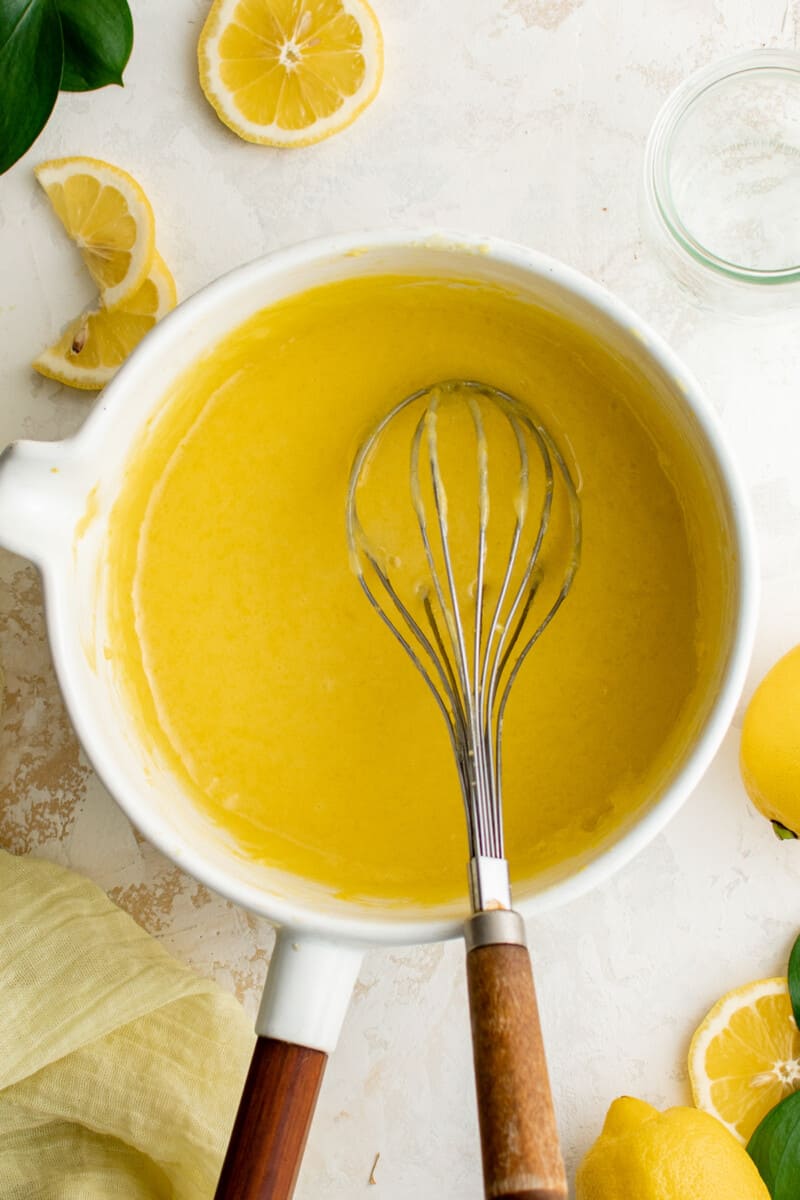
- Stir in the butter and lemon zest until melted and continue to whisk until it thickens enough to coat the back of a wooden spoon or spatula, about 15 minutes. 3 tablespoons unsalted butter, 2 teaspoons lemon zest
- Strain it through a fine mesh sieve if you don’t want the lemon zest in the curd.
- Serve on pancakes, oatmeal, or even over scones if desired.
Equipment
- Kitchen Scale (optional)
- Fine Mesh Sieve (optional)
Becky’s Tips
- You can reduce or increase the sugar to your personal tastes.
- Add an extra egg yolk for an even richer, thicker curd.
- Feel free to add more butter for a richer curd.
- For a dairy-free lemon curd , you can even leave the butter out entirely. A dairy-free lemon curd will be thicker and have a matte finish.
- You can make a curd with other citrus fruits, such as grapefruit, lime, orange, or Meyer lemon. Use an equal amount of the juice and zest of your chosen fruit.
- Use fresh lemon juice. Bottled lemon juice tends to be too acidic and can lead to a bitter curd.
- Be sure to cook the curd low and slow. High heat will scramble the eggs, leading to a lumpy curd.
- If the heat seems too high, you can cook the curd in a double boiler.
- Whisk constantly to ensure the eggs cook evenly and don’t scramble.
- The curd is cooked when it is noticeably thick and coats the back of a wooden spoon.
- The curd will thicken up more as it cools, so it’s important to let it cool completely before using.
- Once cool, place a piece of plastic wrap directly onto the surface of the curd to prevent a skin from forming on top.
Nutrition information is automatically calculated, so should only be used as an approximation.
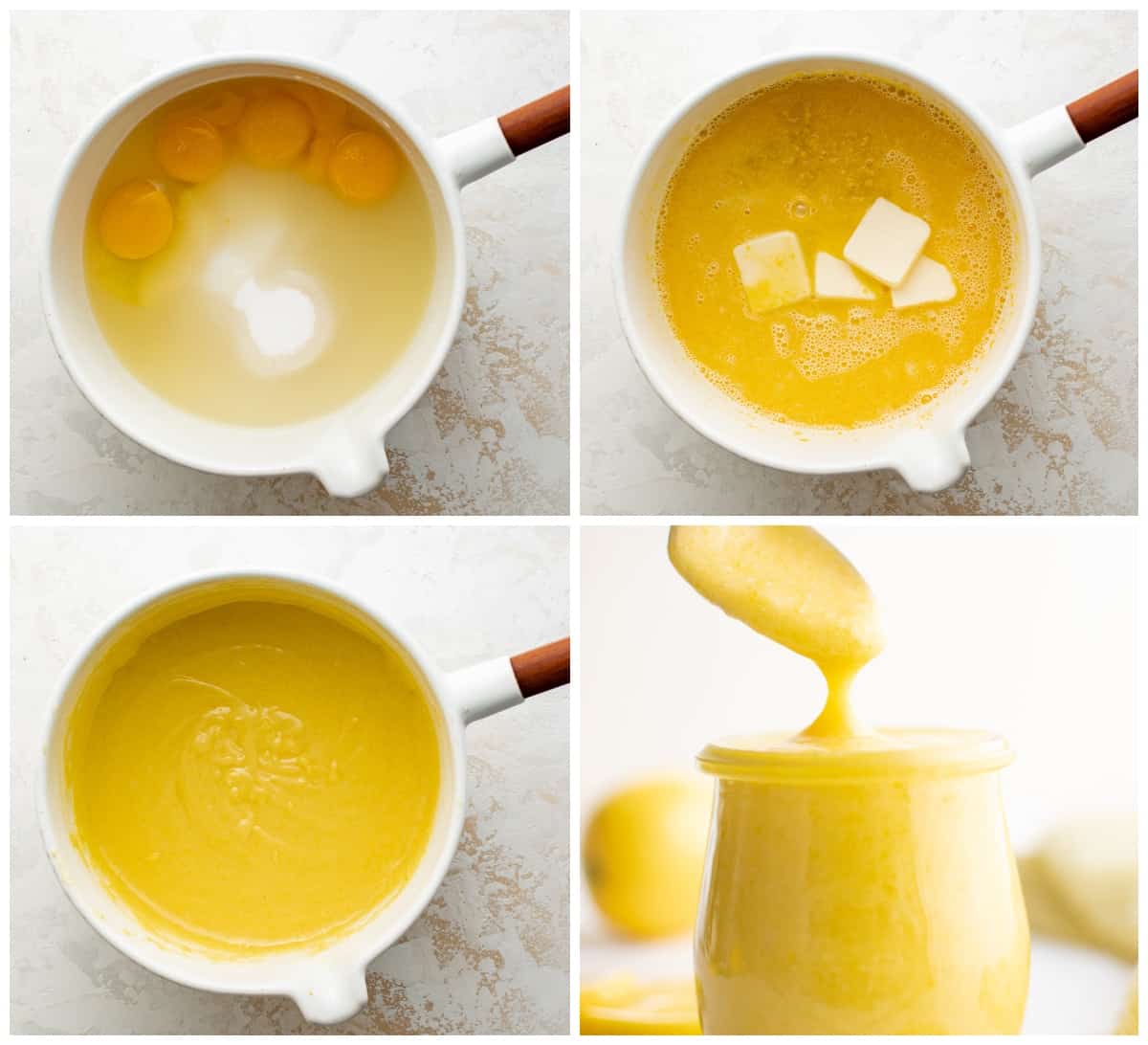
How to Make Lemon Curd
- Whisk together the sugar, lemon juice, and eggs over heat for 5 minutes.
- Stir in the butter and lemon zest.
- Whisk until it thickens.
- Strain if desired.
- Let it cool and store, or use as you please!
Ingredient Notes
- Lemon Juice: For the best results, use fresh-squeezed lemons, rather than bottled lemon juice.
- Eggs: Make sure that your eggs are fresh. (When you place them in a bowl of water, fresh eggs will sink to the bottom, while old eggs will float to the surface.)
Lemon curd is a mixture of sugar, eggs, lemon juice and zest, and butter. It has a creamy, custard-like texture, but is spreadable like a jam.
Lemon curd is incredibly versatile! It makes a great spread on pancakes, biscuits, muffins, or scones. It’s also great baked into lemon bars , pastries, or lemon meringue pies . You can even fold it into whipped cream or swirl it with ice cream.
There are recipes out there for microwave lemon curd, but I have not tested this recipe in the microwave.
Lemon curd may end up tasting metallic if it’s cooked in a metal saucepan. If you notice this, the lemon and eggs may be reacting with your pan. Try cooking your curd over a non-metal double boiler, such as glass or porcelain.
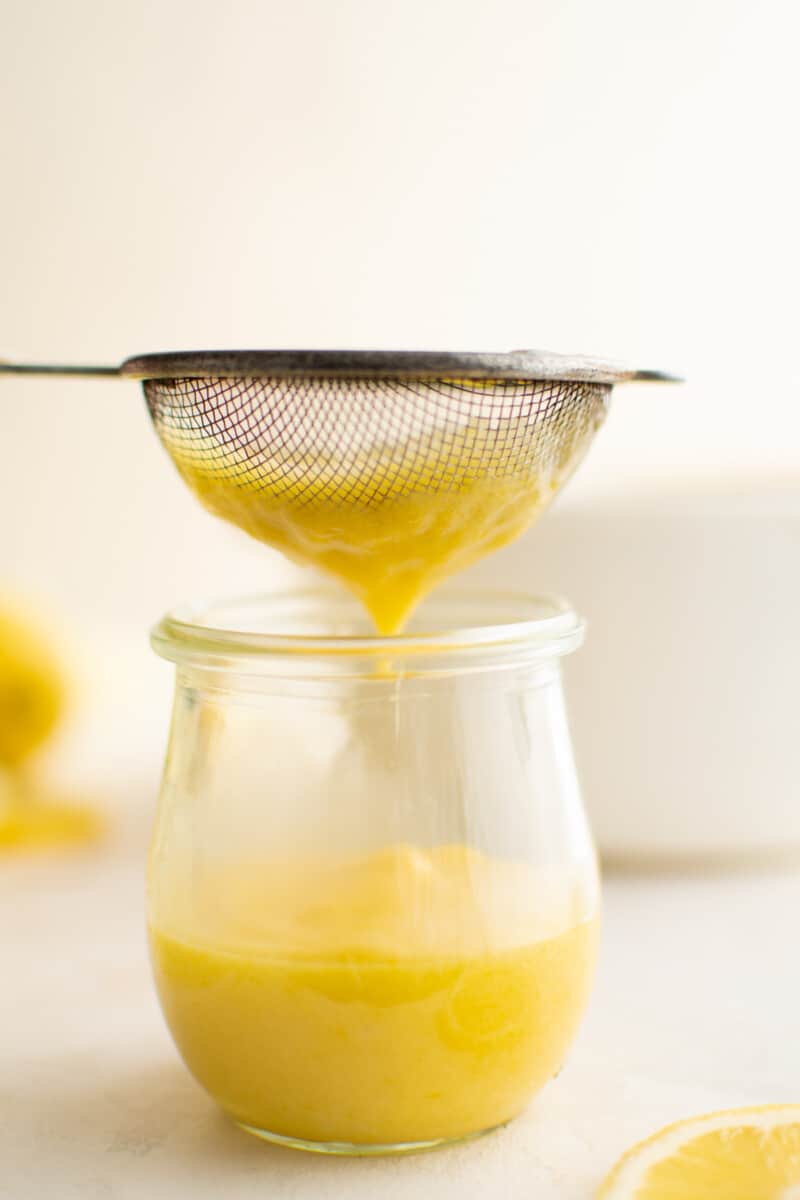
Straining is an optional step, but I highly recommend it because it removes the lemon zest and any overcooked egg, which can lead to a lumpy or gritty texture.
Lumps in your lemon curd are most likely due to the eggs overcooking in the mixture. Press the mixture through a fine-mesh sieve to remove the lumps. If your curd is still lumpy after straining, blend the mixture until smooth.
Lemon curd continues to thicken as it cools, so be sure to wait until it has cooled to judge whether or not it’s too thin. If your curd seems too thin after cooling, you can thicken it by adding a cornstarch slurry (1 tablespoon of cornstarch dissolved in 3 tablespoons of water). Heat the curd over low and stir in the cornstarch until it thickens.
Yes, you can freeze lemon curd in an airtight container for up to 3 months. Let it thaw overnight in the refrigerator before enjoying.
Make Ahead Instructions
Lemon curd is a great make ahead recipe. It lasts for up to 3 weeks in the refrigerator, so it can be made up to 2 weeks before you plan to use it.
Storage Instructions
Store leftover lemon curd in an airtight container in the refrigerator for up to 3 weeks. Enjoy cold or at room temperature.
Freezing Instructions
Freeze lemon curd in an airtight container for up to 3 months. Let thaw overnight in the refrigerator before enjoying.
Variations
- You can reduce or increase the sugar to your personal tastes.
- Add an extra egg yolk for an even richer, thicker curd.
- Feel free to add more butter for a richer curd.
- For a dairy-free lemon curd , you can even leave the butter out entirely. A dairy-free lemon curd will be thicker and have a matte finish.
- You can make a curd with other citrus fruits, such as grapefruit, lime, orange, or Meyer lemon. Use an equal amount of the juice and zest of your chosen fruit.
Tips for the Best Lemon Curd
- Use fresh lemon juice. Bottled lemon juice tends to be too acidic and can lead to a bitter curd.
- Be sure to cook the curd low and slow. High heat will scramble the eggs, leading to a lumpy curd.
- If the heat seems too high, you can cook the curd in a double boiler.
- Whisk constantly to ensure the eggs cook evenly and don’t scramble.
- The curd is cooked when it is noticeably thick and coats the back of a wooden spoon.
- The curd will thicken up more as it cools, so it’s important to let it cool completely before using.
- Once cool, place a piece of plastic wrap directly onto the surface of the curd to prevent a skin from forming on top.
This homemade lemon curd recipe is about to become your new favorite thing. Trust me, you’ll be using it on everything! Simple to make and delicious to eat, it’s perfectly smooth, sweet, and zingy. Be sure to try my Lemon Meringue Cake and Lemon Sauce too!
If you make this recipe be sure to upload a photo in the comment section below or leave a rating. Enjoy!
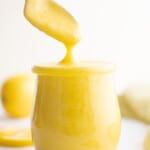
Lemon Curd Recipe
Equipment
- Kitchen Scale (optional)
- Fine Mesh Sieve (optional)
Ingredients
- 1 cup granulated sugar 200 grams
- ½ cup lemon juice 114 grams (from 4 lemons), plus more as needed
- 1 large egg 50 grams
- 4 egg yolks 56 grams
- 3 tablespoons unsalted butter 42 grams
- 2 teaspoons lemon zest 4 grams, from 1 lemon
Instructions
- Whisk the sugar, lemon juice, egg, and egg yolks together in a medium saucepan set over medium heat and continue whisking for 5 minutes. 1 cup granulated sugar, ½ cup lemon juice, 1 large egg, 4 egg yolks
- Stir in the butter and lemon zest until melted and continue to whisk until it thickens enough to coat the back of a wooden spoon or spatula, about 15 minutes. 3 tablespoons unsalted butter, 2 teaspoons lemon zest
- Strain it through a fine mesh sieve if you don’t want the lemon zest in the curd.
- Serve on pancakes, oatmeal, or even over scones if desired.
Notes
- You can reduce or increase the sugar to your personal tastes.
- Add an extra egg yolk for an even richer, thicker curd.
- Feel free to add more butter for a richer curd.
- For a dairy-free lemon curd , you can even leave the butter out entirely. A dairy-free lemon curd will be thicker and have a matte finish.
- You can make a curd with other citrus fruits, such as grapefruit, lime, orange, or Meyer lemon. Use an equal amount of the juice and zest of your chosen fruit.
- Use fresh lemon juice. Bottled lemon juice tends to be too acidic and can lead to a bitter curd.
- Be sure to cook the curd low and slow. High heat will scramble the eggs, leading to a lumpy curd.
- If the heat seems too high, you can cook the curd in a double boiler.
- Whisk constantly to ensure the eggs cook evenly and don’t scramble.
- The curd is cooked when it is noticeably thick and coats the back of a wooden spoon.
- The curd will thicken up more as it cools, so it’s important to let it cool completely before using.
- Once cool, place a piece of plastic wrap directly onto the surface of the curd to prevent a skin from forming on top.
Nutrition
By Becky Hardin
Published Jul 12, 2017
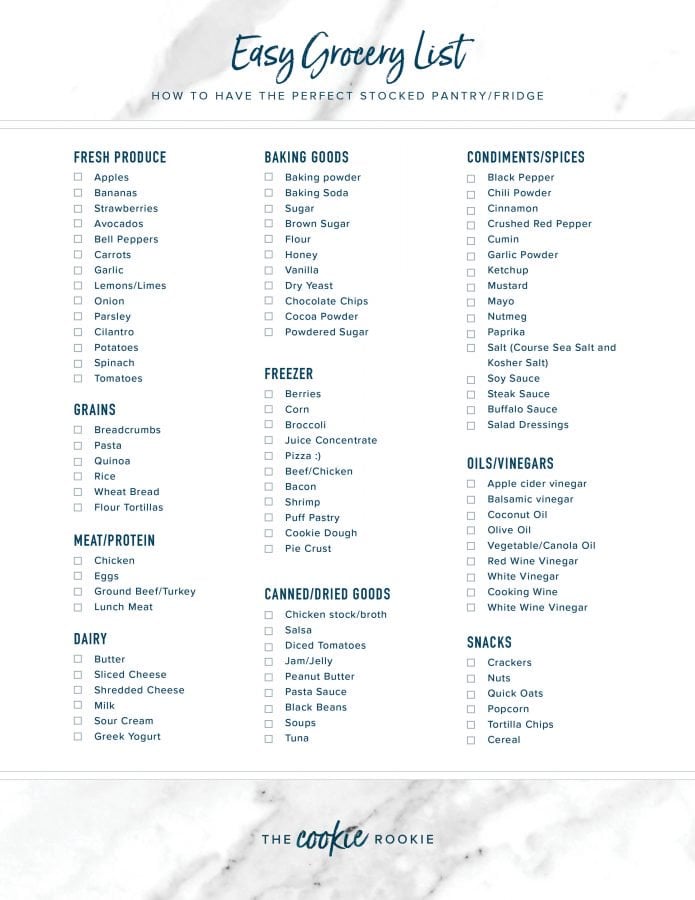
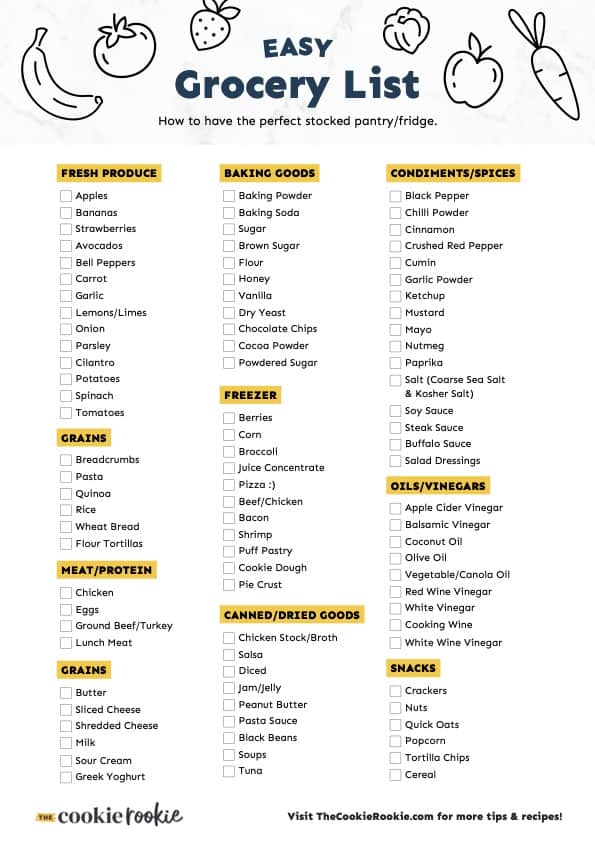
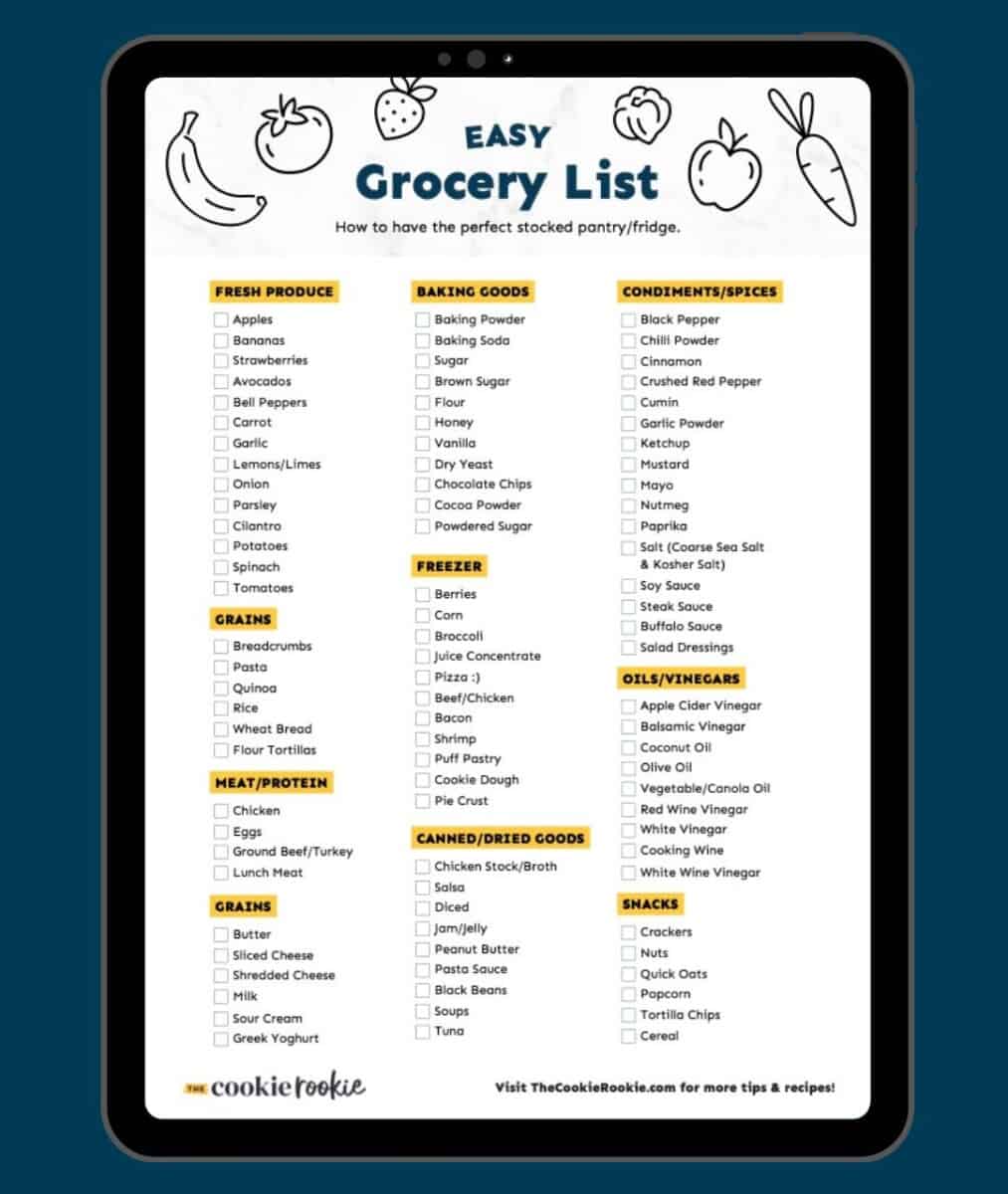

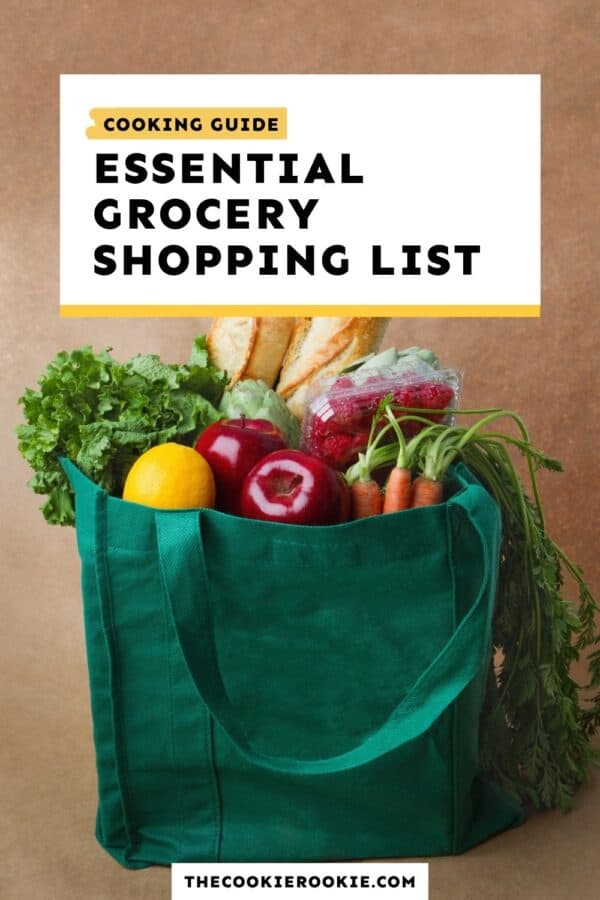
This Essential Grocery List is an absolute life saver for my family on the busy weeks. When I started this journey to learn how to cook, I quickly realized that the first step in cooking is having staple ingredients on hand. I want to avoid having to run out to the grocery store every single time I prepare a new recipe. Having a well-stocked pantry has made my life in the kitchen so much simpler, because when it’s time to cook, I have what I need.
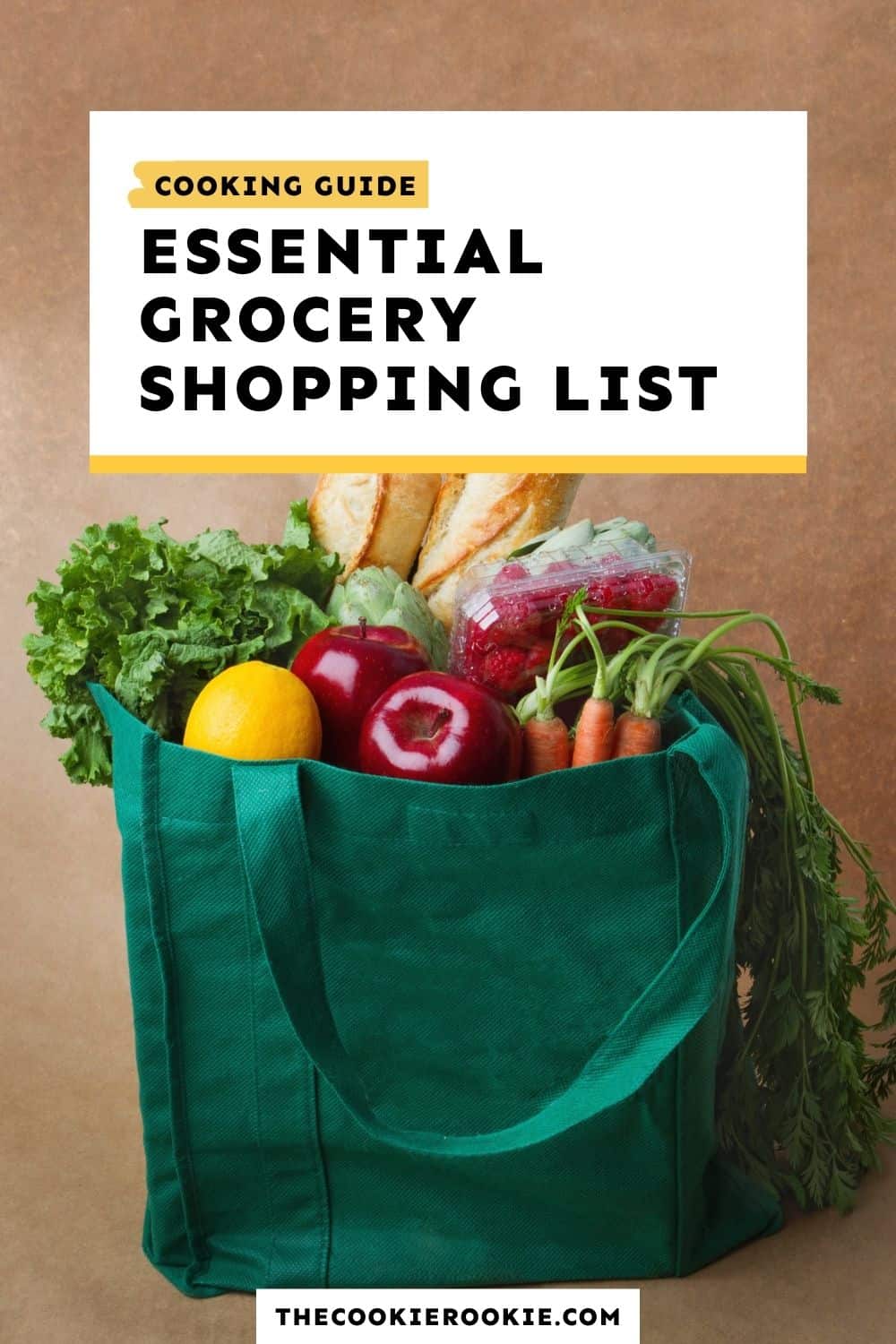
Essential Grocery List
It’s so helpful to have a basic grocery list to help me remember which foods to buy at the store. This food shopping list is my go-to!
It’s better to stock up on things like grains, seasonings and spices, baking essentials, oils, condiments, canned and frozen foods, etc. so I can just grab them when I need them. These things have a long shelf life , so I keep them in my kitchen for convenience.
However, I do have to go to the supermarket sometimes, and there’s a way to make that trip easy and hassle-free: I keep a grocery list! If I go in blindly, I’ll leave with things I don’t need, and nothing that actually helps me prepare a good meal.
In the list below, I’ve compiled everything I always have on my stock-up grocery list.
I’ve got you covered! I created an easy grocery list filled with all of the essentials. Plus there’s a free printable version that you can take with you to the grocery store. It has everything you need to stock your pantry, your freezer, and your refrigerator.
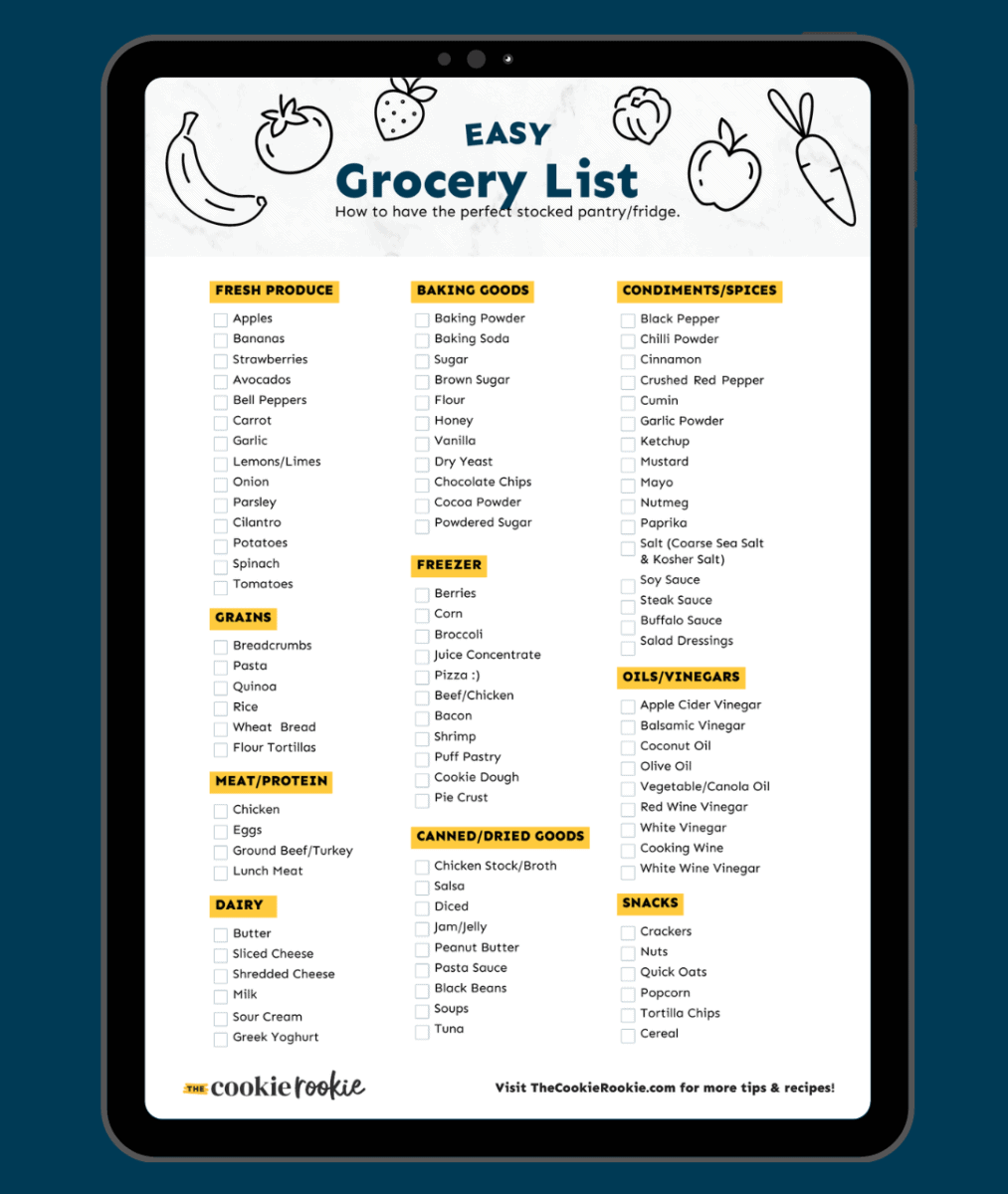
Click to get my Free Printable Grocery List
What to Buy at the Grocery Store
This is the perfect grocery list filled with all the basics and essentials. It should help get you going if you’re new to cooking, or if you’re just left staring helplessly at an empty pantry and don’t know how to fill it.
When I first started cooking, things could seem overwhelming. I quickly realized that they more prepared I could be, the more confident I felt. If you already have the basics in your kitchen, then you can shop stress-free.
So print out our easy grocery list, stock up your pantry and fridge, and you’ll be cooking in no time!
Click to get my Free Printable Grocery List for the perfectly stocked pantry and freezer!
Fresh Produce
- Apples
- Bananas
- Strawberries
- Avocados
- Bell Peppers
- Carrots
- Broccoli
- Garlic
- Lemons/Limes
- Onion
- Parsley
- Cilantro
- Basil
- Potatoes
- Spinach
- Tomatoes
GRAINS
- Breadcrumbs
- Pasta
- Quinoa
- Rice
- Sandwich Bread
- Tortillas
MEAT/PROTEIN
- Chicken
- Eggs
- Ground Beef
- Sliced Turkey
- Lunch Meat
DAIRY
- Butter
- Sliced Cheese
- Shredded Cheese
- Milk
- Sour Cream
- Greek Yogurt
BAKING GOODS
- Baking powder
- Baking Soda
- Granulated Sugar
- Brown Sugar
- Flour
- Honey
- Vanilla Extract
- Dry Yeast
- Chocolate Chips
- Cocoa Powder
- Powdered Sugar
FREEZER
- Fruit and Berries
- Frozen Veggies (Corn, Peas, Broccoli, etc)
- Juice Concentrate
- Pizza or Other Convenience Meals
- Pie Crust
- Cookie Dough
CANNED/DRIED GOODS
- Chicken stock/broth
- Salsa
- Diced Tomatoes
- Jam/Jelly
- Peanut Butter
- Pasta Sauce
- Beans (Black Beans, Chickpeas, Baked Beans, etc)
- Soups
- Tuna
- Green Chiles
- Canned Veggies
- Coffee or Tea
Get more details on the best non-perishable and pantry foods
CONDIMENTS/SPICES
- Black Pepper
- Chili Powder
- Cinnamon
- Crushed Red Pepper
- Cumin
- Garlic Powder
- Ketchup
- Mustard
- Mayo
- Nutmeg
- Paprika
- Salt (Course Sea Salt and Kosher Salt)
- Soy Sauce
- Steak Sauce
- Hot Sauce/ Buffalo Sauce
- Salad Dressings
OILS/VINEGARS
- Apple cider vinegar
- Balsamic vinegar
- Coconut Oil
- Olive Oil
- Vegetable/Canola Oil
- Red Wine Vinegar
- White Vinegar
- Cooking Wine
- White Wine Vinegar
SNACKS
- Crackers
- Nuts
- Quick Oats
- Popcorn
- Tortilla Chips
- Cereal
Click to get my Free Printable Grocery List for the perfectly stocked pantry and freezer!

Click ☝🏻 for my FREE Grocery List Printable!
I hope this essential grocery list can help you buy what you need and make your home cooking so much easier!
Stock Your Kitchen
Find more ideas for your grocery list, stock up your kitchen, and print more cooking guides and charts to keep handy!
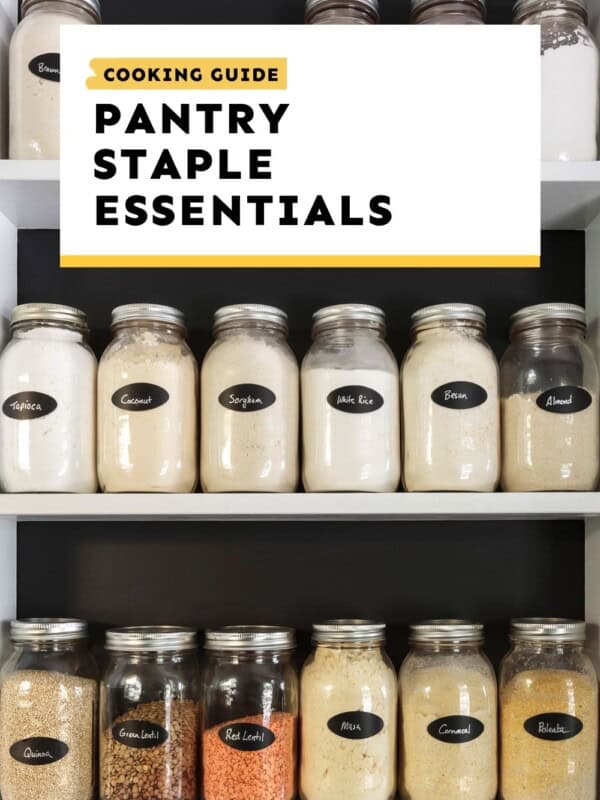
Non-Perishable Foods to Stock Up On
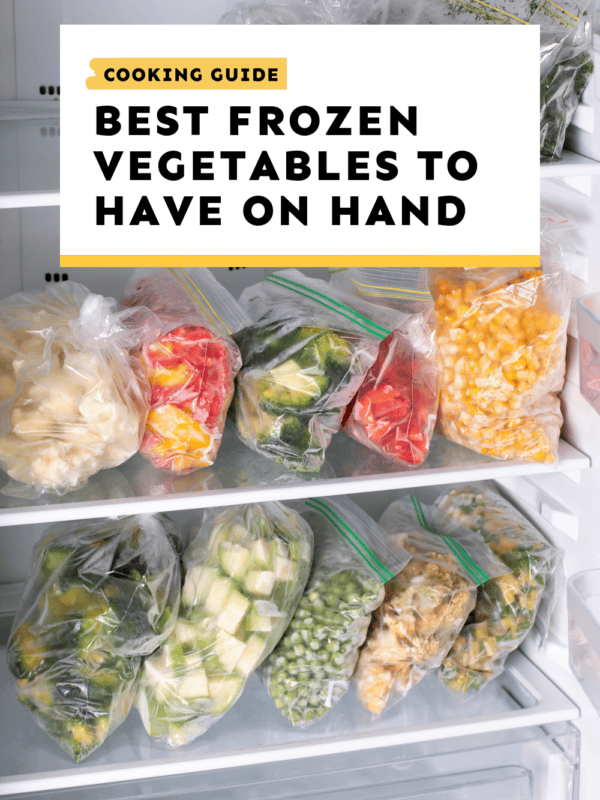
Frozen Vegetables to Stock Up On (and Recipes to Make)
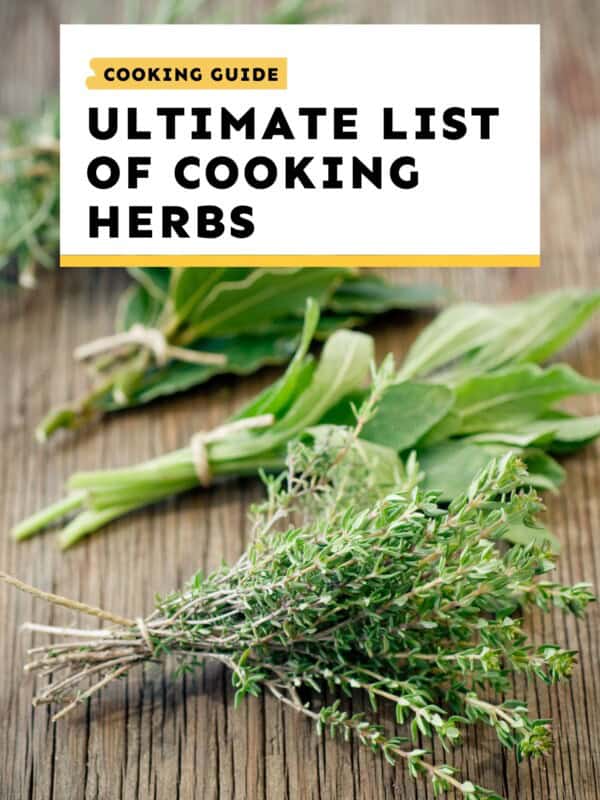
Ultimate List of Cooking Herbs for Your Kitchen

Ultimate List of Cooking Spices for Your Kitchen
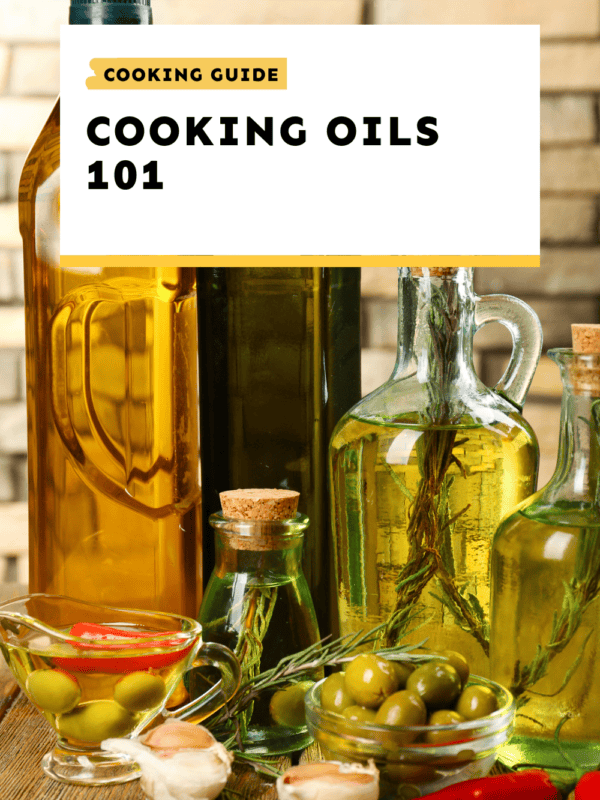
Cooking Oil 101: Types of Cooking Oils to Use
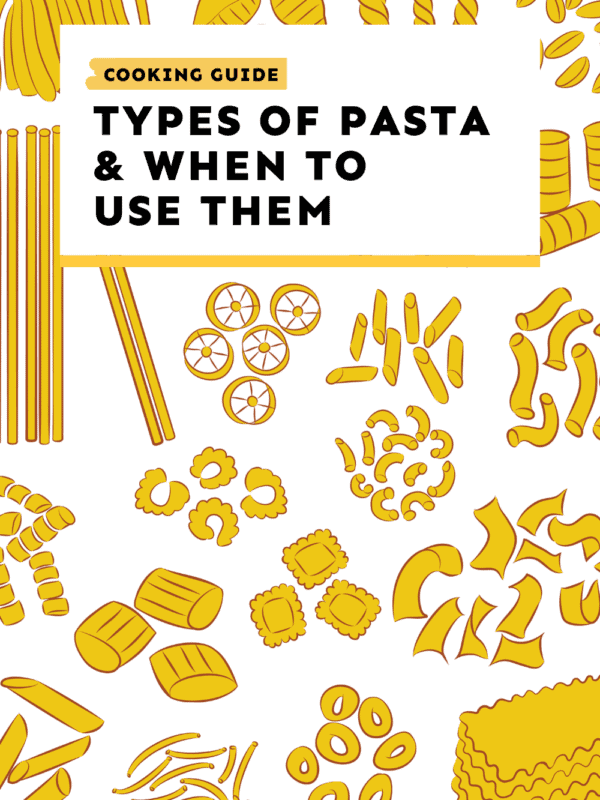
26 Types of Pasta and When to Use Them
What Fruits and Vegetables are in Season?
Meat Temperature Chart (Free Printable)
How to Meal Prep (Guide for Beginners)
Basic Cooking Measurements & Kitchen Conversion Chart