
By Becky Hardin
Published Nov 29, 2022
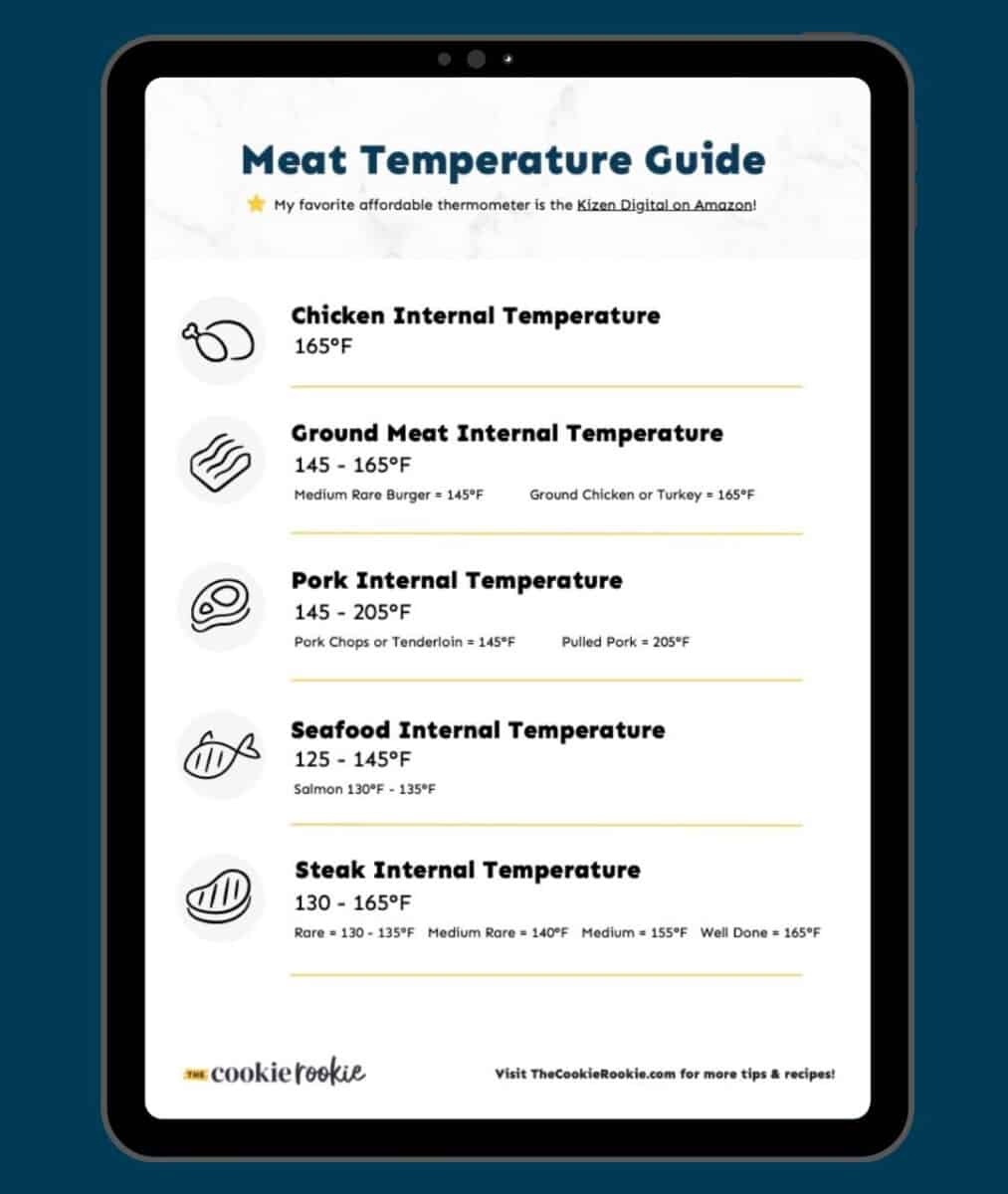
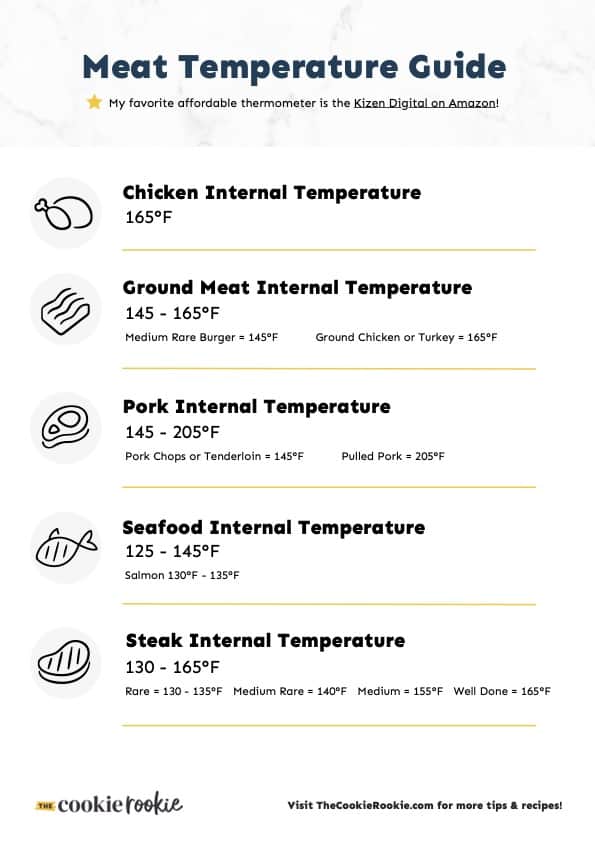
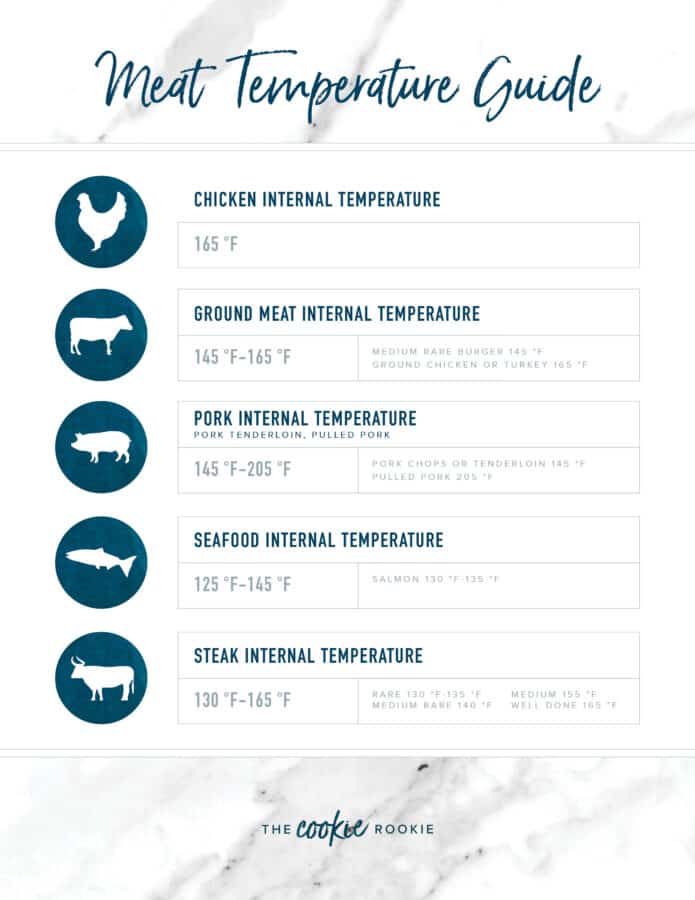
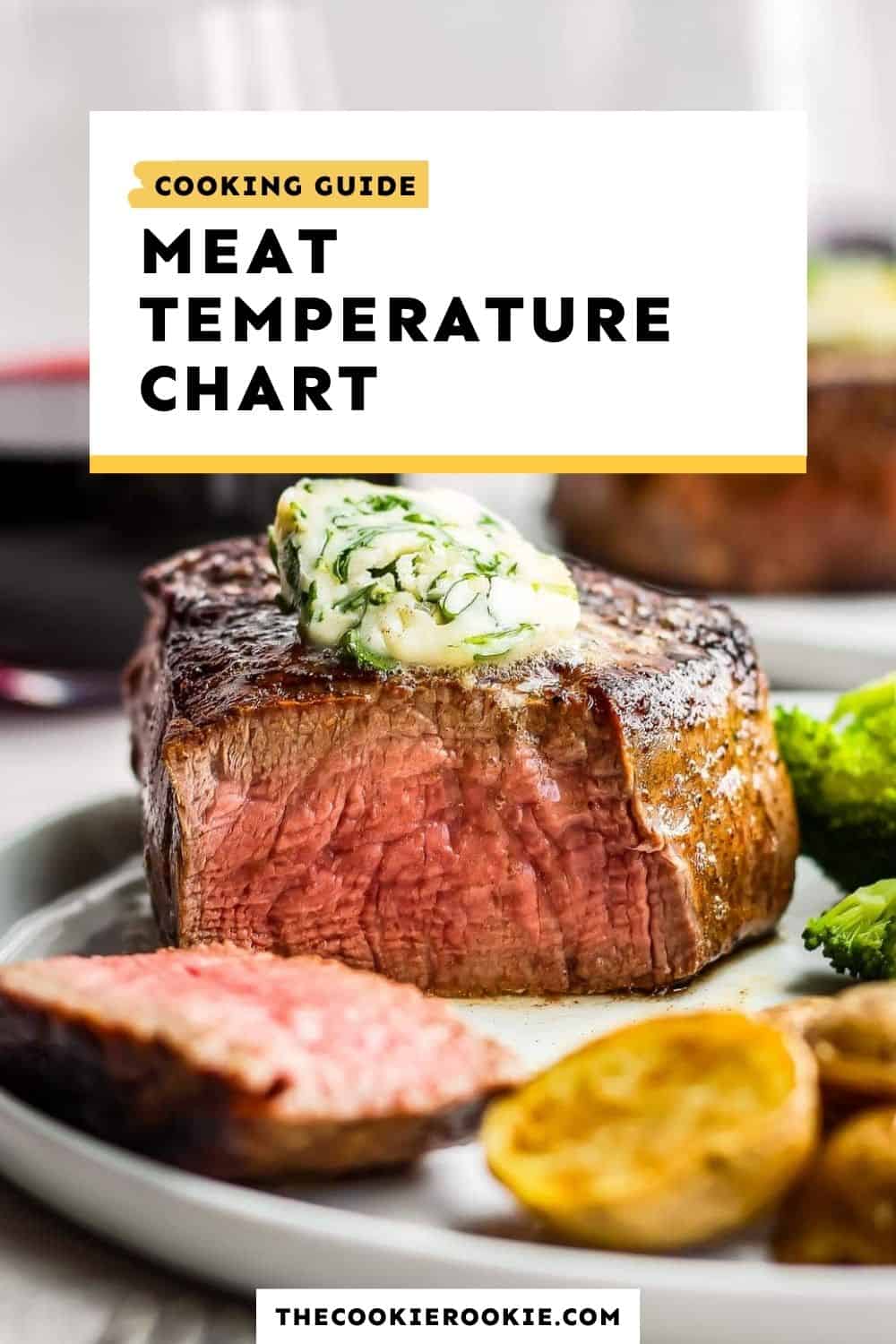
This Meat Temperature Chart is helpful when cooking all kinds of meats! It’s so important to know the correct internal temperatures for steak, beef, pork, salmon, fish, ground meat, and chicken for food safety. Grab this free printable meat temp guide and keep it in your kitchen to reference any time you cook!
CLICK FOR FREE PRINTABLE
FreeMeat Temperature Chart
Making sure your meat is properly cooked is essential to cooking safe and delicious recipes at home. Here you will find a free printable chart, along with lots of extra tips and info, so you always know the best cooking temperatures for chicken, beef, pork, seafood, and more!
We’ve compiled all the info we’ve gathered over the years on the perfect internal temperatures for cooking meat! This easy printable will help you when cooking beef, steak, salmon, seafood, pork, and chicken at home. Internal Temperatures are so important for keeping your family safe and your food tasting good, especially with poultry. So sit back and relax, because we’ve got you covered!
CLICK FOR FREE PRINTABLE
Meat Temp Chart
Listed temperatures are the recommended minimum internal temperatures for food safety, according to the USDA . Keep reading for more details and temperatures for each type of meat.
| Meat | Internal Temp |
|---|---|
| Chicken | 165°F |
| Turkey | 165°F |
| Beef | 145°F |
| Pork/Ham | 145°F |
| Lamb | 145°F |
| Salmon/Fish | 145°F |
| Steak | 140°F |
| Ground Meat | 160°F |
| Reheated Meat | 165°F |
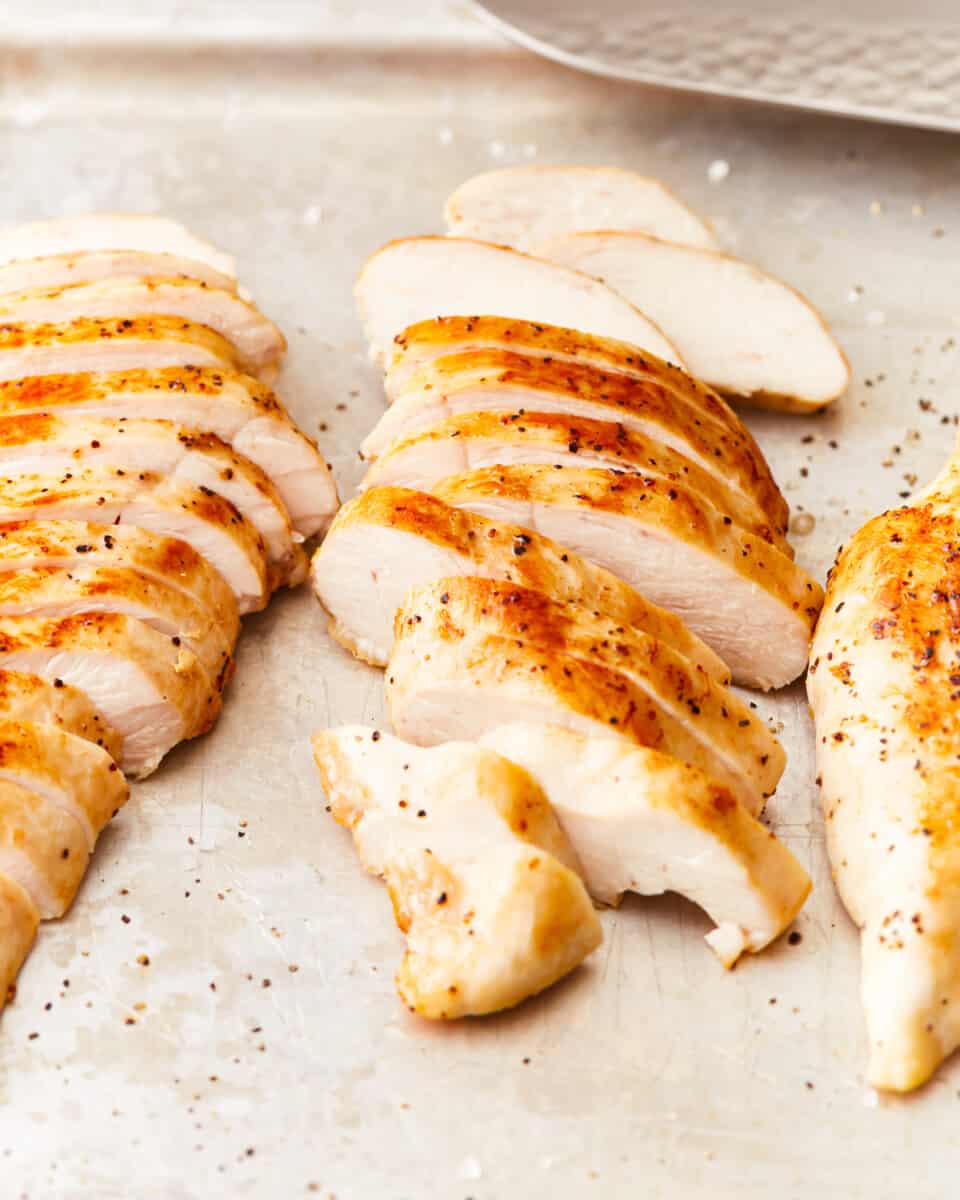
Chicken and Poultry Internal Temperature: 165°F
Cooking food to the correct internal temperature is important, especially with chicken, turkey, and other poultry. Other types of meat have some wiggle room, but the FDA & USDA are very clear that you should always cook chicken to at least 165°F to avoid salmonella poisoning.
Whether you’re making chicken breast , a whole chicken , fried chicken , chicken thighs , or another type, follow these temps.
Chicken, Turkey, and Poultry Temperature Chart
| Type | Temperature |
|---|---|
| White Meat | 165°F |
| Dark Meat | 170-180°F |
| Ground Chicken & Poultry | 165°F |
I recommend using a meat thermometer to make sure your chicken is fully cooked, but here are some extra tips to tell if it’s done:
- When you cut into the chicken, the meat should be opaque. Typically it will be white, but a little pink is okay as long as the temp is 165°F. Color doesn’t necessarily equal doneness.
- When you slice the chicken, the juices should run clear.
- The cooked chicken meat should feel firm, not jiggly or rubbery.
Some early signs of salmonella include diarrhea, chills, fever, and abdominal pain. If you fear you have food poisoning, you should always contact a doctor for further instructions.
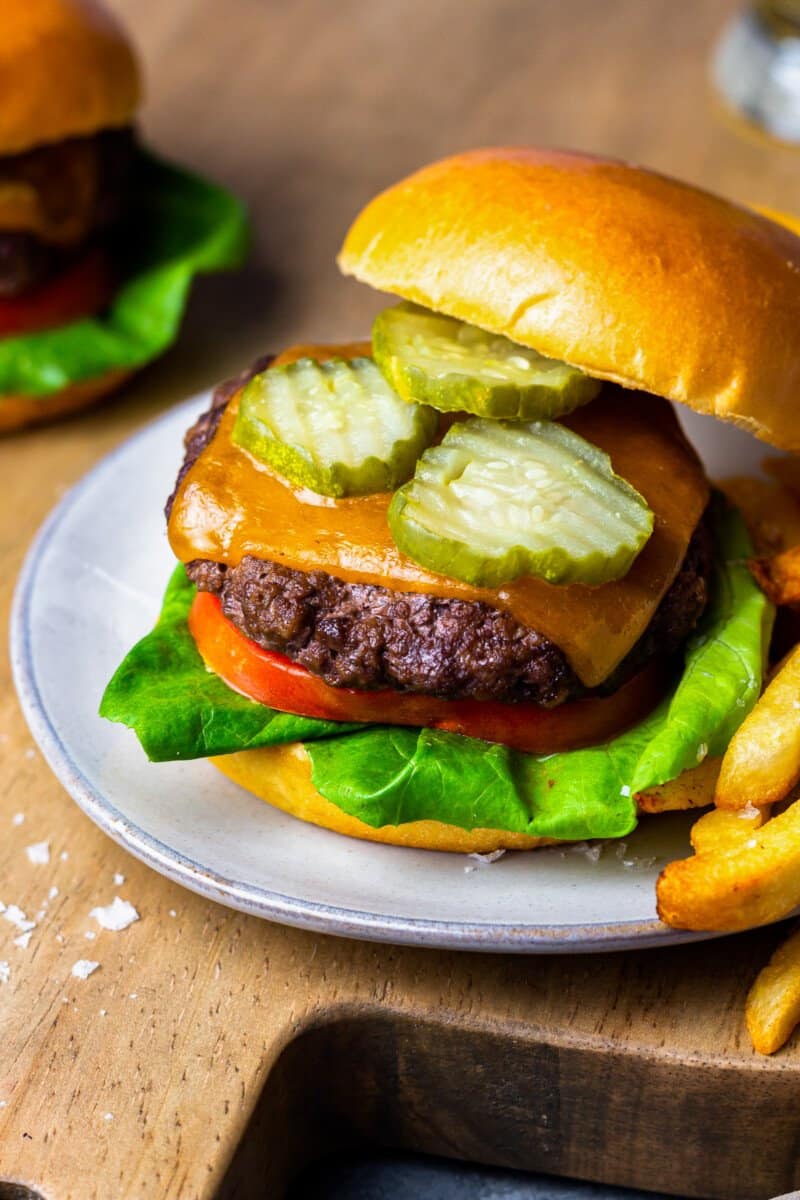
Internal Temperature of Ground Meat (burgers, meatballs, or meatloaf): 160°F
When cooking any ground beef or ground meat for recipes such as burgers , meatloaf , or meatballs , it’s recommended that you cook it to a minimum of 160°F. While it is safe to eat other cuts of beef and pork at lower temperatures, ground meat needs to be cooked to the recommended temperatures below.
Ground Meat Temperature Chart
| Type | Temperature |
|---|---|
| Ground Beef | 160°F |
| Ground Pork | 160°F |
| Ground Chicken | 165°F |
| Ground Turkey | 165°F |
A medium-rare burger would be cooked to 145°F if that’s what you prefer, but it’s officially safest to cook closer to 160°F. When meat is ground up, most of it is surface area, which exposes more of it to bacteria. So cooking it to a higher temp is recommended in order to kill all potential bacteria.
If you’re working with ground poultry (chicken or turkey), as outlined above, they should be cooked to a minimum of 165°F.
Quick Tip: When cooking with ground beef, remove from the stovetop or oven about 5 degrees under your desired internal temperature. That will help keep your recipe juicy and tender.
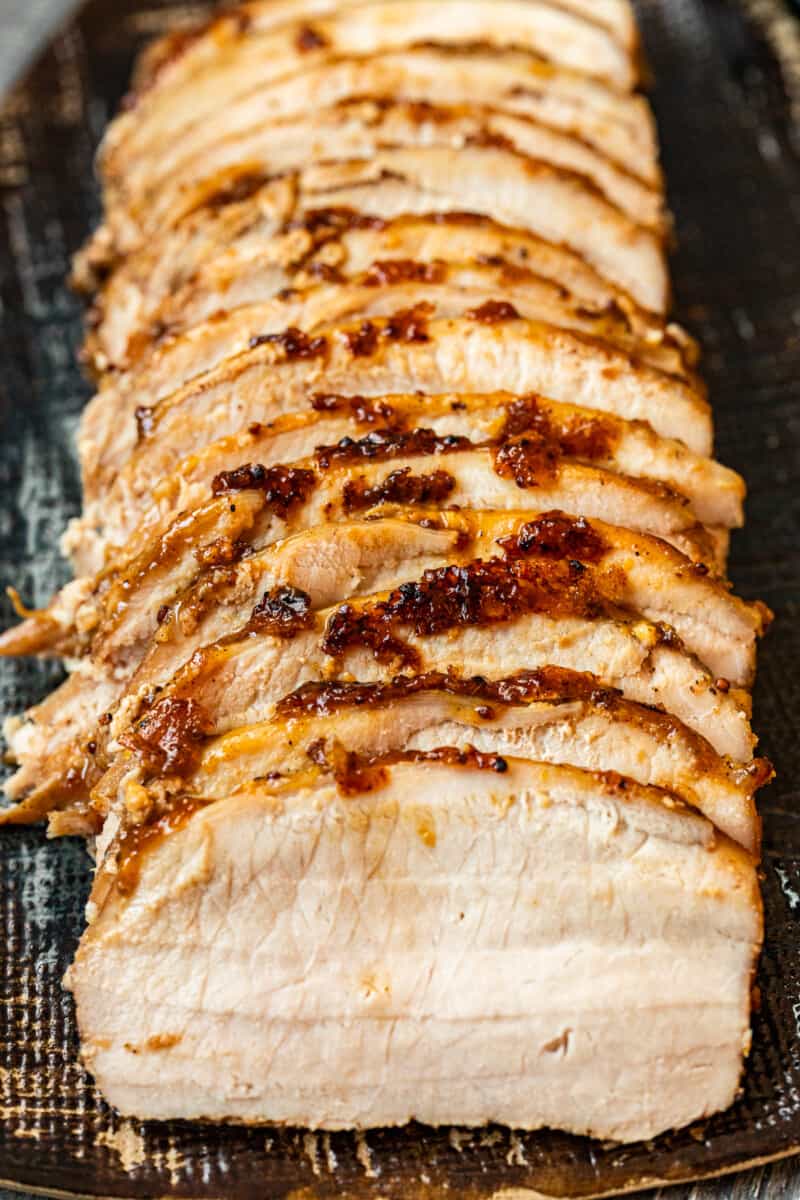
Internal Temperature for Pork (Pork Tenderloin, Ham, or Pulled Pork): 145-205°F
Pork is pretty straightforward and self explanatory when dealing with internal temperatures. The safe minimum temp for pork is 145°F, and it rarely needs to be cooked more than that. So if you’re cooking pork tenderloin or pork chops , it’s simple!
But if you’re cooking ground pork or a spiral ham , you’ll need to cook it a little longer. And pulled pork is best cooked close to 205°F for truly tender meat.
Pork Temperature Chart
| Type | Temperature |
|---|---|
| Pork Chops, Pork Tenderloin, Ham | 145°F |
| Ground Pork | 160°F |
| Pulled Pork | 205°F |
| Pre-cooked (Spiral) Ham | 165°F |
Pork is often overcooked, making it seem like it’s a more difficult meat to cook correctly. But it’s totally possible to get juicy, well-cooked pork! Just watch your temps carefully and remove from the heat about 3-5 degrees under your desired temp of 145°F, then let it rest.
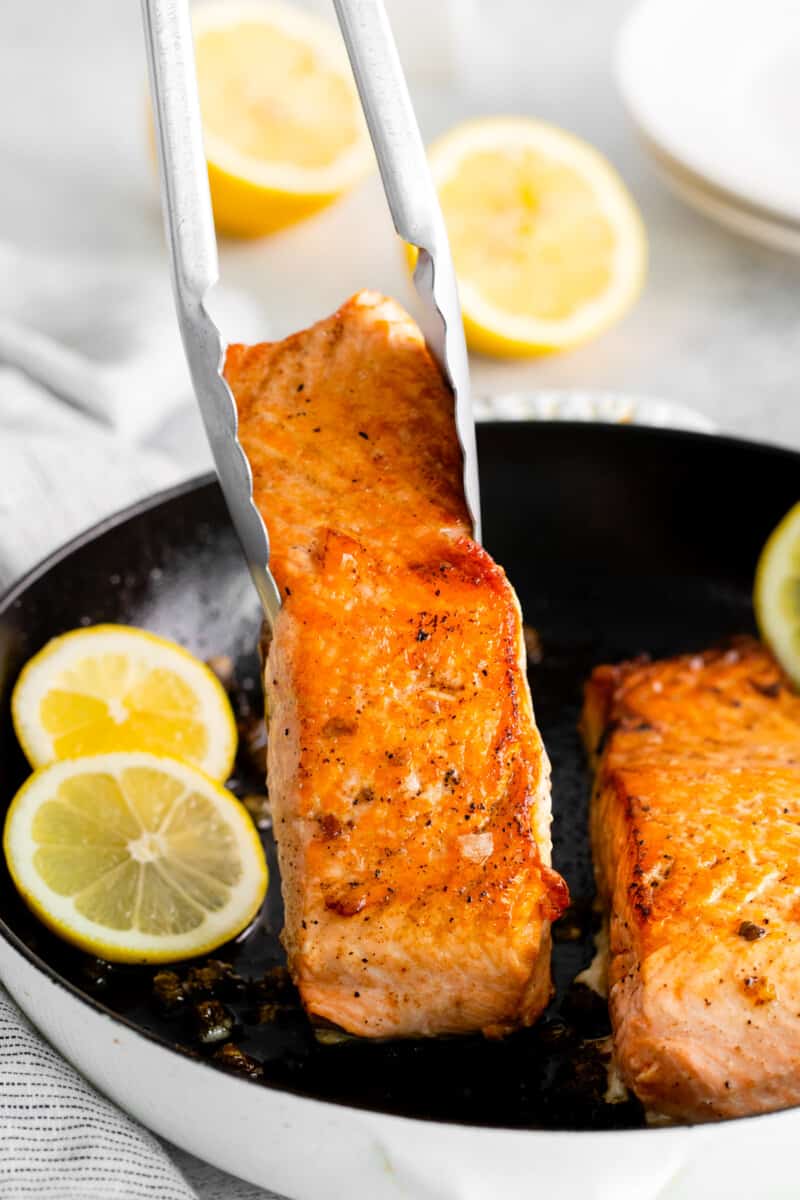
Internal Temperature for Salmon and Seafood: 125-145°F
You’re probably going to get conflicting opinions on the perfect internal temperature for salmon, fish, shellfish, and other seafood. The recommended minimum internal temp for salmon and fish is 145°F, but it is safe to cook it a bit less.
Salmon, Fish, and Seafood Temperature Chart
| Type | Temperature |
|---|---|
| Salmon and Fish | 125-145°F |
| Shellfish (Lobster, Crab, Shrimp, etc) | Cook until opaque |
I prefer to cook salmon around 130-135°F. Salmon cooked to an internal temperature of 125°F is safe to eat and is considered “medium rare”. You’ll get tender, flakey fish while being fully cooked!
All fish, like tilapia , follows the same rules as salmon. Other seafood, like lobster , crab , scallops , or shrimp, has less specific rules. You really just need to cook these foods until they become opaque, rather than checking the temp.
Quick Tip: When testing the internal temperature of salmon, be sure you’re taking the temp at the thickest part of the fillet. Remove from the heat when the fish reads about 2 degrees under your desired temperature, because it will continue to cook.
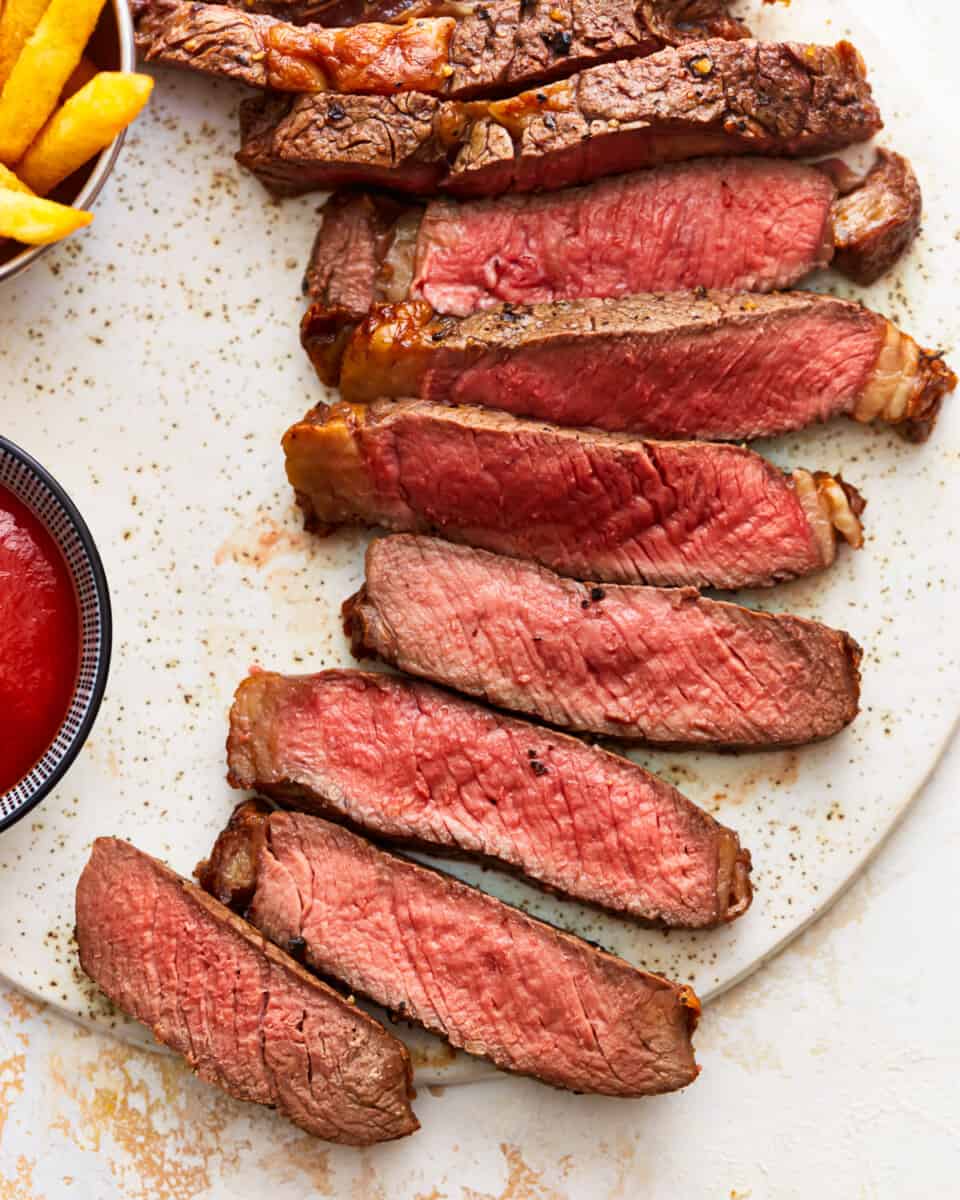
Internal Temperatures for Steak and Beef: 125-160°F
I’ve saved the best for last, steak! If we go to a fancy restaurant, you better believe I’m going to order the filet mignon , medium or medium rare, every single time. I just love a perfectly cooked steak. There’s nothing better!
These temperatures also apply to beef in general, including beef tenderloin , roasts , and other cuts of beef. Check our Burger Temperature Chart for more info if you’re cooking burgers.
It’s generally recommend to cook beef steaks to a minimum temp of 140°F (medium rare). But people like their steaks done at different temps, so there is definitely a range here. Keep your instant read meat thermometer handy!
Beef and Steak Temperature Chart
| Doneness | Temperature |
|---|---|
| Rare | 125-130°F |
| Medium-Rare | 135-140°F |
| Medium | 140-150°F |
| Well-Done | 160°F |
All that’s left is to leave you with a simple and perfect way to grill steak every time. I hope this guide to meat internal temperatures helped, and be sure to print off the FREE printable meat temp chart to keep in your kitchen for easy access. We are so glad you’re here. Enjoy!
Ingredients1x2x3x
- ▢ 4 steaks
Instructions
- Trim excess fat from the steak (but leave a little bit for flavor)
- Let the steak sit at room temperature for at least 20 minutes before cooking
- Prepare the grill and heat up about 30 minutes before cooking
- Pat away extra moisture from the steak, and then season to your liking
- Sear steaks until they lift without sticking to the grates
- Turn your steaks over once and continue cooking
- Use meat thermometer to check internal temperatures. A medium-rare steak should heat to about 140 F. Medium will be closer to 155 F and Well Done should be at a temperature of 165 F.
- Remove the steaks from the grill when the thermometer reads about 5 degrees lower than you want it (the meat will continue cooking after removed from the grill).
- Let the steaks cool briefly before serving
Equipment
- 1 Instant Read Meat Thermometer
Nutrition information is automatically calculated, so should only be used as an approximation.
Get Ready to Cook!
Find more cooking guides, resources, how-tos, and printables to keep in your kitchen!
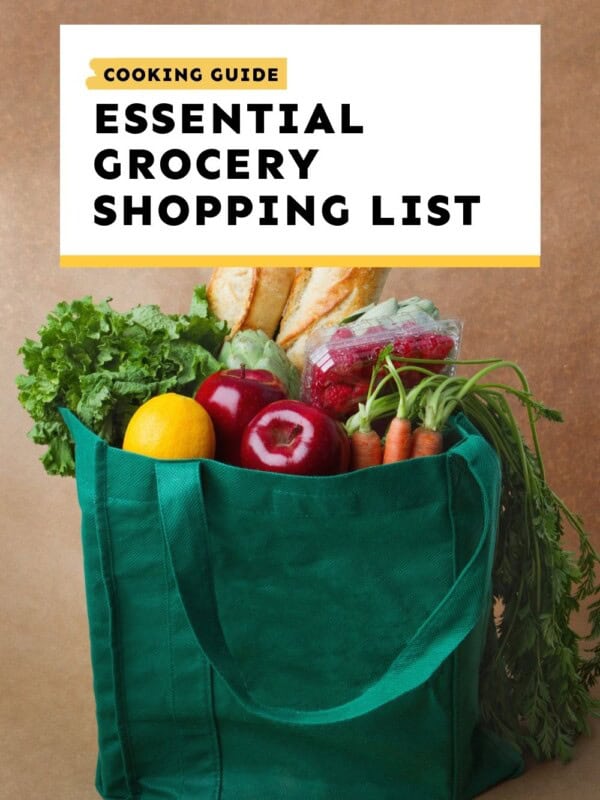
Essential Grocery List (How to stock your fridge and pantry)
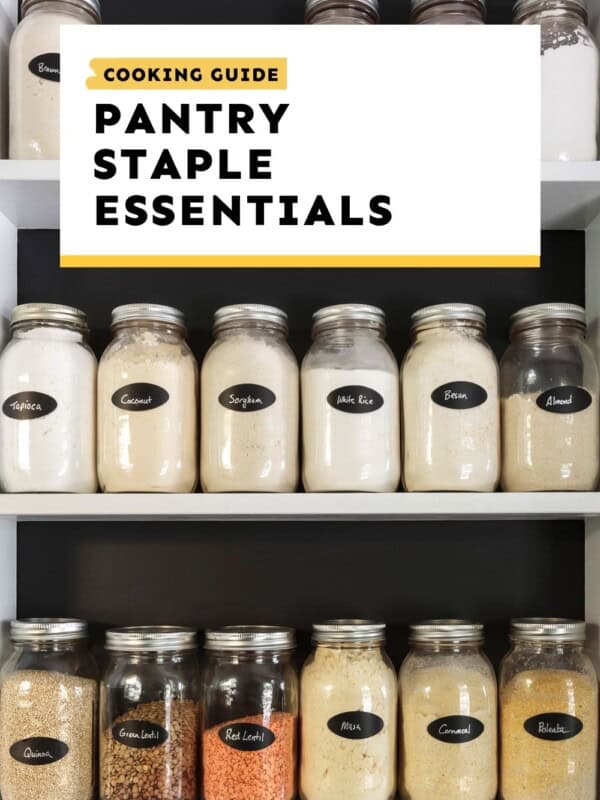
Non-Perishable Foods to Stock Up On
Basic Cooking Measurements & Kitchen Conversion Chart
How to Cut Recipes in Half
How to Grill the Perfect Steak
Equipment
- 1 Instant Read Meat Thermometer
Ingredients
- 4 steaks
Instructions
- Trim excess fat from the steak (but leave a little bit for flavor)
- Let the steak sit at room temperature for at least 20 minutes before cooking
- Prepare the grill and heat up about 30 minutes before cooking
- Pat away extra moisture from the steak, and then season to your liking
- Sear steaks until they lift without sticking to the grates
- Turn your steaks over once and continue cooking
- Use meat thermometer to check internal temperatures. A medium-rare steak should heat to about 140 F. Medium will be closer to 155 F and Well Done should be at a temperature of 165 F.
- Remove the steaks from the grill when the thermometer reads about 5 degrees lower than you want it (the meat will continue cooking after removed from the grill).
- Let the steaks cool briefly before serving
Nutrition
By Becky Hardin
Published Jul 12, 2017
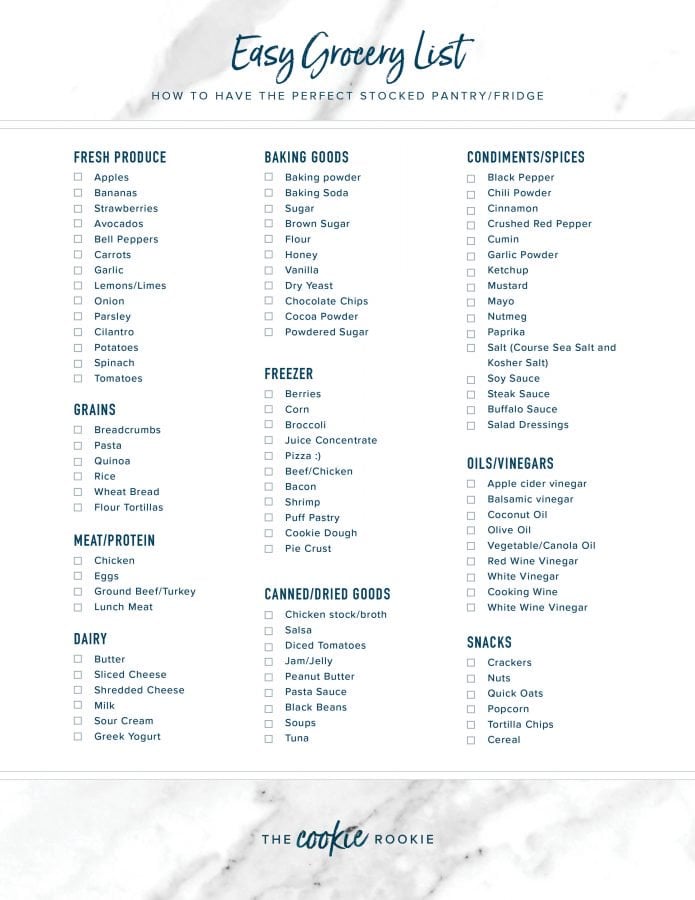
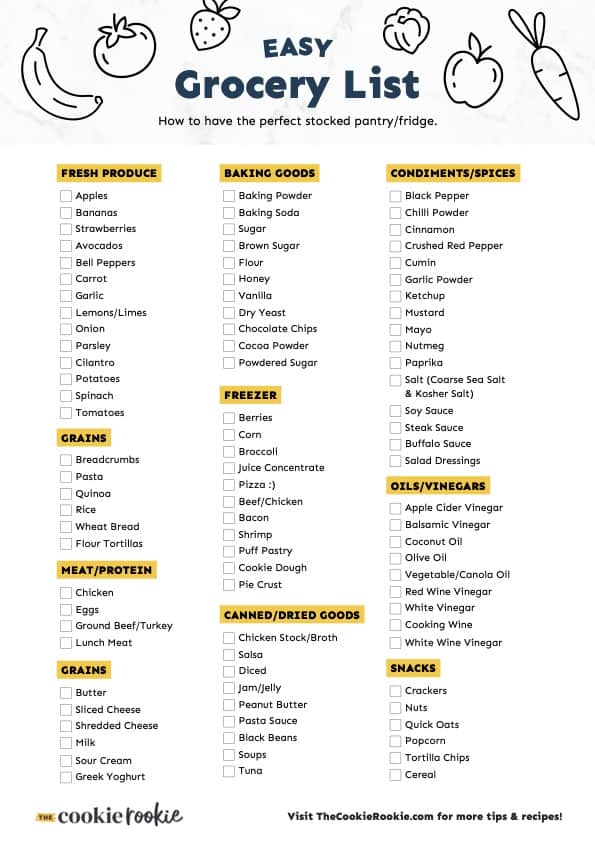
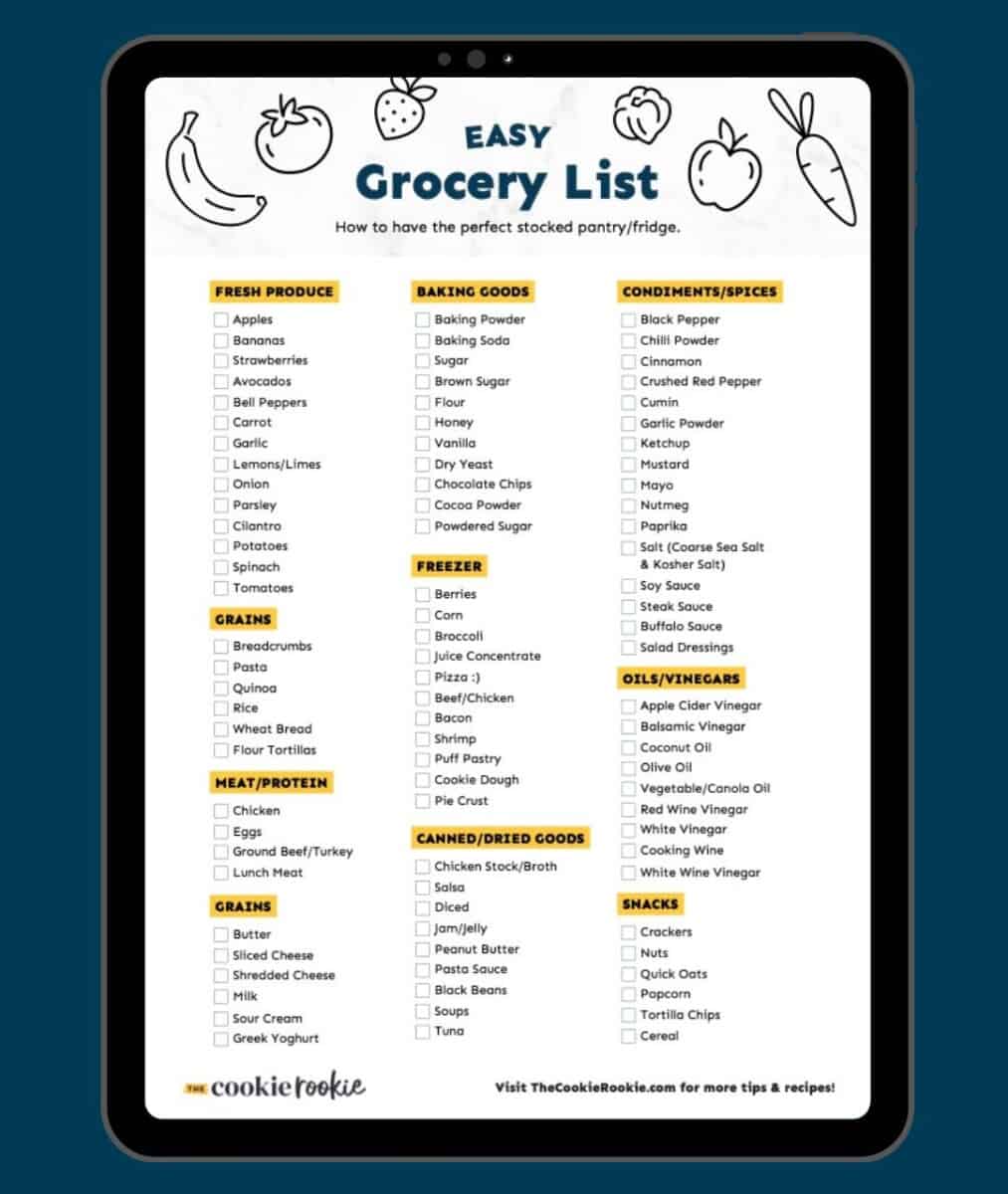

This Essential Grocery List is an absolute life saver for my family on the busy weeks. When I started this journey to learn how to cook, I quickly realized that the first step in cooking is having staple ingredients on hand. I want to avoid having to run out to the grocery store every single time I prepare a new recipe. Having a well-stocked pantry has made my life in the kitchen so much simpler, because when it’s time to cook, I have what I need.
Essential Grocery List
It’s so helpful to have a basic grocery list to help me remember which foods to buy at the store. This food shopping list is my go-to!
It’s better to stock up on things like grains, seasonings and spices, baking essentials, oils, condiments, canned and frozen foods, etc. so I can just grab them when I need them. These things have a long shelf life , so I keep them in my kitchen for convenience.
However, I do have to go to the supermarket sometimes, and there’s a way to make that trip easy and hassle-free: I keep a grocery list! If I go in blindly, I’ll leave with things I don’t need, and nothing that actually helps me prepare a good meal.
In the list below, I’ve compiled everything I always have on my stock-up grocery list.
I’ve got you covered! I created an easy grocery list filled with all of the essentials. Plus there’s a free printable version that you can take with you to the grocery store. It has everything you need to stock your pantry, your freezer, and your refrigerator.
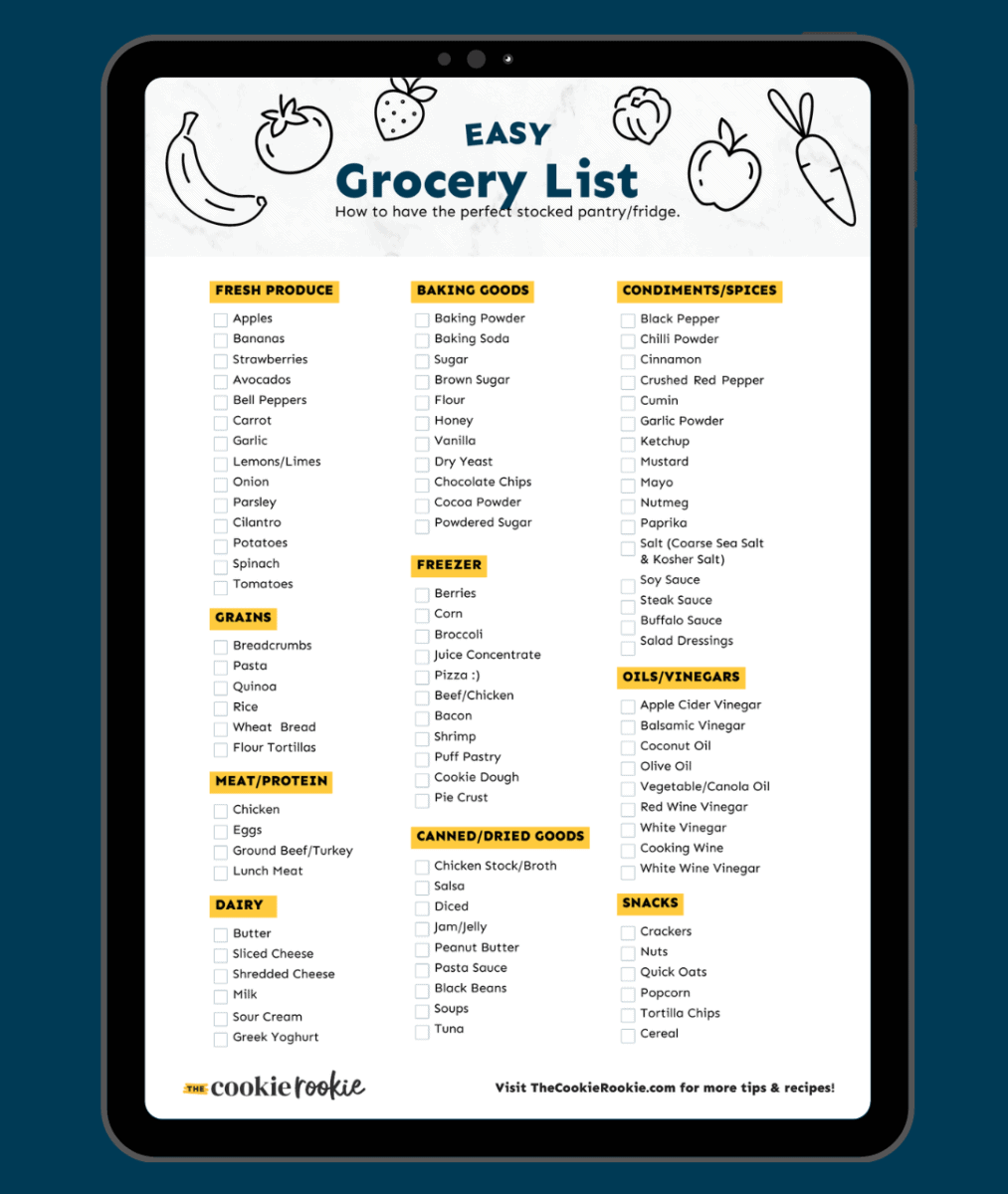
Click to get my Free Printable Grocery List
What to Buy at the Grocery Store
This is the perfect grocery list filled with all the basics and essentials. It should help get you going if you’re new to cooking, or if you’re just left staring helplessly at an empty pantry and don’t know how to fill it.
When I first started cooking, things could seem overwhelming. I quickly realized that they more prepared I could be, the more confident I felt. If you already have the basics in your kitchen, then you can shop stress-free.
So print out our easy grocery list, stock up your pantry and fridge, and you’ll be cooking in no time!
Click to get my Free Printable Grocery List for the perfectly stocked pantry and freezer!
Fresh Produce
- Apples
- Bananas
- Strawberries
- Avocados
- Bell Peppers
- Carrots
- Broccoli
- Garlic
- Lemons/Limes
- Onion
- Parsley
- Cilantro
- Basil
- Potatoes
- Spinach
- Tomatoes
GRAINS
- Breadcrumbs
- Pasta
- Quinoa
- Rice
- Sandwich Bread
- Tortillas
MEAT/PROTEIN
- Chicken
- Eggs
- Ground Beef
- Sliced Turkey
- Lunch Meat
DAIRY
- Butter
- Sliced Cheese
- Shredded Cheese
- Milk
- Sour Cream
- Greek Yogurt
BAKING GOODS
- Baking powder
- Baking Soda
- Granulated Sugar
- Brown Sugar
- Flour
- Honey
- Vanilla Extract
- Dry Yeast
- Chocolate Chips
- Cocoa Powder
- Powdered Sugar
FREEZER
- Fruit and Berries
- Frozen Veggies (Corn, Peas, Broccoli, etc)
- Juice Concentrate
- Pizza or Other Convenience Meals
- Pie Crust
- Cookie Dough
CANNED/DRIED GOODS
- Chicken stock/broth
- Salsa
- Diced Tomatoes
- Jam/Jelly
- Peanut Butter
- Pasta Sauce
- Beans (Black Beans, Chickpeas, Baked Beans, etc)
- Soups
- Tuna
- Green Chiles
- Canned Veggies
- Coffee or Tea
Get more details on the best non-perishable and pantry foods
CONDIMENTS/SPICES
- Black Pepper
- Chili Powder
- Cinnamon
- Crushed Red Pepper
- Cumin
- Garlic Powder
- Ketchup
- Mustard
- Mayo
- Nutmeg
- Paprika
- Salt (Course Sea Salt and Kosher Salt)
- Soy Sauce
- Steak Sauce
- Hot Sauce/ Buffalo Sauce
- Salad Dressings
OILS/VINEGARS
- Apple cider vinegar
- Balsamic vinegar
- Coconut Oil
- Olive Oil
- Vegetable/Canola Oil
- Red Wine Vinegar
- White Vinegar
- Cooking Wine
- White Wine Vinegar
SNACKS
- Crackers
- Nuts
- Quick Oats
- Popcorn
- Tortilla Chips
- Cereal
Click to get my Free Printable Grocery List for the perfectly stocked pantry and freezer!

Click ☝🏻 for my FREE Grocery List Printable!
I hope this essential grocery list can help you buy what you need and make your home cooking so much easier!
Stock Your Kitchen
Find more ideas for your grocery list, stock up your kitchen, and print more cooking guides and charts to keep handy!
Non-Perishable Foods to Stock Up On
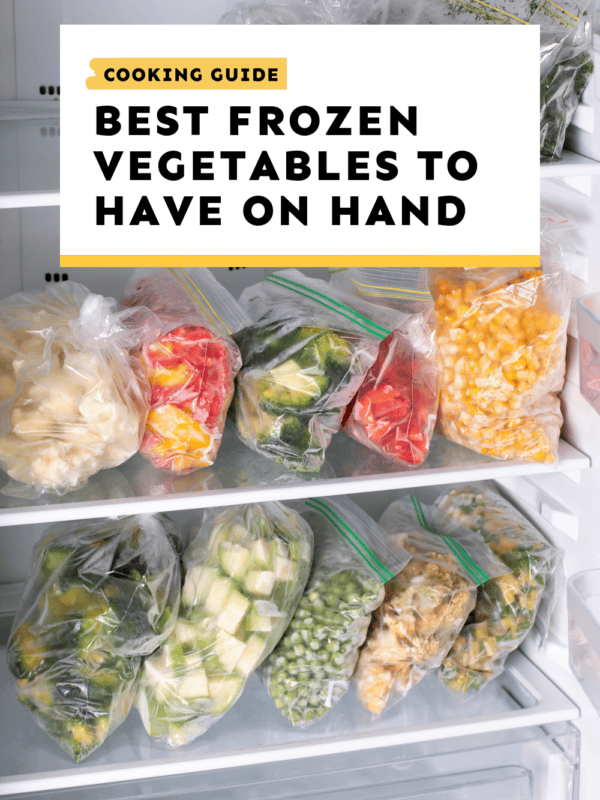
Frozen Vegetables to Stock Up On (and Recipes to Make)
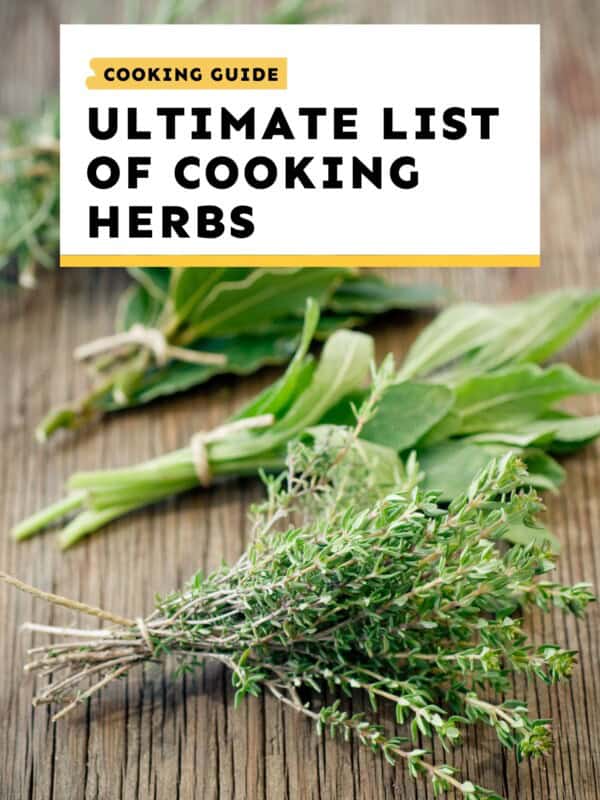
Ultimate List of Cooking Herbs for Your Kitchen
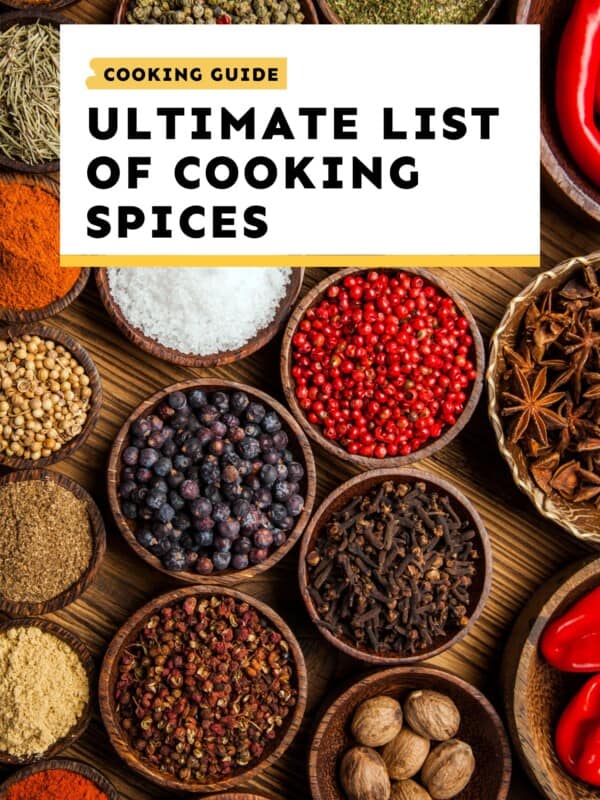
Ultimate List of Cooking Spices for Your Kitchen
Cooking Oil 101: Types of Cooking Oils to Use
26 Types of Pasta and When to Use Them
What Fruits and Vegetables are in Season?
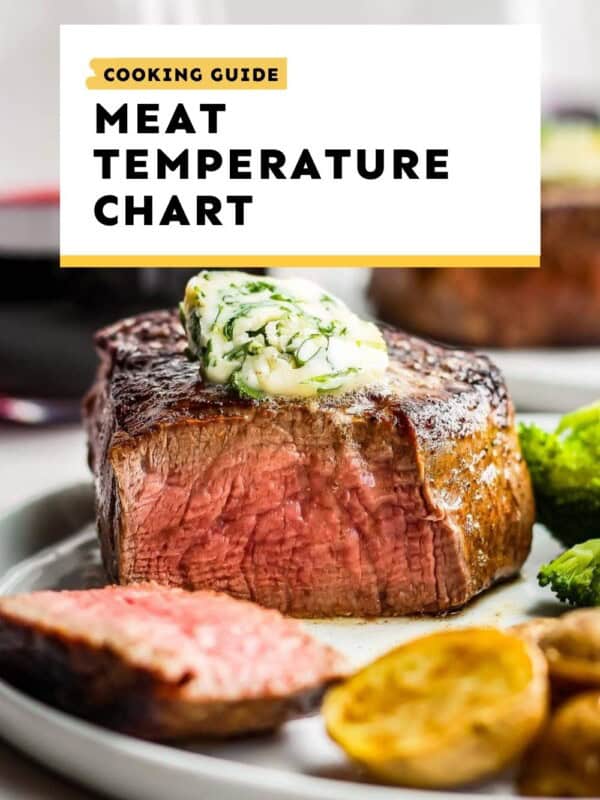
Meat Temperature Chart (Free Printable)
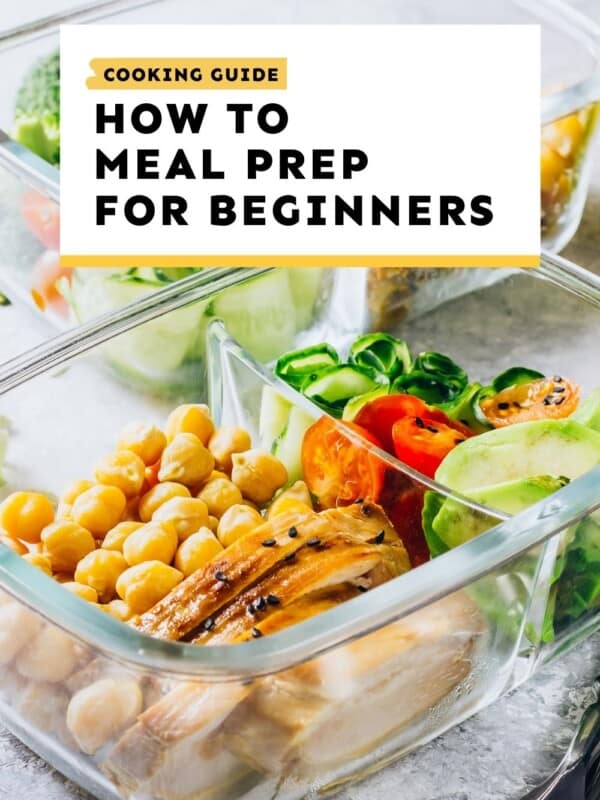
How to Meal Prep (Guide for Beginners)
Basic Cooking Measurements & Kitchen Conversion Chart
